Volcanoes and cliffs in São Miguel, the green island of the Azores
The subtropical climate maintains mild temperatures even in summer, making it a perfect destination for a holiday in contact with nature

4' min read
4' min read
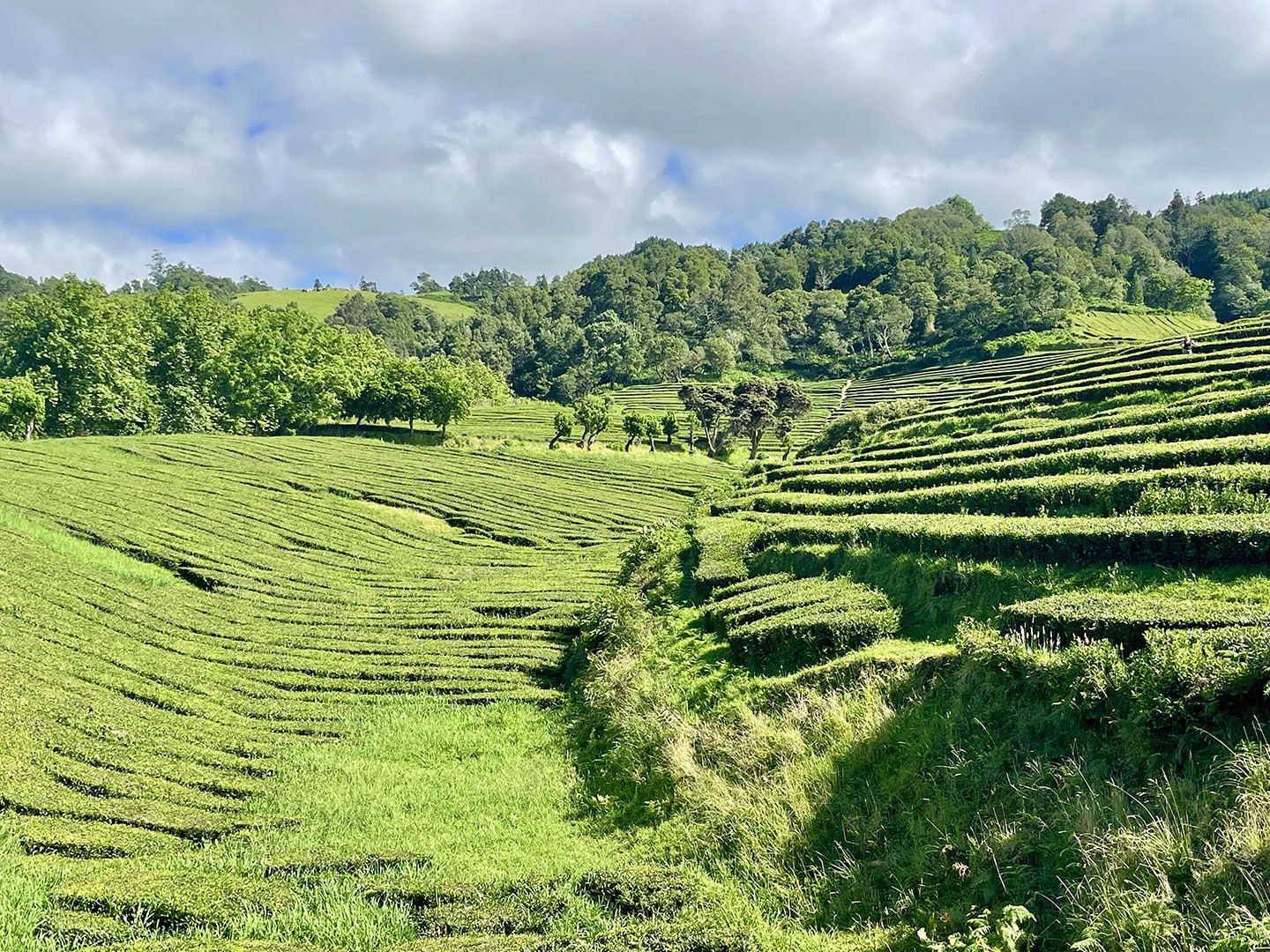
Lost in the immensity of the Atlantic Ocean, the Azores look like just a dot on the map. Once reached, one discovers a place suspended between dream and reality, where nature reigns supreme. São Miguel, the largest and most populated of the nine islands that make up the Portuguese archipelago - known as 'the green island' - surprises with its mosaic of bucolic and spectacular landscapes. Volcanic craters, lakes, vertiginous cliffs overlooking the ocean, valleys covered with lush vegetation on which cows graze, roads framed by a riot of blue and white hydrangeas, hot springs, tea plantations, pineapple plantations, hidden waterfalls and lush parks. The subtropical climate maintains mild temperatures even in summer, making it a perfect destination for a dynamic holiday in contact with nature, primarily for hikers. To reach São Miguel it is also possible to take advantage of the direct flight (until the end of September) with the company Sata Azores, which takes you to an evergreen Atlantic Eden in four hours.
Wonders of Water and Land
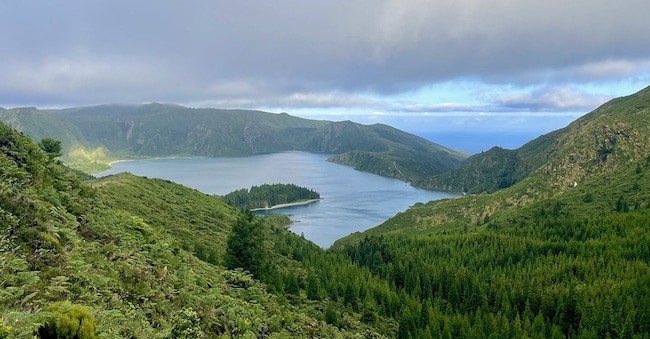
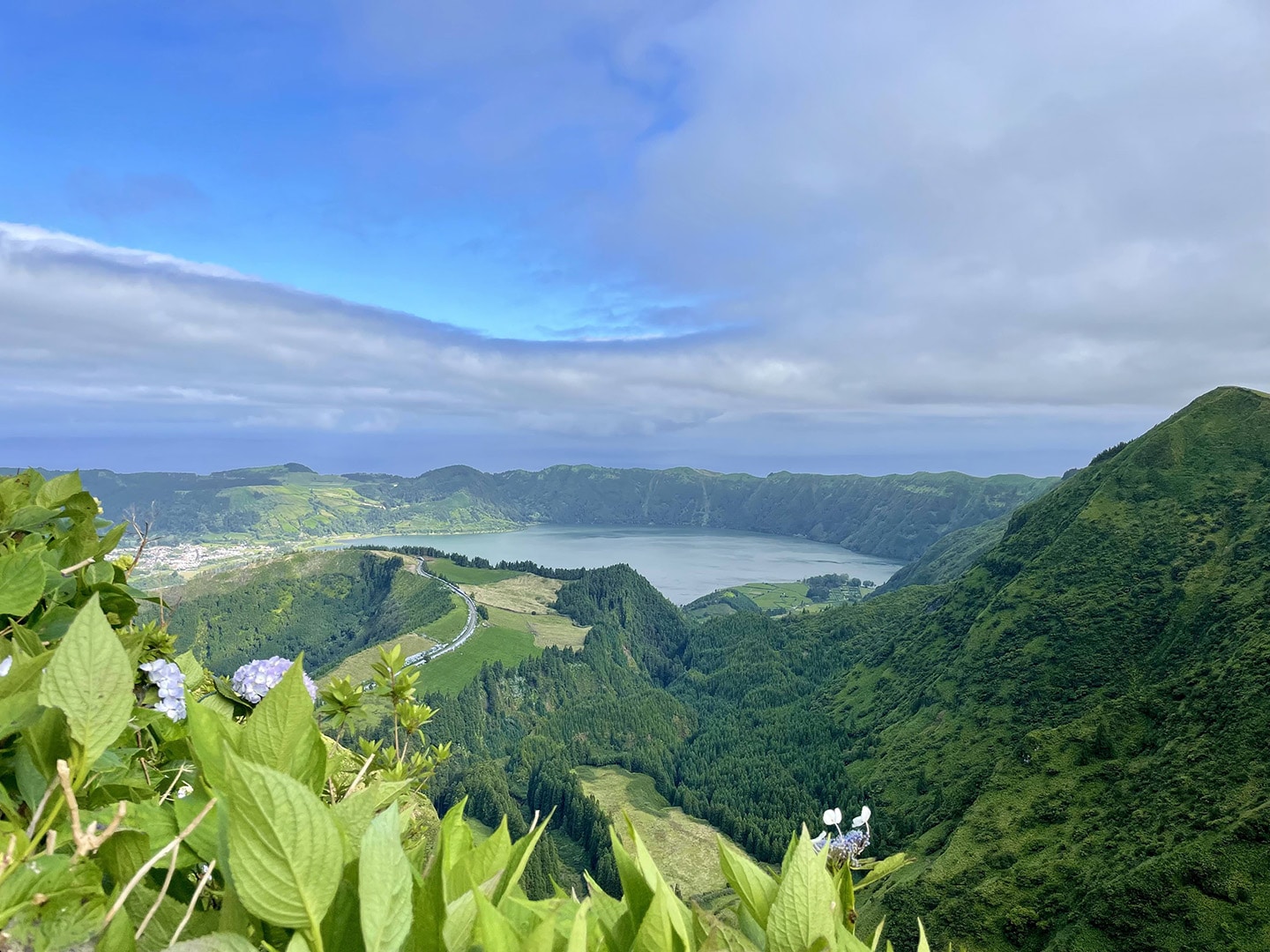
.A voyage of discovery to the green island of the Azores can begin with one of its most iconic sites: the volcanic crater of Sete Citades, listed among the seven natural wonders of Portugal. Shimmering within it are the striking Lagoa Azul and Lagoa Verde, two lakes that, according to legend, were born from the tears of a green-eyed shepherd and a blue-eyed princess, who were unable to live out their love. These stretches of water can be admired from several belvederes, miradouro, surrounded by vegetation. Among the most spectacular is that of the Grota do Inferno, which can be reached via a path from Lagoa do Canário; from an altitude of 800 metres there is an enchanting view from which to admire the crater of Sete Citades, the Azul, Santiago and Rasa lakes. Another impressive view is from the miradouro Vista do Rei, named in honour of the visit of King D. Carlos and Queen D. Amélia in 1901. Amélia in 1901. Proceeding towards the centre of the island, nature continues to amaze with Lagoa do Fogo, another volcanic lake set in a collapsed caldera and declared a nature reserve since 1974. The road along it is only accessible by car in the morning (before 9 a.m.) and in the evening (after 7 p.m.), while during the day it is accessible by public shuttles. Along the way, several belvederes offer spectacular views of this unspoilt landscape dominated by dense, lush vegetation.
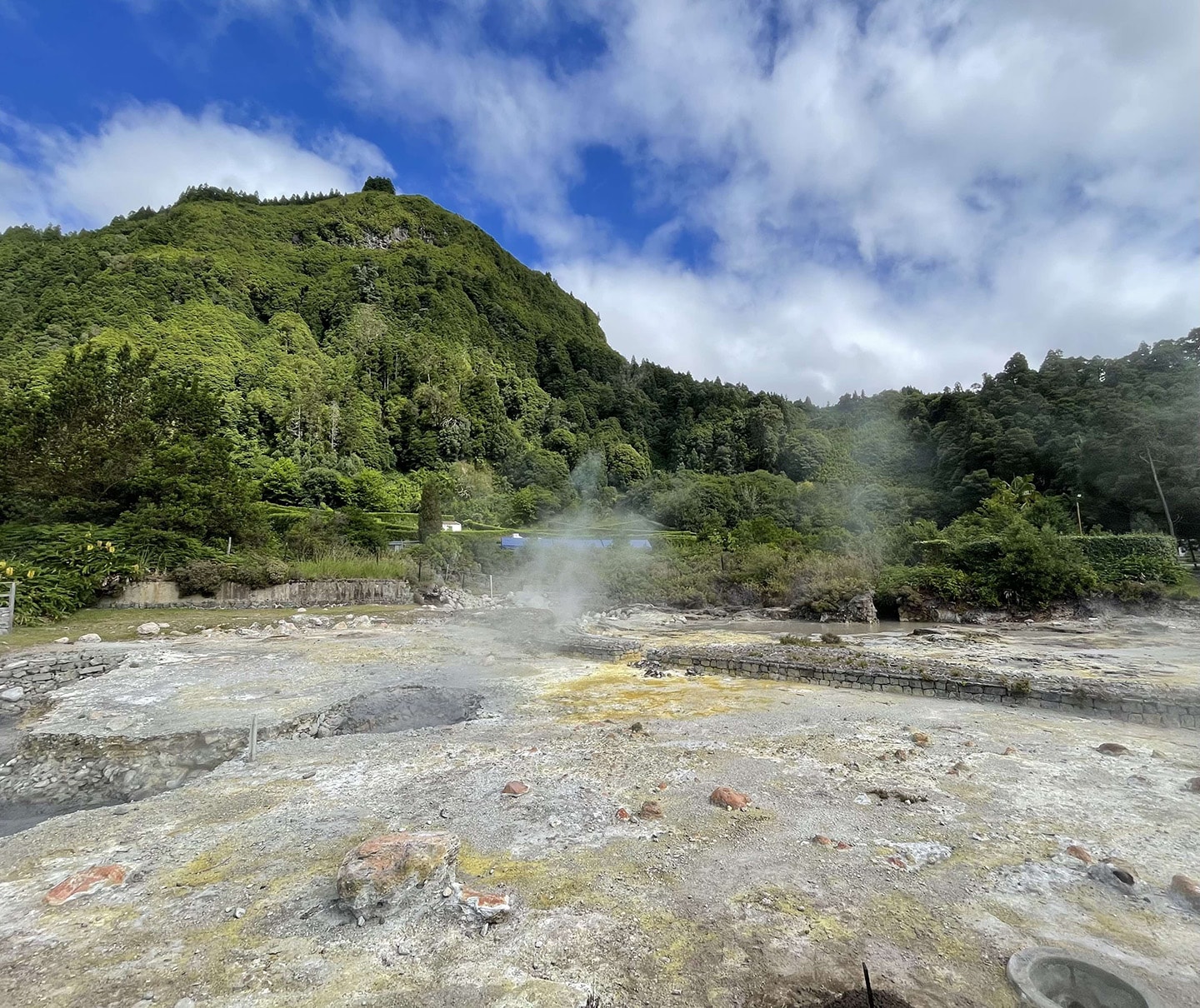
In the eastern part of the island one encounters another wonder: Lagoa das Furnas, a lake bordered by a path that leads, on its northern edge, to the Caldeiras das Furnas geothermal field. Here, the soil releases steam and boiling water and the natural heat of the earth is even used to cook the typical cozido das Furnas, a stew of meat and vegetables cooked slowly underground. The nearby village of Furnas is another not-to-be-missed stop, and a visit to the Terra Nostra Park, one of the oldest gardens in the Azores, home to a variety of one thousand eight hundred botanical species, is a must.
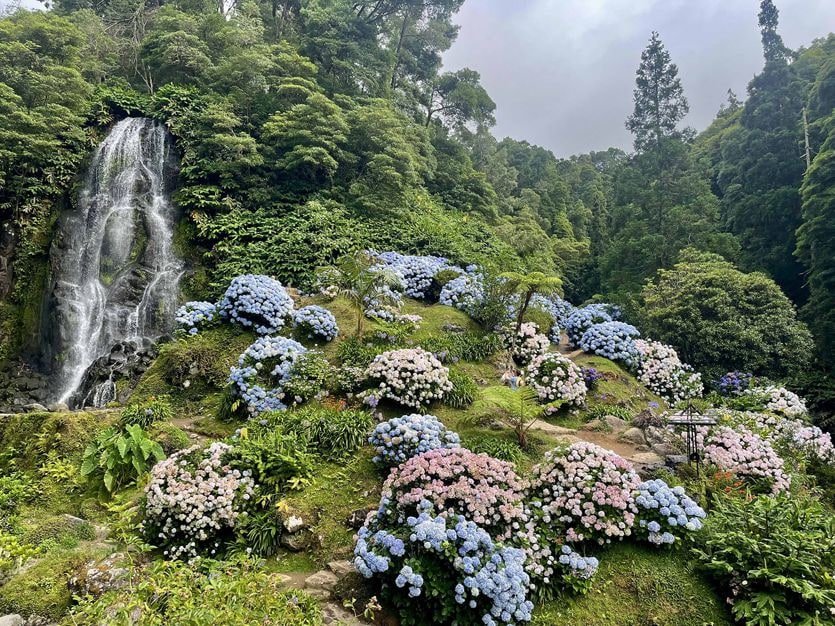
Inside, a thermal pool, fed by a volcanic spring, offers a unique wellness experience thanks to the 42 °C water, rich in iron and minerals beneficial to the skin. Continuing towards the north-east of São Miguel, you reach another postcard-perfect place: the Ribeira dos Caldeirões Park, with its waterfall surrounded by hydrangeas. For another change of scenery, drive along the east coast, in the Nordeste area, a scenic road dotted with viewpoints from which to admire the ocean and expanses of greenery.
Exotic flavours and traditions
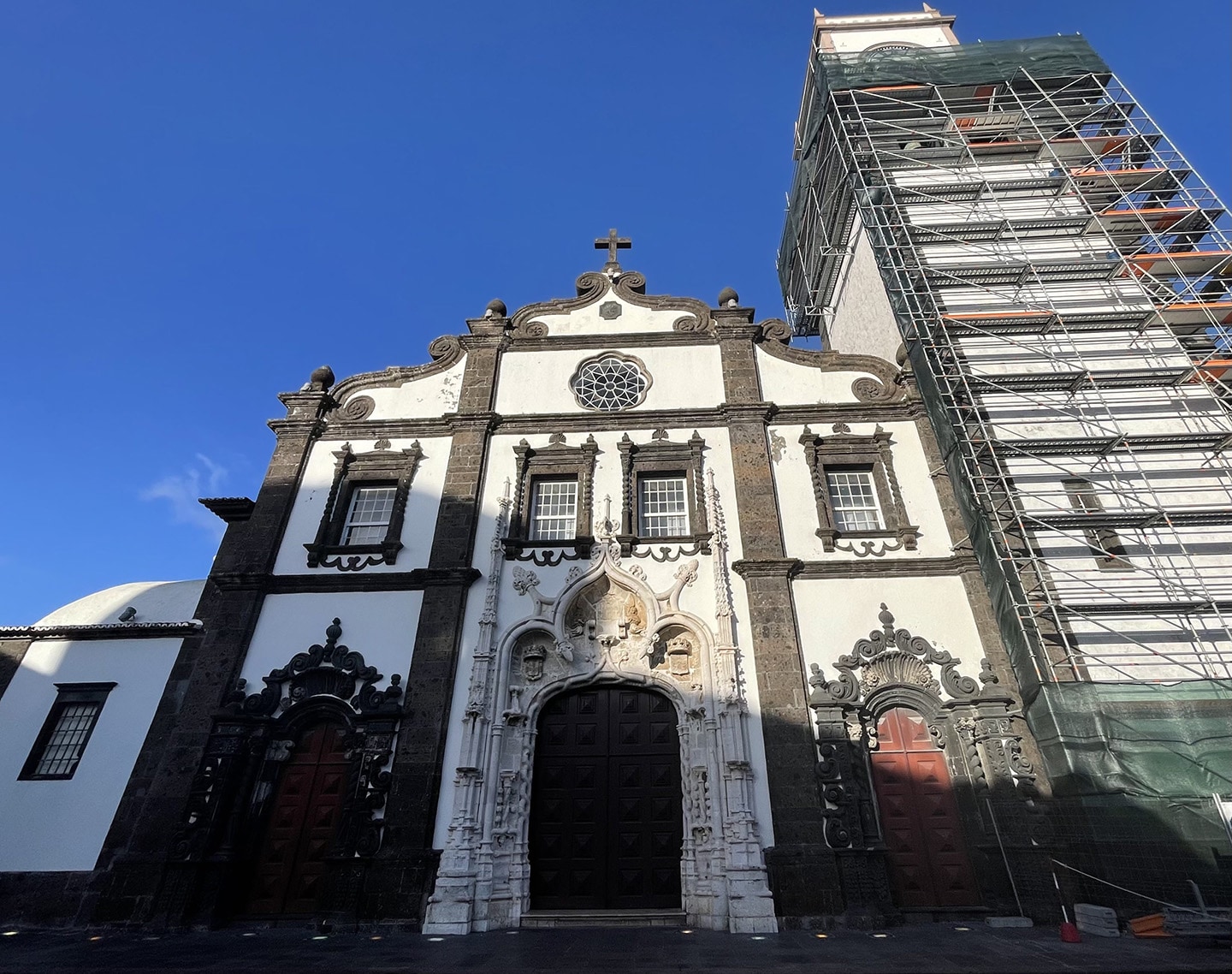
.Amidst lush valleys and volcanic scenery, São Miguel also impresses with its gastronomic traditions and the architecture of its oceanfront capital, Ponta Delgada. Here, styles from different eras coexist, in particular Manueline, Baroque and Gothic elements such as those that decorate the church of São Sebastião and the majestic portal of the Portas da Cidade, the symbol of the city.