Cars

Volkswagen considers closing a plant in Germany to reduce costs

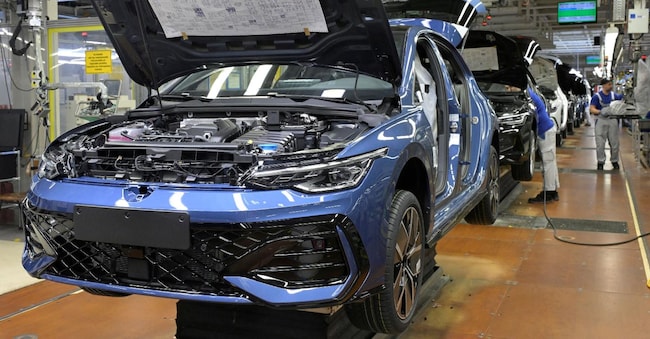
Volkswagen is considering closing one of its plants in Germany to reduce costs. This would be the first time in the company's history. The decision is motivated by the need to cut ten billion euros in costs by 2026 and to rationalise spending to support the transition to electric cars. Germany is losing ground in terms of competitiveness as a production location and the difficult economic climate is bringing German companies to their knees

3' min read

3' min read

One more certainty is wobbling for Germany: Volkswagen, the iconic German industrial giant, made it known on 2 September that it could no longer rule out closing plants in the country. This would be the first time in the 87-year history of the company. A shock, which the case places one day after another historic turning point: the victory of the ultra-right-wing Alternative für Deutschland in one Land, Thuringia. There is one thing in common: the prolonged economic crisis of the German locomotive, which swells the consensus of populist parties to the detriment of the government coalition and brings its most representative companies to their knees.

Auto Italy: -13.37% to 69,121 registrations in August, +3.83% in 2024

Loading...

Cut 10 billion

.

Volkswagen is to cut ten billion euros in costs by 2026. The group is planning to close a large car factory and a component production plant, which it considers obsolete. Also under consideration is the breaking of the pact made back in 1994 with the trade unions to freeze redundancies until 2029.

'The economic climate has become even more difficult and new players are entering Europe,' Managing Director Oliver Blume said in a statement. "Germany as a production location is losing ground in terms of competitiveness. This is also a kind of vote of no confidence in the government led by Chancellor Olaf Scholz .

The Volkswagen brand, which fuels the majority of the carmaker's sales, is the first in the group to undergo a cost-cutting exercise in an attempt to rationalise spending to support the transition to electric cars.

The group has lost almost a third of its stock market value over the past five years, making it the worst-performing of the major European carmakers. The delay on electrics has eroded its market share in China, where local rivals have rapidly launched consumer-accessible cars.

Volkswagen Id.3 Gtx, le foto dell’alternativa elettrica alla Golf Gti

Photogallery6 foto

The alarm clock has sounded

.

For Carsten Brzeski of Ing Research, the decision highlights the consequences of years of economic stagnation and structural changes without growth. "If such an industrial heavyweight has to close down factories, it could be the long overdue wake-up call that Germany's economic policy measures need to be significantly enhanced."

Fight announced

.

Works Council head Daniela Cavallo, a member of the IG Metall union, has already accused Volkswagen's managers of management failure, blaming the 'many bad decisions' of recent years, including not investing in the hybrid or speeding up the development of affordable electric cars. IG Metall called the announcement an irresponsible decision that 'shakes the foundations' of the company.

Finance director Arno Antlitz will address the staff together with Volkswagen brand manager Thomas Schaefer at a works council meeting tomorrow morning. CEO Blume may also be involved in the negotiations, which will echo heavily in the political debate. The Ministry of Economics has already made itself heard: 'Every company is responsible for its employees and its sites, and companies must take this responsibility when making decisions,' said a spokesman, adding that the ministry does not comment on the decisions of individual companies.

Volkswagen Golf GTI restyling, il video della versione aggiornata

300 thousand employees in Germany

.

Volkswagen employs about 680,000 workers worldwide, almost 300,000 of them in Germany. Previous clashes ended or shortened the terms of office of senior executives, including the former CEO, Bernd Pischetsrieder, the former head of the VW brand, Wolfgang Bernhard, and Herbert Diess, Blume's predecessor. All three sought to regain competitiveness, particularly in the German operations.

In the past, analysts have pointed to the plants in Osnabrück, Lower Saxony, and Dresden, Saxony, as potential closure targets. The state of Lower Saxony is Volkswagen's second largest shareholder and on Monday backed its decision. 'The coming weeks will probably be a time of intense discussions not about if, but rather how' the cuts will take place, said Premier Stephan Weil.

On the stock exchange, the German manufacturer's share gained 1.2%.

Copyright reserved ©
Loading...

Brand connect

Loading...

Newsletter

Notizie e approfondimenti sugli avvenimenti politici, economici e finanziari.

Iscriviti