
How the Volkswagen Group tries to cope with the crisis
The German colossus and its brands revise and adapt their all-in plans on electrics to the times. At stake is survival in a double challenge: competition from China and a relaunch on technology

3' min read
3' min read
The de profundis of the German car, with falling sales and plant closures in Germany. This is the situation that is increasingly being associated with the German car industry, where between falling numbers and unconfirmed announcements it feels like Napoleon at Waterloo. But while the Volkswagen Group's situation is certainly complex, there is good news on the other hand in terms of new developments, steps forward in hardware and software, greater flexibility and above all a focus on production costs. And as seen with Dieselgate, where many (mistakenly) announced its death or major downsizing, but in reality the event was followed by the most economically prosperous period in the history of the Wolfsburg group, history could now repeat itself although the advance of the Beijing brands.
Because despite the all-in (using poker jargon to mean betting all the chips you have on a single hand) in the matter of 'all electric', the group led by Oliver Blume is showing a flexibility of outlook that is not exactly typical of the German industry.
Translated? No dogma about announcements made unless backed up by numbers and new investment and long-term vision also in the field of internal combustion cars, as evidenced by the debut of the PPC (Premium Platform Combustion) platform brought out by the new Audi A5 (a model that replaces the A4 under the new acronym policy with even numbers used for fully electric models and odd numbers for thermal and hybrid) and also used by the new Q5, capable of mounting the E3 1.2 (End-to-End Electronic Architecture).
With five 'computer platforms' controlling all vehicle functions, the new architecture forms the basis for the digitisation of future models. The main objective of the E3 1.2, which was brought to debut by the Q6 e-tron, was to create a scalable and future-proof electronic architecture that could be used throughout the group, thus avoiding delays as happened with the Cariad division.
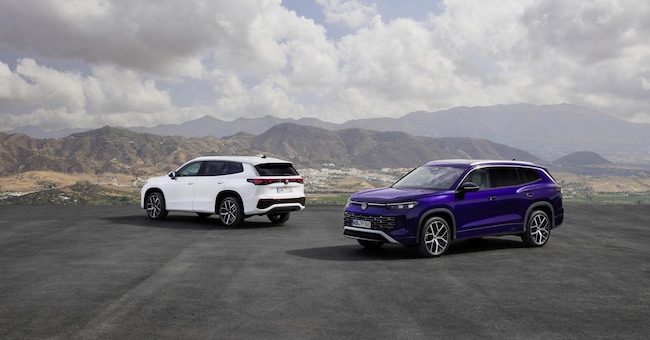
And it is precisely the Q6 e-tron also offered in a Sportback version that will be the real litmus test of the four rings' electric transition. Because if with the e-tron, later renamed Q8 e-tron, the technology was still immature and not up to the standards of native electric brands such as Tesla (hence the poor commercial success that caused the closure of the plant in Brussels), now the numbers are set to change thanks to the long-awaited technological equivalence between thermal and electric, as confirmed by the A6 e-tron with 750 km of autonomy.A situation that we find in the group's other brands, starting with Volkswagen, which has brought out its new plug-in hybrid engines, with low consumption even when the battery is flat, in the Golf 8.5, Passat, Tiguan and Tayron.

