
Volkswagen ID.Polo: how does this compact electric car handle on the road?
The new German electric car boasts a more traditional design, a functional interior and a range of up to 454 kilometres. We tested the 211 cavalli version

Key points
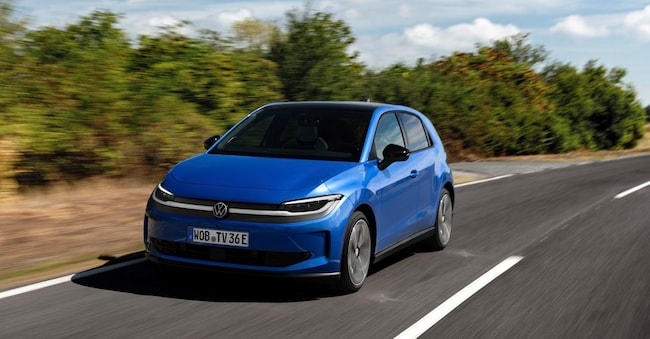
It’s called the ID.Polo, but the correct name really should have been ‘at last, the compact electric car that Volkswagen customers have been waiting for’. Following the lacklustre reception of the first ID range – which suffered mainly from a design that felt disconnected from the brand’s traditional production models and an interior that didn’t always measure up – the situation could now change rapidly. The ID.Polo features reassuring styling, a name that evokes the petrol-powered version, a more carefully crafted interior and handling that is well-suited to this type of car. We tested the most powerful 211 cavalli version and found it to be well-balanced and responsive.
Engines and range
First, however, a brief recap. The ID.Polo is built on the front-wheel-drive MEB+ platform, which it shares with the Cupra Raval, Škoda Epiq and Volkswagen ID.Cross. The 116 and 135 cavalli versions use a 37 kWh net LFP battery, offering a range of up to 329 kilometres and 90 kW DC fast charging. The 211 cavalli variant, on the other hand, features a 52 kWh NMC battery, offering a claimed range of up to 454 kilometres and a maximum charging power of 105 kW. A 226 cavalli GTI is also due to arrive in 2027. The dimensions remain compact, with a length of 4.05 metres and a wheelbase of 2.60 metres.
Home Affairs: the feature is back
The most noticeable improvement compared to the first-generation IDs is in the cabin. Volkswagen has put functionality back at the heart of the design, without relying solely on the touchscreen for every control. Physical buttons have returned to the steering wheel, and the same applies to the climate control, door panels and centre console. The 10.25-inch Digital Cockpit and the 12.9-inch central screen remain the focal points, but you don’t have to navigate through menus for the most frequently used functions. The materials and finish also give a more refined feel. There’s plenty of space, particularly in the rear, and the boot capacity is 441 litres.
ID.Polo: how does it handle on the road?
Power delivery is immediate yet progressive, and the front-wheel drive handles the torque well even when accelerating briskly. The steering is light but sufficiently precise, whilst the suspension prioritises stability and comfort without making the car feel sluggish when changing direction. Comfort remains consistently high. The rear end follows along composedly and the car’s behaviour remains predictable even when the pace is increased. This set-up is consistent with a compact car intended primarily for everyday use, where ease of driving and comfort count for more than performance. Fuel consumption was moderate during our first test drive, with the on-board computer showing an average of around 13 kW/100 km.
ID.Polo, price
In Italia, the ID.Polo Trend starts at 26,100 euros. The range also includes the Life and Style models, as well as the Edition 1. The 211 cv Style version we tested comes with a hefty price tag, with a list price of around 38,500 euros.

