
Volkswagen ID.3 Neo, with restyling the electric car improves software, Adas and equipment
It will debut in mid-April with updated style and content. Physical buttons on the steering wheel are coming.

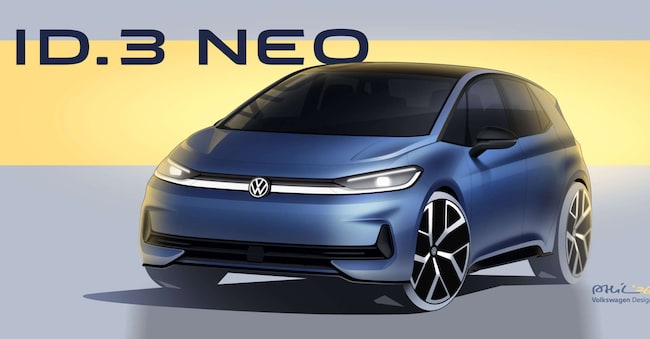
Volkswagen ID.3 gets a major update and does so starting with its name, which has become ID.3. Expected to make its world debut in mid-April, it will feature revised styling but above all a host of new features such as the latest generation of software, the new Innovision infotainment system, new equipment and in the future the arrival of the GTI version expected after the summer. Software and hardware are designed to meet new or future regulatory conditions. These include the requirements of the European Euro 7 emission standard, the Californian ZEV (Zero Emission Vehicle) standard and the EU GSR2 (General Safety Regulation 2) directive, which aims to further increase road traffic safety.
New Volkswagen ID.3 Neo
With the latest generation of software, the ID.3 Neo will debut new or improved features. These include, for example, the improved Travel Assist with traffic light detection and the One Pedal Driving function, with which the vehicle recovers energy until it comes to a complete stop.
Volkswagen Innovision
The new Innovision infotainment system, not only debuting in the ID.3 Neo but also available on other models, adds a range of services. A new app store has also been integrated into the system's In-Car Shop, allowing functions and services to be activated or extended digitally, even temporarily and vehicle-specifically. As with a smartphone, it is possible to download popular apps in the areas of audio, video streaming, parking, charging and gaming.
Volkswagen ID.3 Neo digital key
A digital key is now available as an option for all models. It allows access to the vehicle via mobile device (smartphone, smartwatch). The digital vehicle key complements the traditional key. The architecture of the controls has also been modified. All future ID. models have buttons on the steering wheel, which improve the intuitive use of the various functions.
Volkswagen ID.3 Neo Vehicle-to-Load
The new software generation also introduces in the ID. models the Vehicle-to-Load function, which allows electrical devices to be powered directly from the vehicle's battery, with a power output of up to 3.6 k via a 230 V socket inside the passenger compartment, or, with a separate adapter, using the Mode 3 connection of the charging socket.

