
Volkswagen secures Ducati: ‘No sale for the next three years’
The Borgo Panigale-based sports car manufacturer remains German, with hopes of a return to Italian ownership fading. Valued at 1.25 billion, the deal has been excluded from the parent company’s restructuring plan

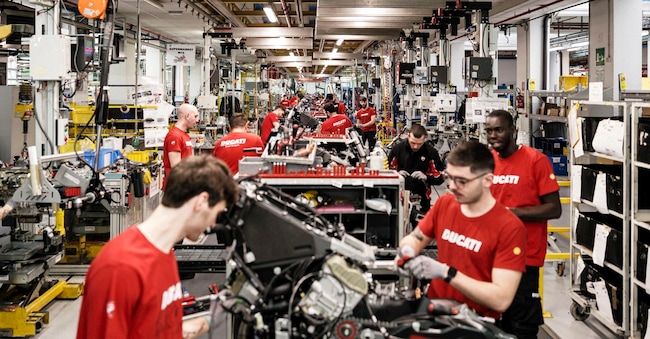
Ducati’s return to Italia looks unlikely. The Borgo Panigale-based manufacturer remains German, and will remain so for at least the next three years. After weeks of rumours, hints, denials and political manoeuvring, the Volkswagen Group has confirmed to *Il Sole 24 Ore* that ‘there are no plans to sell the Borgo Panigale-based manufacturer over the next three years’. This reassurance had been informally leaked following the face-to-face meeting on 25 September between the Minister for Enterprise, Adolfo Urso, and Audi’s top management, but at the time it had been overshadowed by a more cautious official stance: no decision on ownership and the matter was still under review as part of the portfolio review.
Four months on from the first rumours, the picture is now becoming clearer. In Germany, according to reports, there was never any genuine intention to sell Ducati. Rather, it was the massive reorganisation launched by Volkswagen – against a backdrop of the European car industry crisis and pressure from German trade unions – that put Borgo Panigale under scrutiny. The Future Plan 2030 envisages a reduction of around 50,000 jobs across the group and a radical overhaul of its more than 2,000 shareholdings: the portfolio is set to be reduced by around a third, retaining only those businesses capable of making a clear strategic and financial contribution to the core business.
In September, Audi CEO Gernot Döllner had specifically mentioned the brand amongst the assets under consideration, whilst making it clear that no decision had been taken. Since then, the matter had gained momentum, culminating in Bloomberg Intelligence’s valuation of the Emilia-based company in the event of a sale: approximately 1.25 billion euros. Acquired by Audi in 2012, Ducati continues, however, to stand on its own two feet. In 2025, it generated €925 million in revenue, €52 million in operating profit and delivered 50,895 motorbikes. These figures are below previous peaks, but they belong to a company that continues to finance its own programmes independently. CEO Claudio Domenicali explained this in July in these pages: ‘There are no open files at Borgo Panigale. Ducati does not need support from the parent company. We are completely self-sufficient.” The company forecasts around 100 million in capital expenditure per year, totalling 500 million over five years, whilst maintaining its premium positioning in a period marked by tariffs, unfavourable exchange rates and competition from Asia.
It was precisely the company’s financial stability that had fuelled the campaign in Italia for a possible return to Italian ownership. On 21 September, following a visit to Borgo Panigale with the President of Emilia-Romagna, Michele de Pascale, and the President of Confindustria, Emanuele Orsini, Urso had said: ‘The time has come for this company to return fully to Italian ownership.’ Four days later, in negotiations with Audi, the situation had already begun to cool. Now Volkswagen’s confirmation closes that window, at least until the end of the decade. It also raises a political question: if the parent company had no intention of selling, why mobilise the country’s political establishment so early?
For the most die-hard localists, the dream of seeing Ducati return to Italian ownership is fading. For Borgo Panigale, however, little changes: German ownership, an Emilian heart and industrial investments already in place.

