
Volvo EX60, how it goes and how much the Swedish electric suv costs
Over 810 km range, Gemini artificial intelligence on board and similar price to the XC60 hybrid

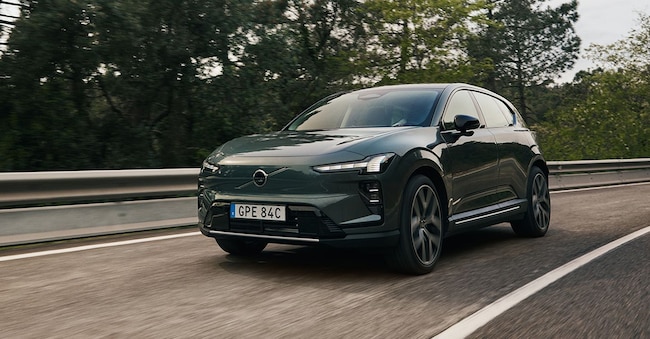
The Volvo EX60 confirms its full potential on the road, becoming a real alternative to endothermic models like the XC60 in terms of both performance and purchase price. As the first model built on the SPA3 platform, the EX60 brings a long list of firsts to the road, starting with Gemini artificial intelligence and efficiency never seen on a lithium-ion Volvo.
A true software-defined vehicle where the number of control units is drastically reduced but the computing power allows a long list of advantages starting with advanced level 2 autonomy driving, it can be ordered in combination with three engines with up to 680 horsepower and over 810 kilometres of range.
Volvo EX60 P10 AWD road test
Tested in the P10 AWD twin-engine version with 510 horsepower and 770 Nm of torque, it claims a Wlpt range of 660 km thanks to its 95 kW battery with a declared consumption of 15.7 kWh/100 km, very close to the 16.1 kWh/100 km obtained during our first contact. Driven between Barcelona traffic and an extra-urban route of about 100 kilometres between motorway and hills, the EX60 convinced us not only by its efficiency on the road but also by the right mix of comfort and driving dynamics. Credited with a sprint covered in 4.6 seconds and an electronically limited top speed of 180 km/h, thanks to the different driving settings it changes character and shows the great work done on the chassis and suspension despite its weight of 2275 kg. Conversations with Gemini's artificial intelligence are fluid, while a few more physical buttons on board, such as rear-view mirror adjustment, climate control and volume, would have been appreciated.
Dimensions
The EX60 is 4,803 mm long, 1,899 mm wide, 1,635 mm high and has a wheelbase of 2,970 mm. Aesthetically, it follows the stylistic course of the EX30 and EX90 but with a style characterised by greater dynamism and an overall line that places it between a wagon and an SUV. The lowered front end, sloping roofline and tapered flanks optimise its overall aerodynamic efficiency. As a result, the EX60 passes through the air with a very effective drag coefficient of 0.26. Built according to Megacasting methodology, a production technique that fuses many body parts into one large aluminium casting, reducing complexity, welding and weight while improving structure and sustainability, the EX60 is also the first Volvo to adopt cell-to-body technology, meaning the batteries become a structural part of the chassis.
Interior
The interior features a central screen positioned horizontally and no longer vertically, as on all Volvos of the last decade. Also making its debut on a Volvo is Gemini, Google's new AI assistant that enables natural conversation. The EX60 is equipped with the latest version of HuginCore, Volvo Cars' core system named after the mythological bird from Norse legends, which enables the car to think, process data and act. This is the first time Volvo Cars has given a name to its core system, which consists of the internally developed electrical architecture, the main computer, the zone controllers and the integrated software inside the EX60. Great computing power is provided by the Snapdragon Auto Connectivity platform from Qualcomm Technologies. At the heart of the EX60 is the Nvidia Drive platform, with accelerated data processing thanks to the Nvidia Drive Agx Orin on-chip system running on the DriveOS operating system. On-board space is ample, with a load compartment starting at 523 litres, plus 85 litres in the front compartment under the bonnet.

