
Von der Leyen: 'War in the Middle East costs the EU 500 million a day'
The Commission President, in her speech to the European Parliament, emphasised the need to reduce energy dependency and accelerate electrification
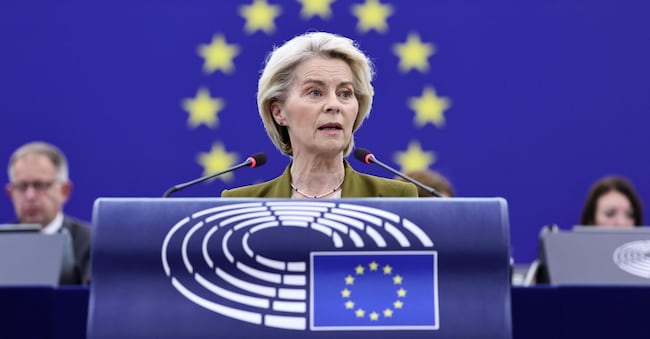
Five hundred million euros per day. That is the cost of the war in the Middle East for Europe. As emphasised by the President of the European Commission Ursula von der Leyen in her speech to the plenary session of the Eurochamber, "in just sixty days of conflict, our expenditure on imported fossil fuels has increased by more than 27 billion euro". The emergency, the president warned, could have consequences that will be felt 'for months or even years'.
The priority is to reopen Hormuz
The Commission leader went on to express Europe's position on the war in the Persian Gulf: "We all want the ceasefires in Iran and Lebanon to hold, with the ultimate goal of restoring peace and stability through diplomatic means". The goal is to achieve a lasting end to hostilities, so as to re-establish "full and permanent freedom of navigation in the Strait of Hormuz without tolls".
Loading...
Von der Leyen also added that a peace agreement would necessarily have to address the issue of Iran's nuclear programme, and emphasised the importance of cooperation between the EU and partners such as Egypt, Lebanon, Syria and Jordan.
Reducing European energy dependence
To deal with this new context, with the second energy crisis in four years, the watchword according to the Commission is 'independence'. "The way forward is obvious: we must reduce our over-dependence on imported fossil fuels and boost our domestic production of clean and affordable energy," von der Leyen told Strasbourg. The strategy to get rid of energy dependency also includes greater cooperation between EU members, so as to avoid internal conflicts between different interests.
The Commission's recipe: renewables, nuclear and electrification
In her speech to the European Parliament, von der Leyen cited Sweden as a virtuous example of an effective energy mix, with a combination of renewable energy and nuclear power covering the majority of national needs. In addition, she emphasised the importance of developing support tools for households and businesses that are mirrored to help the most vulnerable. Finally, the Commission aims to speed up the process of electrifying the Union, with a new plan coming before the summer.


Brand connect
Loading...
