
EU Commission approves framework for state aid against Middle East crisis. Von der Leyen: 'War costs us 500 million a day'
The Commission President, in her speech to the European Parliament, emphasised the need to reduce energy dependency and accelerate electrification

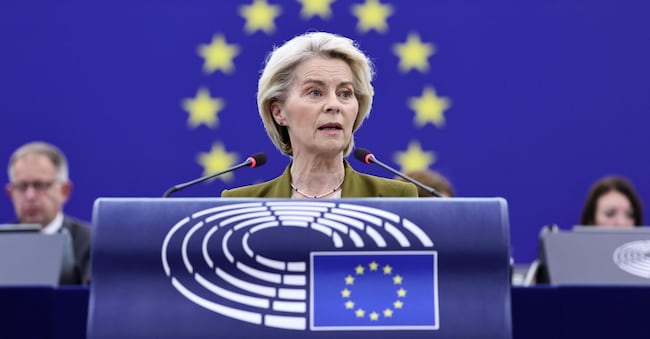
Five hundred million euros per day. That is the cost of the war in the Middle East for Europe. As emphasised by the President of the European Commission Ursula von der Leyen in her speech to the plenary session of the Eurochamber, "in just sixty days of conflict, our expenditure on imported fossil fuels has increased by more than 27 billion euro". The emergency, the president warned, could have consequences that will be felt 'for months or even years'.
Commission approves framework for state aid against crisis
Meanwhile, the European Commission approved a temporary framework for state aid to support sectors affected by the crisis in the Middle East (Metsaf) that allows Member States to grant aid to the most disadvantaged European companies, while preserving a level playing field in the single market. "This is a temporary and targeted measure, because the rules will be in force until the end of this year. Within that period, Member States will be able to modulate the temporary nature of the support according to the needs they identify," explained European Commission Executive Vice-President Teresa Ribera.
The measures identify agriculture, fishing, transportation and energy-intensive industries as the sectors directly and most affected. "Member States will be able to compensate up to 70 per cent of the additional costs incurred by beneficiaries as a result of the increase in fuel and fertiliser prices due to the crisis, compared to the levels before 28 February," Ribera said, adding that a simplified flat-rate compensation option of up to EUR 50,000 per beneficiary has also been introduced, aimed especially at small businesses.
The priority is to reopen Hormuz
In her speech to the Eurochamber, the Commission leader also expressed Europe's position on the war in the Persian Gulf: "We all want the ceasefires in Iran and Lebanon to hold, with the ultimate goal of restoring peace and stability through diplomatic means". The goal is to achieve a lasting end to hostilities, so as to re-establish "full and permanent freedom of navigation in the Strait of Hormuz without tolls".
Von der Leyen added that a peace agreement would necessarily have to address the issue of Iran's nuclear programme, and emphasised the importance of cooperation between the EU and partners such as Egypt, Lebanon, Syria and Jordan.

