
Von der leyen, strategies for new leadership

4' min read
4' min read
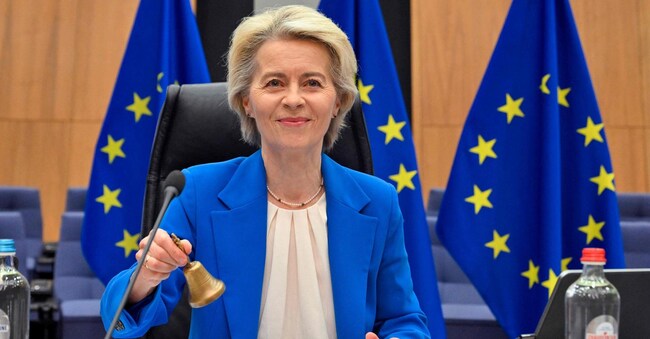
On 1 December, the new European Commission, chaired by Ursula von der Leyen in her second term, took office. Unlike in the past, the European Parliament (EP) did not force the replacement of commissioner candidates, but their appointment was opposed. The College of Commissioners polled fewer votes in favour than those that had elected the President four months earlier: 370 (51.4%) compared to 401 (55.7%). This outcome is unprecedented and marks an all-time low in voting for the Commission.
It should be recalled in this regard that, although Prodi had a plebiscite personal consensus (78%), he presided over a college of commissioners (1999-2004) that had garnered almost 90% of the EP consensus; and the college presided over by Barroso (2004-2009) came within 24 percentage points. Moreover, even in the case of von der Leyen's first mandate, the increase in the support rate between the two votes was 13 percentage points.
These figures indicate that, in the past, disagreements between pro-European political forces over the appointment of the President were reconciled through the prevailing Community spirit and the EP's open vote. Now, the opposite has occurred. As we have already written, the increase in conflict stemmed from two elements: the change, between July and November, of the Commission's policy agenda with the weakening of commitments to the Green Deal; the succumbing attitude of various EP components to national public opinion. The fact is that these two bodies face the arduous task of redesigning Europe's economic-institutional arrangements in a situation of unprecedented political fragility.
Some believe that this will increase the possibilities of centralising the management of the Commission in the hands of the President. Proof of this is that von der Leyen has decided to launch and chair a European automotive table, instead of entrusting it to executive vice-presidents Ribera or Séjourné. However, the current problems of the European Union (EU) call for strategic decisions and radical changes projected in the medium term and destined to alter the internal and external balances in the area. It is risky to pursue these goals relying only on the political strength of the President and resigning oneself to the fact that the EP lacks institutional maturity. Moreover, pending the German elections next spring, von der Leyen cannot count on the two past drivers of the European Council: Germany and France.
The question then arises: does the Commission president aim to forge a defensive alliance with the next likely German chancellor, Friedrich Merz, and other popular leaders even at the cost of watering down the necessary European production changes; or will she leverage the desirable future German political stability to implement the 'green' and technological transitions and to react to the Trump era and the growing geo-political conflicts threatening the EU? The hope is that the second option will prevail. The signing of the free trade agreement with Mercosur, which was the first move of the new von der Leyen presidency, and which was the result of a pre-existing work, was an important decision. This agreement must not, however, be reduced to a neo-mercantilist move to provide a market outlet for European companies with mature technology, following the well-established German tradition of relying on net exports for the area's growth. Instead, it should foster the technological leap of European industry - starting with the automotive sector - and signal to Trump that the EU does not allow itself to be squeezed between sterile regrets for multilateralism and a reluctant practice of trade wars. The EU would thus signal its capacity for strategic autonomy and its openness to the global South.

