
Vote of confidence in Von der Leyen: tensions and discontent in the European Parliament
The motion has little chance of being passed, but for the president of the Commission, the situation remains uncertain with a divided majority: this was confirmed by today's rejection of the urgency procedure on the Commission's new environmental goals, proposed by the Greens, Socialists and Liberals and rejected thanks to many popular MEPs who voted together with right-wing parties.
From our correspondent Beda Romano
 Aggiungi Il Sole 24 Ore
ai preferiti su Google
2' min read
2' min read
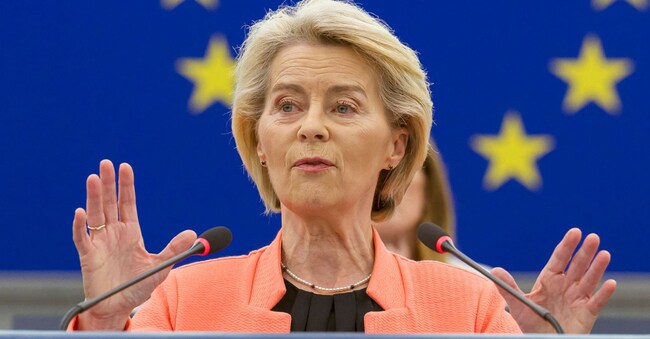
BRUSSELS - Tomorrow, Thursday 10 July, the long-awaited confidence vote on the work of European Commission President Ursula von der Leyen will take place. The motion tabled by a group of nationalist MEPs is unlikely to pass in the Strasbourg Parliament, if only because a double majority is required. At the same time, the vote will show the many cracks in the popular-socialist-liberal coalition, less than a year before the EU executive takes office.
Officially, the motion was tabled because of the president's decision not to publish telephone messages exchanged with executives of vaccine manufacturer Pfizer during the pandemic. In reality, there is growing dissatisfaction with Mrs von der Leyen that also concerns her majority. There are those who protest about the centralised management of the European Commission and those who accuse the president of not paying enough attention to Parliament.
More generally, there are also tensions between the majority parties, as emerged from a debate in the chamber earlier this week. Socialists and Liberals blame the Populars for betraying the political programme they agreed on last year. In particular, they consider that the Populars have lost the environmentalist streak, and do not hesitate to vote with the more radical right-wing parties when it comes to revising the Green Pact or tightening the screws in the fight against immigration.
Just today, Wednesday 9 July, Parliament rejected the idea of opting for urgent procedure when considering the Commission's proposal for a new environmental target for 2040. The parties that had proposed the simplified procedure - the Greens, the Socialists and the Liberals - wanted to reduce the competences of the rapporteur, an MEP chosen from the ranks of the Patriots. During the vote, many popular MPs voted against the urgency procedure, along with the right-wing parties.
Political analysts do not expect the no-confidence motion to pass, even with likely abstentions in the ranks of the socialists or liberals. Helping Mrs von der Leyen will be the voting modalities. For the motion to pass, two-thirds of the votes cast and a majority of the Members of Parliament (360) are required. Abstentions lower the two-thirds threshold, but it remains necessary to gather 360 votes in favour, a very difficult goal to achieve.


