
Vouchers and inspections: the government’s response to the obstacles facing fibre-optic roll-out
Butti: The Committee of Ministers will update the Ultra-Broadband Strategy. The aim is to achieve 52 per cent FTTH take-up by 2031

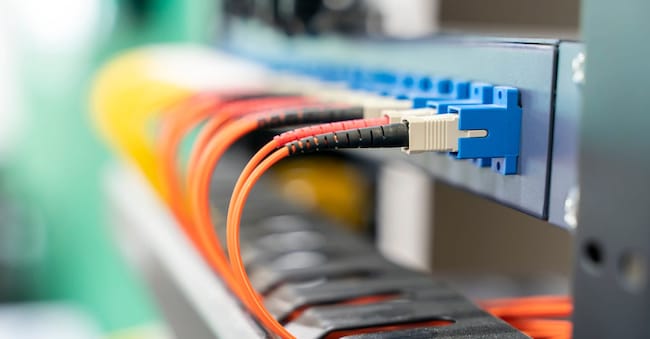
An odyssey of delays, missed appointments, technical objections and problems caused by the unsuitability of the buildings. In an investigation published last Sunday, Il Sole 24 Ore summarised the difficulties faced by consumers trying to subscribe to ultra-broadband via FTTH, i.e. fibre-to-the-home, where the fibre optic cable is supposed to reach the home.
The main operators involved in network roll-out (Open Fiber and FiberCop) and in selling connections to end customers (Fastweb+Vodafone, Tim, WindTre and Iliad) have answered three questions to explain what is holding the market back. This situation has probably been underestimated so far by the relevant government bodies. However, things are now beginning to move. The Under-Secretary to the Prime Minister’s Office with responsibility for Innovation, Alessio Butti, has announced that the issue will be placed at the heart of the update to the Ultra-Broadband Strategy, the document that will set out the initiatives for 2027–2030 (with the uncertainty of who will take office at Palazzo Chigi following next year’s elections).
The Strategy will be examined by the Interministerial Committee for Digital Transition at its next meeting. Given that the take-up rate (active connections as a proportion of the properties covered) currently stands at less than 30 per cent – which, in an international comparison, places Italy in a dismal fifth-last position – the aim is to reach at least 52 per cent by 2031. How? The Department for Digital Transition is considering a mix of demand-side vouchers and measures to increase transparency regarding properties that are not merely connected and theoretically ‘marketable’, but ready for rapid activation.
“When a critical issue arises, our task is to understand its causes and find a practical solution,” says Butti. “That is why the new Bul Strategy addresses the gap between network availability and actual usage. We are working on incentives, services and training to help citizens, businesses and public authorities make use of ultra-high-capacity connections. The Strategy we are drawing up aims for at least 52 per cent utilisation by 2031, with support measures and ongoing monitoring of results.” The point is that translating good intentions into concrete results – as demonstrated by the adoption of numerous plans and strategies across various sectors, regardless of the political leanings of the government that launched them – is by no means a foregone conclusion. “That is why,” adds the Under-Secretary for Innovation, “we are involving all the relevant authorities to develop a joint response.”
The government’s proposed measures
Among the package of measures currently under consideration, one that stands out is a voucher for ultra-fast fibre connectivity for households; the financial arrangements for this are being assessed in light of the potential number of beneficiaries to be supported. As for the technical issues highlighted in the *Il Sole 24 Ore* investigation, the current plan is to issue guidelines to operators to ensure greater transparency regarding connectivity provision, through the Communications Authority’s Broadband Map and other information tools on available technologies.


