Collecting

Walking sticks, a symbol of elegance

Not just for support, they hide many functions and stories to be enhanced
by Silvia Anna Barrilà

4' min read

<a class="classes-link-in" href="#U037066105Dez">Types</a>

4' min read

Today, the walking stick is considered an object for old age, but it was not always so. Its history is very old and over the centuries it has gone through moments of widespread popularity as a fashion accessory and symbol of social status. The oldest specimens, preserved in museums, date back to the 1500s, but there is also private, albeit niche, collecting. "Today, unfortunately, there is little generational turnover," notes Renzo Traballesi, a collector from Siena and president of Mondobastone, Associazione Italiana Cultori del Bastone. 'The cane suffers from the lack of interest that, in general, the world of antiques is experiencing. But it is a pity, because that of the walking stick is a wide world, rich in history and curiosities.

The types

.

To begin with, it is necessary to distinguish between at least two types of canes. The first includes the single-purpose ones, i.e. the classic standing sticks, which can be made of various types of wood and more or less decorated with ivory, silver and precious stones. Depending on the materials and workmanship, the values change, but so do the iconographies, which can range from animals to skulls to erotic themes (phallic shapes are said to have been linked to the homosexual world and acted as a code of recognition).

Loading...

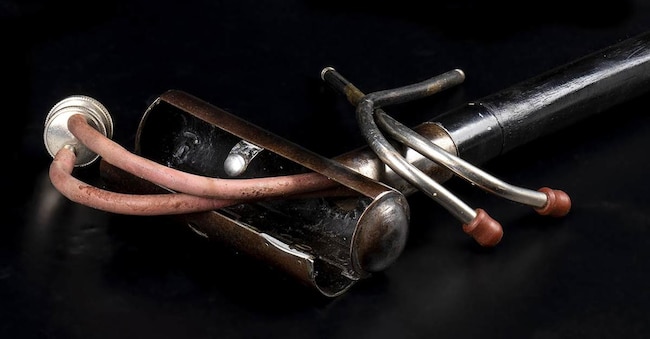
The second type gathers together the multi-purpose ones, which conceal another purpose, also called 'system' or 'animated'. For example, they may conceal a defensive weapon, such as a knife, pistol or rifle, or a wine or perfume bottle, or even a music stand. There were also sticks for smokers, containing a pipe; for watercolourists, with brushes; or related to the owner's profession, such as those for doctors, with all the equipment for home visits. The multi-function sticks are certainly the most curious and attract new buyers approaching this world for the first time, although real collectors usually concentrate on the single-function stick.
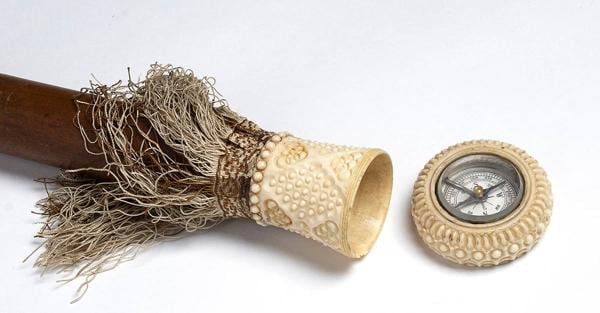
BASTONE DA CAPITANO DI MARINA CON BUSSOLA. INGHILTERRA INIZIO XX SECOLO. Impugnatura in avorio € 300/450. Courtesy Bertolami Fine Art

Periods and Origins

As in other fields, the older the stick, the higher the value: those from the end of the 17th century reach €7-10,000. Particularly sought-after sticks from this period are the 'pique' sticks, a craftsmanship that originated in England but was later revived and developed in the Neapolitan area.

In the following century, the use of porcelain, considered to be the gold of the 18th century, for the handle became widespread. Certainly in the stick, the price depends on the materials used and the workmanship; jewelled sticks, such as those by Fabergé, reach 20-25,000 €.
In both the 17th and 18th centuries, however, it was an indispensable accessory, also because of the heels that both men and women wore. Even in the 19th century it was considered fundamental, especially in the male world, together with the hat and tie, while in women's fashion it was replaced by the parasol.

With industrialisation in the 19th century, the cane ceased to be an object of craftsmanship and became a mass-produced object, hence extremely popular and less valuable. Values also decreased for collectors. They start as low as €50-100 for the simple sticks used in furniture today, which can also be found at flea markets, and go up to €1,500-3,000 for beautiful collector's sticks.

Another type of cane that became popular in the 19th century is the stick made entirely of carved wood. They were in great demand because they were handcrafted, usually by sculptors or even peasants, which made the cane unique and not replicable. In this case, they range from €300-500 up to €5,000-7,000.

If we look at provenance, England was certainly a nation that produced many sticks. Well known are those made by Thomas Brigg & Sons. But the French or German ivory ones are sometimes superior in quality. Italy also ranks very well in this area for the quality of its craftsmanship, but Italian sticks have found less international expansion.
With World War II, the fashion for the walking stick waned, but the phenomenon of collecting was born.

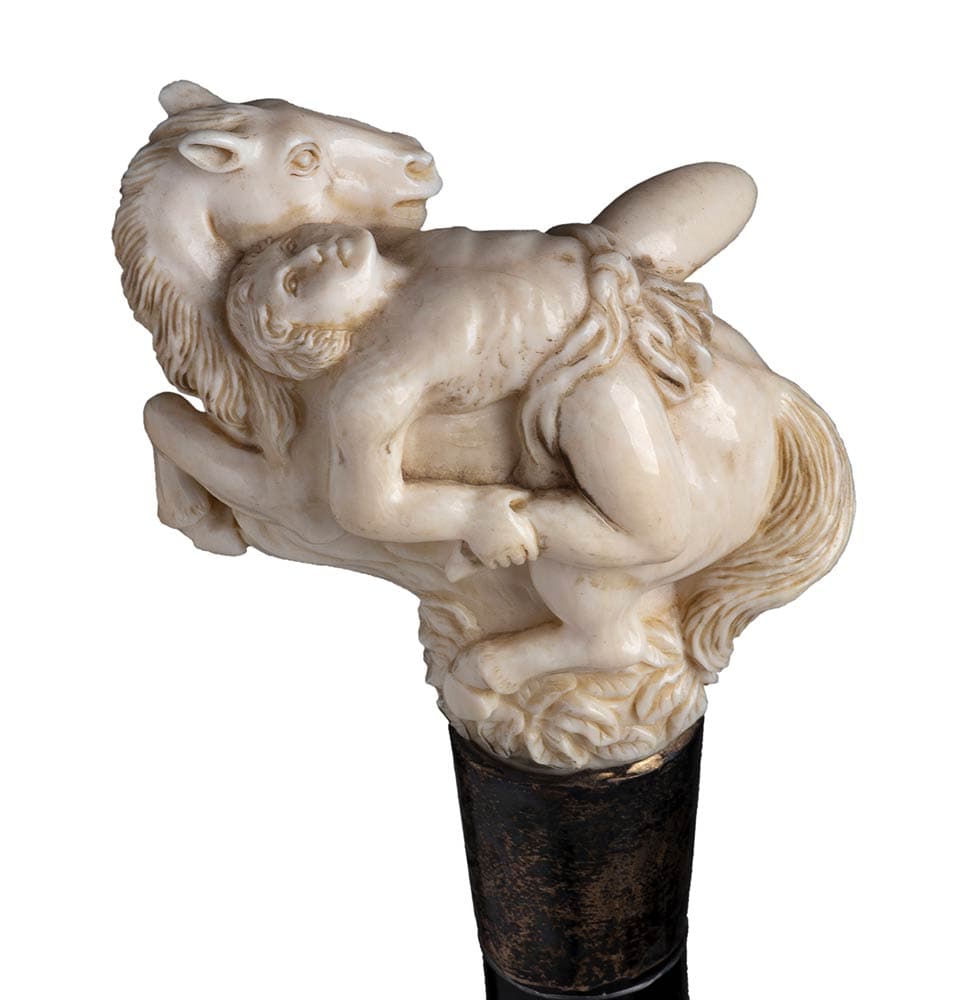
BASTONE MITOLOGICO. EUROPA FINE XIX SECOLO. Impugnatura in avorio asta in legno ebanizzato. Bibliografia “Bastoni “ ed. 2006 a cura di A. Gerardi, R. Traballesi, A. Zina, p. 76 nr. 100. € 1.500/2.500. Courtesy Bertolami Fine Art

All’asta

Dedicated auctions are not usually found and sticks are included in generic antiques auctions. For example, Pananti of Florence held a timed online auction last October with sticks ranging from €100 to €2,500, while Bertolami of Rome dispersed an important collection in 2019 at prices between €65 and €1,300. One element that represents a limitation to the market is ivory, as in those days it was widely used to decorate the stick, while today it is a material on which there are strict elephant protection restrictions and it is difficult to export to many countries.

There are only a few collectors in Italy, mostly from the Association mentioned above. 'Personally, I started collecting in the mid-1980s,' says President Traballesi, 'after discovering during a trip to Scotland a stick with a horn handle in the shape of an owl, the symbol of my contrada in Siena.

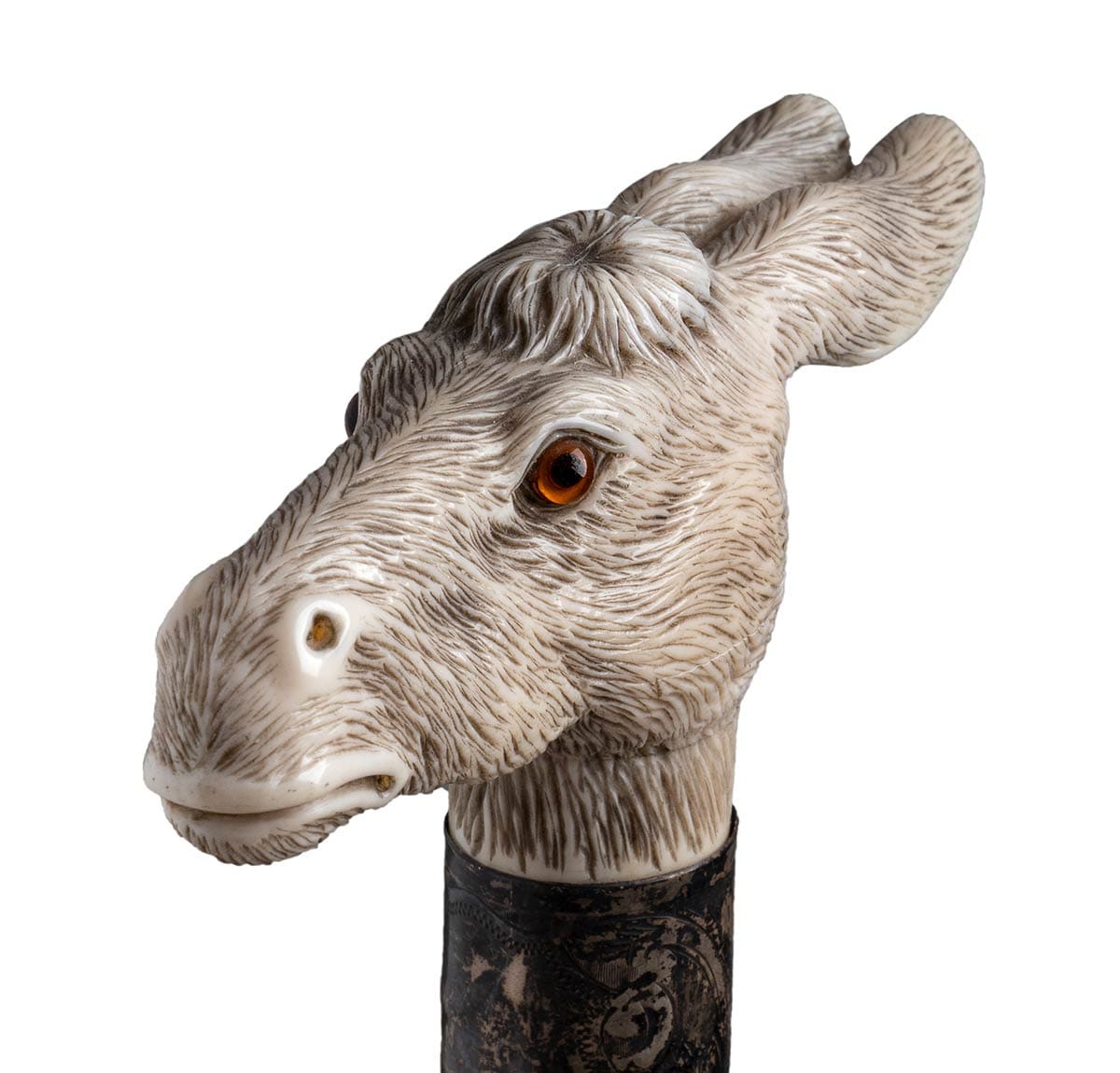
BASTONE ASINO. INGHILTERRA XX SECOLO. Impugnatura in avorio. € 1.500/2.500. Courtesy Bertolami Fine Art

The Exhibitions

.

Nor are there many exhibition opportunities. In 2006 there was a major exhibition in Siena in the Sala San Leopoldo of the Santa Maria della Scala museum complex, with 650 sticks from private and museum collections, which moved to Milan the following year.

Currently on display at the Triennale is the collection of about 200 sticks by the artist and designer Roberto Sambonet, who in the 1960s travelled to Asia and Latin America on behalf of Rinascente, to collect material for exhibitions, partly commercial and partly cultural, that illustrated the world to the Milanese, and collected materials, fabrics, masks, baskets and even sticks. In particular, he collected those for walkers, for mountaineers, for shepherds, often with a dual function, such as those for killing vipers, but also one for witchcraft.

Another exhibition at the Triennale during the Salone del Mobile, curated by Milan-based Japanese designer Keiji Takeuchi, collected a dozen contemporary sticks.

In October there will be another, smaller one in Martinengo, in the province of Bergamo. An opportunity to discover this currently undervalued world that could, however, make a comeback. Think, too, of the new dandies or personalities sporting it, such as Doctor House or Brad Pitt in various public appearances.

Copyright reserved ©
Loading...

Brand connect

Loading...

Newsletter

Notizie e approfondimenti sugli avvenimenti politici, economici e finanziari.

Iscriviti