
War does not stop repression in Tehran: 4,000 more young people arrested
Report by Human rights activists: 50 opponents executed since 28 February. In Iran we live with 50% inflation

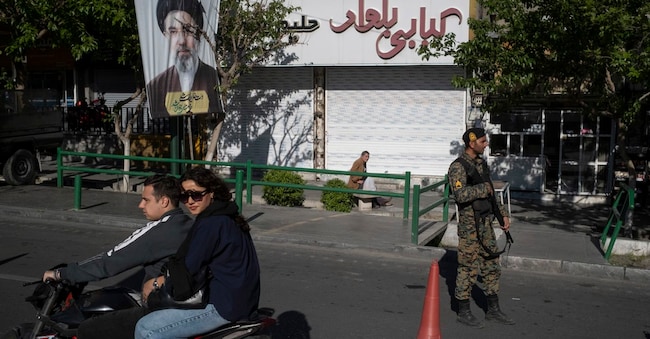
In the days between the start of the Tehran youth demonstrations against the ayatollahs and the outbreak of the conflict between Iran and the United States, the Iranian regime killed thousands of opponents. According to Iran International, more than 12,000 people were massacred in the first ten days of the demonstrations alone. After 28 February, however, news of political persecution at the hands of Tehran came in droves. What has happened in Iran in these two and a half months of war?
What has happened is that the bombs have not stopped the arrests and executions, nor helped the protesters. Since the US took the field, more than 4,000 people have been locked up on charges of espionage or threatening national security, almost all of them young people and students, and at least 50 have been executed. The numbers come from Human rights activists (Hra), who have just published a monitor of what happened in Iran between 28 February and 13 May. An accounting that is certainly on the low side, given that the organisation has chosen to report only the list - names and surnames - of the people whose fate it was able to verify beyond any reasonable doubt. Hra itself calculated the number of victims of last January's repression at 6,500, when most sources have always assumed far more.
The organisation's report then reveals all the difficulties of daily life in Iran today. There are 3.2 million displaced persons, at least 100,000 buildings are irreparably damaged. With the Internet operating at 1%, even air-raid alerts have struggled to reach the population, and anyone caught using Starlink is accused of espionage, resulting in arrest. In the capital, checkpoints of the Basij militia have sprung up like mushrooms: they stop people and vehicles, especially confiscate mobile phones. For males over the age of 18, there is compulsory conscription, but many children from the age of 12 onwards are nevertheless recruited by the Guardians of the Revolution in the mosques to work at checkpoints or provide other kinds of services.
39% of Iranians of working age today can only rely on undeclared work, inflation has soared by 50% compared to before the war - when it was already sky-high - the basic drug to treat diabetes has gone from 1.7 to 4.5 million rials. Oxygen cylinders for respiratory failure are unavailable and receiving medical treatment is increasingly difficult, with over 330 damaged health facilities including hospitals, clinic centres and Red Crescent stations. More than 170 electricity grid stations are damaged and blackouts in homes are frequent, as is the water supply and gas supply is erratic.


