
23 July 2026
Latest war news. Trump: ‘I am close to a decision on a massive attack on Iran’
The United States is stepping up its military presence in the Persian Gulf region. The US State Department has issued a warning about the risk of escalation
For feedback, please contact
english@ilsole24ore.com
 Aggiungi Il Sole 24 Ore
ai preferiti su Google
Summary by points
23 July 2026
Ghalibaf: ‘They wanted to punish Iran, but they’ve ended up punishing themselves with three-figure oil prices’
Iran’s chief negotiator and Speaker of Parliament, Mohammad Bagher Ghalibaf, has derided the US military strategy aimed at weakening Tehran’s ability to control the Strait of Hormuz: “They wanted to punish Iran. Instead, they’ve punished themselves with three-figure oil prices. A 10/10 strategy,” said Ghalibaf on X. Today, for the first time in two months, oil prices have risen above $100 a barrel following the Houthis’ attack on two Saudi oil tankers, whilst a further escalation of the conflict threatens to exacerbate disruptions to global oil supplies.
23 July 2026
Kuwaiti Army: Iranian missile and drone attacks intercepted
The Kuwaiti army has announced that its air defences are “repelling missile and drone attacks” attributed to Iran, according to a statement released on social media. “The General Staff of the Armed Forces states that ‘should any sounds of explosions be heard, these are due to the interception of hostile attacks’.”
23 July 2026
Oil closes up 6.39% in New York
Oil prices closed higher in New York on the back of tensions in the Middle East, fuelled by the situation in the Red Sea and threats from the Houthis, Iran’s allies in Yemen: WTI, the US benchmark, rose by 6.39% to $92.38 per barrel, whilst Brent, the international benchmark, rose by 7% to $100.65. Go to Brent and WTI prices.
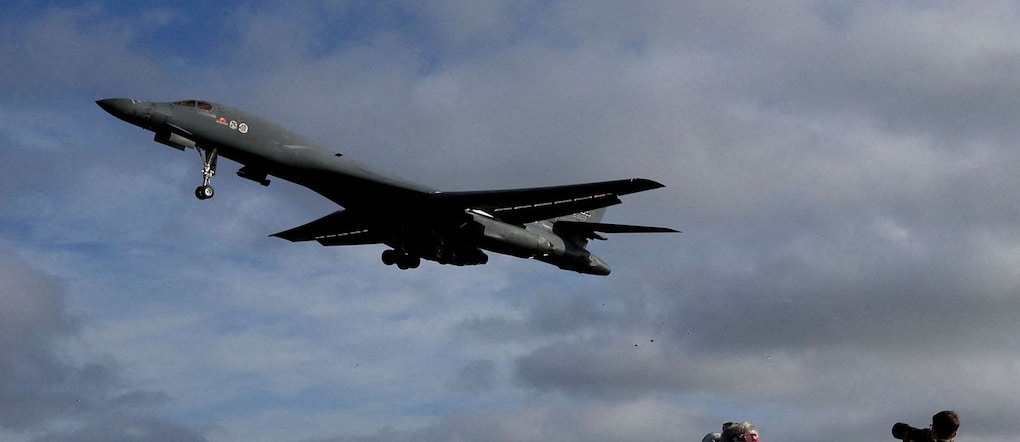
Un superbombardiere B-1. REUTERS/Toby Melville/File Photo REUTERS
Ask the editorial team
Have questions or feedback about this article? Contact our editorial team.
23 July 2026
Fertitta: It’s up to Trump, but I don’t foresee any major changes to US troops in Europe
“Of course, it is up to the President to decide, but personally I do not foresee any major changes.” This was the view expressed by the US Ambassador to Italia, Tilman J. Fertitta, in response to a question about whether he anticipated a gradual reduction in US troops in Europe and, in particular, at the Aviano base (Pordenone). “I haven’t seen any changes yet,” Fertitta continued during a press conference on his yacht, the Boardwalk. “I believe President Trump has made his views clear: he is not satisfied with NATO. He makes statements that reflect what he would like to see happen, and he may well follow through on them. However,” he concluded, “I think there is a very good chance that troop numbers here will remain largely unchanged. The Italians are extraordinary partners of the United States when it comes to all these bases.” On the subject of the military, Fertitta said he had been very “impressed by the incredible cooperation between our armed forces and the Italian armed forces, as well as between the police forces. Many Italian officers have trained in the United States and, at the same time, many American military personnel come here to Italia for training,” he noted. “You should be very proud of the professionalism of the Italian armed forces and law enforcement agencies: they operate at a truly very high standard.”
23 July 2026
Kuwait: ‘New drone attacks on the border with Iraq’
The Kuwaiti army has stated that a new drone attack has been launched against one of its border crossings with Iraq. “The Al-Abdali border post was once again targeted this evening by enemy drone attacks, which caused material damage but no casualties,” the army headquarters said in a statement posted on social media. The Gulf state has repeatedly been targeted by missile and drone attacks attributed to Iran, amid the escalating conflict between Washington and Tehran. The Kuwaiti armed forces have intercepted hundreds of ballistic missiles and drones since last February, with several soldiers injured and damage to civilian infrastructure, including a major desalination plant hit in mid-July. Iran has recently claimed responsibility for new raids against US military bases on Kuwaiti territory and has announced further drone attacks. Meanwhile, on the border between Iran and Iraq, a US raid on the Shalamcheh crossing caused deaths and injuries and disrupted a major trade route, triggering retaliatory drone strikes against oil facilities in southern Iraq and the Al-Abdali crossing. Kuwait has strongly condemned the attacks, holding Iran “fully responsible” and warning of the risk of regional destabilisation.
23 July 2026
US: Senate rejects motion against Trump over the war in Iran
The US Senate, with 47 votes in favour and 49 against, failed to pass a resolution on President Donald Trump’s powers regarding the war in Iran. As CNN points out, this was the first direct vote on the issue since the end of the ceasefire.
The resolution was intended to force Trump to seek congressional approval for further military action within or against Iran.
Earlier that morning, the House had voted to limit Trump’s war powers by passing a similar measure.
In June, during the ceasefire, the Senate had adopted a resolution calling for the withdrawal of military forces from Iran, only to retract it the following day after failing to secure the passage of a similar measure on the powers of war.
This is the twelfth time the Senate has voted on a resolution on war powers against Iran since the start of the year.
23 July 2026
Iran: US missile strikes the island of Qeshm
A US missile has struck a site near the town of Suza, on the island of Qeshm in the Strait of Hormuz, according to the Iranian news agency Tasnim. “The relevant authorities are assessing the scale of the incident and the extent of the damage,” the agency reports.
23 July 2026
Lebanon: Israeli attack in the south; several rescue workers injured
An Israeli drone fired a missile at a vehicle belonging to the Islamic Health Authority in the Natabieh al-Fawqa area, in southern Lebanon. This was reported by the Lebanese news agency NNA, which stated that several rescue workers were reportedly injured.
According to the news agency, the attack took place at the same time as a “heavy artillery barrage” on the outskirts of Nabatieh al-Fawqa.
23 July 2026
Defence: why rearmament in Europe depends (in part) on Chinese cotton


In the great arms race, Europe is catching up, to the extent that Germany alone is now producing heavy artillery ammunition at more than twice the rate of the United States. The paradox is that there may not be enough explosives and propellants for the shells to actually be used.
As is often the case, the problem – which generally affects NATO countries – lies in the bottlenecks that hinder the supply of certain key raw materials. In this sector, these are not rare earths or other critical minerals, but the more mundane cotton – or rather, cotton linters, that is, the short fluff that covers the seeds after the first ginning process.
23 July 2026
Trump: ‘I am close to making a decision on a massive attack on Iran’
“If I asked them,” Trump told Axios, Israel “would join in within two minutes” of any attack. But “we don’t need anyone” to launch a new operation, he added. The US president reiterated that Iran “wants to negotiate”, but is not currently ready to reach a deal. “They haven’t suffered enough yet,” he commented.
23 July 2026
Attacks on Saudi oil tankers: Germany ‘very concerned’
Germany is “very concerned” following the attacks on Saudi oil tankers in the Red Sea, claimed by the Iran-backed Houthi rebels in Yemen, which “point to a possible escalation” of the conflict in the Middle East. This was stated by the German Defence Minister.
"The situation is clearly heading in the wrong direction", said Boris Pistorius during a visit to a facility belonging to the defence firm Hensoldt in Oberkochen, in south-west Germany, adding that “at present, there is nothing – absolutely nothing – to suggest that a ceasefire, let alone peace, can be achieved in the region”.
23 July 2026
Another blow for Trump: yet another House resolution against war in Iran
The US House of Representatives has passed another resolution condemning the hostilities in Iran. With 214 votes in favour and 208 against, MPs gave the green light to the resolution on war powers, in what amounts to a slap in the face for Donald Trump. Four Republicans voted alongside the Democrats. The House and the Senate have already passed resolutions on war powers, but the attacks in Iran have continued. The Senate is due to vote on its own resolution on war powers in the coming hours.
23 July 2026
Iran, al-Arabiya: ‘Iraqi militia has carried out attacks against Gulf states and Jordan’
A pro-Iranian Iraqi militia, known as ‘Awliya al-Dam’ (The Avengers of Blood, ed.), is reported to have carried out attacks against Jordan, Kuwait and Saudi Arabia, presenting them as operations targeting US bases in the region. This was reported by the Saudi-owned broadcaster al-Arabiya, citing its own sources, according to which the militia counts advisers from the Revolutionary Guards amongst its ranks. The same sources specified that the attacks against Jordan and Kuwait were carried out using drones launched from Iraqi territory. The pro-Iranian Iraqi Shia factions – the sources claim – have also significantly enhanced their capabilities through the use of drones equipped with advanced technology, setting up operational cells comprising personnel specialised in launching these drones. Iraqi Prime Minister Ali al-Zaidi, who is visiting Tehran today, has issued an ultimatum, setting 30 September as the deadline for the disarmament and disbandment of pro-Iranian militias.
23 July 2026
Netanyahu: Riyadh’s accession to the Abraham Accords would be a historic step
The office of Israeli Prime Minister Benjamin Netanyahu has welcomed the possibility of Saudi Arabia joining the Abraham Accords. “Saudi Arabia’s accession to the Abraham Accords would be a historic step forward for peace in the Middle East, a peace built on strength,” reads the statement published in English. The statement goes on to say that “joint US-Israeli military action in Iran against the genocidal regime and the collapse of the Iranian terrorist axis at the hands of Israel have created the opportunity to widen the circle of peace”. This was reported by Ynet.
23 July 2026
Trump: Nuclear deal with Riyadh conditional on adherence to the Abraham Accords
The agreement between the United States and Saudi Arabia on a Saudi civil nuclear programme requires the Kingdom to normalise relations with Israel through the Abraham Accords. This was stated by US President Donald Trump in a post on his social media platform, Truth. “The civil nuclear agreement (there will be no enrichment of material!) currently being finalised between the US Department of Energy and Saudi Arabia, which concerns exclusively non-military uses such as those already in place in Iran and the United Arab Emirates (and other countries), will be approved, but is entirely contingent upon Saudi Arabia’s adherence to the highly respected and highly successful Abraham Accords,” wrote Trump. “The United States,” he added, “is not opposed to civil nuclear facilities (not intended for enrichment).” The Abraham Accords are a series of treaties aimed at normalising diplomatic and economic relations between Israel and various Arab nations with Muslim majorities.
23 July 2026
Trump: ‘If the Houthis attack again, we will hold Tehran responsible’
Donald Trump has issued a warning to the Houthis and Iran following the attacks on commercial vessels in the Red Sea. In a post on the social media platform Truth, Trump stated that the United States “will hold Iran responsible” should the Yemeni group repeat its attacks on Saudi vessels. “If they do it again, the United States will hold Iran responsible, as the Houthis are a surrogate and/or proxy for Iran,” Trump said. “Significant military punishment will be meted out to Iran and, of course, to the Houthis themselves,” Trump added, describing himself as “very disappointed” with the Yemeni group, which “had acted very professionally and intelligently until now”.
23 July 2026
Iran: Tehran spokesperson criticises US policy of collective punishment
The US administration ‘intends to sacrifice what remains of international humanitarian law and the foundations of human ethics and civilisation to its insatiable appetite for war and massacre’. This was denounced by the spokesperson for the Iranian Foreign Ministry.
He stated that Washington is pursuing “a policy that involves the destruction of bridges and power stations, conduct that is blatantly illegal and criminal”. This “constitutes retaliation and collective punishment, both of which are explicitly prohibited as war crimes under international humanitarian law”, the Iranian official added. He urged military personnel to refuse unlawful orders and stated that Iran would firmly oppose ‘illegality’.
23 July 2026
Iran is using the Houthis to threaten global trade and European security
The Houthis’ decision to close the Bab el-Mandeb Strait and impose a naval blockade against Saudi Arabia is neither an isolated incident nor a mere local act of retaliation. It is the latest sign of a plan aimed at destabilising the entire Middle East and striking directly at the very heart of global trade. Freedom of navigation, a cornerstone of international law, is being turned into a geopolitical weapon to disrupt trade and energy routes, and to bring our production system and our economies to their knees.
But this escalation has not come out of nowhere. It is the result of a well-thought-out strategy by Tehran, which for years has been using its proxies as tools of destabilisation, transforming militias and armed groups into actors capable of striking on multiple fronts. A decentralised network operating with tactical autonomy but with a common goal, with the sole aim of weakening its neighbours, disrupting maritime routes, and bringing the West and Europe to their knees. Meanwhile, the Iranian theocracy continues to repress its own people, massacring young people – and above all young women – who are demanding freedom and rights – a moral tragedy that should have mobilised the international community but which has, all too often, been ignored – and aims to throw the entire region into turmoil through instability, conflicts, naval blockades and attacks on strategic infrastructure.
23 July 2026
Yemen: Houthis say Saudi Arabia’s embargo will continue until the blockade against us is lifted
The naval blockade against Saudi Arabia will remain in place until the Saudi blockade against the Houthis – which has been in place for years – is lifted. This was stated by a senior Houthi official in Yemen. Saudi Arabia leads a coalition against the Houthis and, in 2015, imposed an air and sea blockade on Yemen. The Yemeni civil war began in 2014, when the rebels seized the capital, Sana’a, and much of northern Yemen, forcing the government into exile. A ceasefire was reached in 2022. This truce has been jeopardised in recent days after the Houthis claimed that the Saudis had struck Sana’a airport in an attempt to target a flight bringing Houthi leaders home from Iran, where they had attended the funeral of Ayatollah Ali Khamenei. The aircraft landed safely at another Yemeni airport. The Houthis then launched missiles and drones at Abha International Airport in Saudi Arabia, in the most serious clash in recent years.
-U11442087238rum-600x313@IlSole24Ore-Web.jpg)
Il portavoce militare degli Houthi, Yahya Sarea, mentre rilascia una dichiarazione televisiva a Sana'a, nello Yemen, il 20 luglio 2026. Gli Houthi yemeniti hanno annunciato un embargo marittimo contro l'Arabia Saudita nel contesto di crescenti tensioni a seguito del bombardamento dell'aeroporto di Sana'a del 13 luglio, secondo una dichiarazione del portavoce militare degli Houthi Yahya Sarea. EPA/YAHYA ARHAB
23 July 2026
Iran, media: Iraqi Prime Minister brings messages from Trump to Tehran
The arrival of Iraqi Prime Minister Ali Falah al-Zaidi in Tehran today comes against a backdrop of growing regional tensions, whilst Baghdad continues to pursue a delicate policy of balancing relations between the United States and Iran. This is his first visit to Tehran just a few days after his official mission to Washington, a trip that has provoked reactions and harsh criticism in Iranian circles, particularly from Ali Akbar Velayati, a long-standing adviser to the late Supreme Leader. According to a source within the Iraqi government, the Prime Minister’s trip has a significance far beyond what has been publicly stated, reports the Qatari broadcaster Al Jazeera. “It consists of a series of political and economic signals directed specifically at the Iranian leadership,” the source explained. The first message is that Baghdad wishes to demonstrate ‘goodwill’ and reassure Tehran that the recent visit to Washington ‘is not intended to harm Iran nor is it at the expense of bilateral relations’, the source maintains. The second message, according to the same source interviewed by the Qatari broadcaster, is to reassure Tehran that Washington “does not intend to overthrow the Iranian system and that the harsher statements made by some US officials should be viewed in the context of the ongoing war and the political and media pressure”. Al-Zaidi also intends to push for new informal regional arrangements – a sort of ‘gentlemen’s agreement’ between the parties to the conflict – convinced that the region has reached ‘a point where it is urgent to halt the escalation and put an end to direct confrontations’, notes Al Jazeera.
23 July 2026
Guerra in Iran e Medio Oriente, 23 luglio 2026
Photogallery11 foto
23 July 2026
Iranian Army: ‘Retaliation will continue as long as we are under attack’
The Iranian army stated today that it will continue its attacks in the region until the attacks on Iran cease. “The armed forces’ retaliatory strikes will continue as long as US attacks on the country’s infrastructure and coastal areas persist,” said army spokesman Mohammad Akraminia, as reported by Iranian state television, adding that the country is ready to face “any hostile scenario”.
23 July 2026
Rubio responds to Tehran: Trump’s stance is ‘an eye for an eye’
“US President Donald Trump’s policy is ‘an eye for an eye’.” This was stated by US Secretary of State Marco Rubio, in response to a question regarding the fact that Iran’s Foreign Minister, Abbas Araghchi, had claimed that Tehran’s ‘defence doctrine’ is ‘clear’ and is ‘an eye for an eye’. The Secretary of State then went on to discuss the Houthis in Yemen, saying that “they have been misled by Iran”. Rubio added that he hopes the Houthis will work towards de-escalation.
23 July 2026
Rubio: ‘They’ll keep paying more and more until they come to their senses’
For Iran, “every night the price keeps going up” and it will continue like this “until they come to their senses”. This was stated by US Secretary of State Marco Rubio in Manila on the sidelines of the ASEAN ministerial meeting, according to Sky News. The Secretary of State was responding to a question about President Donald Trump’s threat to strike bridges and power stations in Iran, which he made yesterday on social media. According to Rubio, Iran, “begging every day”, is trying to reach an agreement, but the problem is that it either wants to “break it… or change it. ‘Iran is clearly not ready to reach an agreement, at least not one it is prepared to honour,’ he concluded.
23 July 2026
Rubio: Iran ‘is not yet ready to conclude a peace agreement’
The United States believes that Iran is not yet ready to reach an agreement, but the situation will change soon, US Secretary of State Marco Rubio said today. “They are probably not yet ready to reach an agreement, but they will be soon because the price they are paying is very high,” Rubio told reporters in Manila. The United States acknowledges that Iran will change its stance on peaceful dialogue with the United States in the coming days, the official said, adding that the United States has never stated that its objective is a change of power in Iran, but rather denuclearisation. Commenting on a possible escalation of the conflict with Iran in the coming days, Rubio said that it would be US President Donald Trump who would make a decision on the matter.
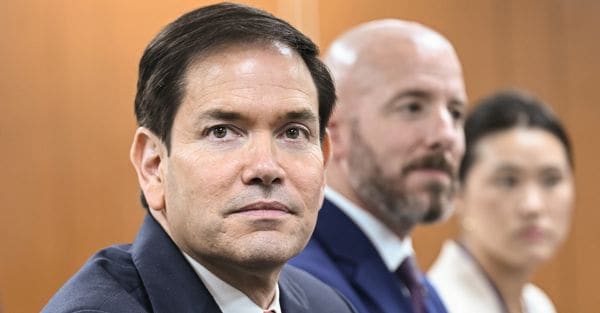
Il Segretario di Stato statunitense Marco Rubio, giovedì 23 luglio 2026. (Brendan Smialowski/Foto Pool via AP)
23 July 2026
US bolsters military presence in the Gulf; Trump considers new options
The United States is bolstering its military presence in the Middle East by deploying special forces, medical personnel and new military assets, whilst President Donald Trump is considering a possible expansion of operations against Iran. This is according to sources familiar with the matter, as reported by the Wall Street Journal. According to the sources, special forces units have been deployed to the region over the past week, whilst fighter squadrons have been repositioned in various Middle Eastern countries. Furthermore, bombers stationed at bases in the United States and the United Kingdom have been placed on high operational alert. Furthermore, over 150 healthcare workers have been sent in recent days to the Landstuhl Regional Medical Centre in Germany, the main facility for treating US military personnel wounded during operations in the Middle East. These measures follow the killing of three American soldiers in an attack in Jordan attributed to Iran, and the death of a fourth soldier in Iraq during the controlled detonation of an Iranian drone. According to retired General Joseph Votel, former commander of Centcom, the reinforcement of forces does not necessarily imply an imminent large-scale offensive, but aims to ensure that the President and the Secretary of Defence have maximum flexibility in the military options available to them. The Pentagon has not commented in detail on the troop movements, citing operational security, whilst the White House has reiterated that Trump ‘always has all options available’. According to sources, the reinforcement could also be aimed at boosting the US’s capacity to strike Houthi rebels in Yemen, following the group’s recent threats to impose a naval blockade on Saudi Arabia.
23 July 2026
US State Department issues alert to US citizens: risk of escalation in the Middle East
‘Due to the escalating tensions in the Middle East, the security situation remains complex, with the risk of an unpredictable escalation. US citizens currently in the Middle East should remain highly vigilant and be prepared for flight cancellations, periodic airspace closures and potential travel disruptions.” This is according to an alert issued by the US State Department, which emphasises that ‘some airlines in the region have postponed the resumption of their previous flight schedules; others have cancelled certain routes’. ‘US diplomatic missions, including those outside the Middle East, have been targeted. Iran and groups supporting it may target other US interests abroad or in locations associated with the United States and US citizens worldwide, including US businesses and other institutions,” the alert continues. “Americans outside the Middle East should reconsider travel to and through the region. Americans travelling in or through the region should check with their airlines to see if flights are still scheduled. If your flight is affected by these measures, contact the airline directly for details of the changes,” the advisory concludes.
23 July 2026
Pasdaran: US anti-missile systems destroyed in Jordan
The Revolutionary Guards have claimed to have destroyed a US radar station belonging to the THAAD anti-missile system in Jordan, in retaliation for US attacks against Iran. In a statement broadcast on state television, the Pasdaran also reported the destruction of a Patriot system, designed to intercept ballistic missiles, as well as the burning of a hangar described as being used for helicopter maintenance.
23 July 2026
Iran: media report US attacks in the country – 2 dead
Iranian media have reported what they have described as US attacks in the country. Iranian state television reported that two people were killed and at least eleven others injured as a result of what a provincial official in Khuzestan described as a missile attack on the Shalamcheh border crossing with Iraq. Local media reported attacks on a military site in the port city of Bushehr, near Iran’s only operational commercial nuclear reactor, according to Reuters.
23 July 2026
Pasdaran: US bases in Kuwait hit
The Iranian Revolutionary Guards have reported that they have attacked US forces at Al-Adiri camp and Ali Al Salem airbase in Kuwait. This is according to Iranian state media, which also reports that the camps at Arifjan and Doha were targeted. The news comes as Iran continues to strike countries in the region hosting US forces, against the backdrop of ongoing US attacks on Iran. Kuwait has not confirmed the reported attacks.
23 July 2026
Trump: ‘Tehran will pay a heavy price’
Iran “will pay a heavy price”. This was stated by US President Donald Trump to journalists before setting off for Dover Air Force Base in Delaware, the venue for the solemn repatriation ceremony for US servicemen killed in the conflict. “They will be decimated,” the tycoon added.
23 July 2026
Iraqi Prime Minister visits Iran; regional tensions at the centre of talks
Iraqi Prime Minister Ali al-Zeidi is to visit Iran today at the official invitation of the Iranian President, according to Al Jazeera. Talks with Masoud Pezeshkian will focus on bilateral relations, with energy expected to be a key issue. The visit comes against the backdrop of escalating tensions between the United States and Iran, and Iraqi officials have stated that helping to bring an end to this escalation is one of the objectives of the trip. Furthermore, the Iraqi Prime Minister has just returned from a visit to the United States and, following today’s visit, will continue on to Turkey. Regional tensions will be at the centre of all three stops. According to Iraqi officials, the Prime Minister is not taking a message from the US to Iran, but will discuss Iraq’s position alongside that of the US, on which he was briefed during his recent visit to the US. Al Jazeera reports that Iraq has lost at least $40 billion in revenue during the war waged by the US and Israel against Iran.
23 July 2026
Three oil tankers detained in the Strait of Hormuz
Iran’s Revolutionary Guards announced overnight that they had intercepted three oil tankers attempting to pass through the Strait of Hormuz, without specifying when, according to a statement released by the official Iranian news agency IRNA.
The three oil tankers attempted “to use the mined passage in the southern part of the Strait of Hormuz”, they said, “but after one of them exploded and caught fire, the other two quickly withdrew”. The Strait of Hormuz will remain “completely closed as long as the United States continues its nefarious actions in the region”, the Pasdaran wrote. “No oil tanker will be able to enter or leave, and any vessel misled by the United States that attempts to pass through without coordination with the Islamic Republic of Iran will suffer the same fate,” they added.
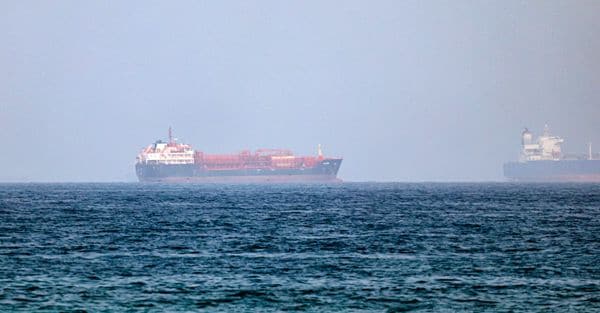
Navi da carico avvistate a un'estremità dello Stretto di Ormuz, vicino alla costa di Dibba Al Fujairah, negli Emirati Arabi Uniti, il 21 luglio 2026. EPA/STRINGER
23 July 2026
Tehran: not a drop of oil from the Strait of Hormuz if the US strikes infrastructure
The Iranian armed forces will not allow even a single drop of oil to be exported through the Strait of Hormuz if the United States follows through on its threats to attack Iranian infrastructure. This is the warning issued by the Khatam al-Anbia Central Headquarters, as reported by the Iranian media. “If the American threats materialise, the armed forces of the Islamic Republic of Iran will not allow even a single drop of oil to be exported and will target the region’s oil, gas, electricity and economic infrastructure,” it emphasised.
23 July 2026
Axios: ‘The US has resumed use of the B-1 strategic bomber’
The US military has used a B-1 long-range bomber to strike targets belonging to the Islamic Revolutionary Guard Corps in Iran, according to US officials. This is reported by Axios. It is the “first mission carried out by the US using a B-1 since fighting with Iran resumed 12 days ago. The use of B-1 bombers – capable of carrying around twenty 900 kg bombs or dozens of cruise missiles – the article continues – signalled a significant escalation and expansion of the US military campaign. The B-1 can fly at supersonic speeds at low altitude, carrying a heavier payload than any other type of bomber. The B-1 launched its mission from an airbase in the UK and was spotted on flight-tracking websites.” Axios notes that CentCom “did not mention the B-1 mission in its statement”. It is unclear what the B-1 struck and whether the massive mission was more effective than other attacks in recent days.
23 July 2026
US forces complete twelfth night of attacks, ‘military targets struck’
The United States has carried out another series of strikes against Iran for the twelfth consecutive night. This is according to Central Command (Centcom), which added that “US forces have struck Iranian military targets, including naval assets, missile and drone storage facilities, coastal surveillance sites and air defence systems”. According to Centcom, “the strikes further reduce Iran’s ability to attack civilian seafarers and commercial vessels”.
23 July 2026
US: Ten merchant ships detained as part of a naval blockade
“This month, US forces have targeted dozens of Iranian military sites on the mainland, whilst resuming the naval blockade against Iran. To date, Centcom has diverted nine commercial vessels and rendered one inoperable to prevent ships from entering or leaving Iranian ports.” This was reported by the US Central Command on its X profile. “Over 50,000 members of the US armed forces are deployed across the Middle East,” it states, “and remain highly vigilant, focused, lethal and ready for action.”
23 July 2026
Pasdaran: one oil tanker ablaze, two others change course
The Iranian Revolutionary Guards claim that three oil tankers attempting to pass through the mined route south of the Strait of Hormuz were stopped. “Following an explosion and a major fire on one of them, the other two quickly turned round and headed back,” according to Iranian media reports.
23 July 2026
Axios: ‘Mossad chief met with CIA director in Washington’
According to two sources familiar with the matter, the new director of Mossad, the Israeli intelligence agency, Roman Gofman, visited Washington two weeks ago for talks on the war in Iran and Iran’s nuclear programme. This is reported by Axios. Gofman is one of Israeli Prime Minister Benjamin Netanyahu’s closest aides. It was his first visit to Washington since taking up the post in June, shortly before tensions in the Strait of Hormuz escalated and fighting resumed. One of the aims of Gofman’s visit was to coordinate with the White House on negotiations with Iran for a nuclear deal, an Israeli source said. Sources reported that Gofman met with CIA Director John Ratcliffe and White House officials. Within Trump’s inner circle, Ratcliffe was one of the most sceptical voices regarding the memorandum of understanding with Iran. Prior to the signing of the memorandum of understanding, he had warned that Iran would interpret the agreement differently from the United States, including the provisions relating to the Strait. The CIA and Mossad declined to comment.
