
30 July 2026
Latest war news. Trump: ‘Without what we want, full-scale war will resume’
CENTCOM strikes the island of Qeshm and the city of Abadan. An entire family is among the victims
For feedback, please contact
english@ilsole24ore.com
 Aggiungi Il Sole 24 Ore
ai preferiti su Google
Summary by points
30 July 2026Pinned update
A two-pronged war, involving ‘heavy’ bombing and mediation efforts to de-escalate the situation
The conflict between the United States and Iran is proceeding along two parallel tracks: intense military escalation and diplomatic contacts aimed at averting an even larger-scale conflict. Washington has resumed striking Iranian targets in a major military operation, and this morning Pakistan confirmed that indirect negotiations are under way between the two capitals, focusing primarily on security in the Strait of Hormuz and possible de-escalation measures.
Overnight, the US Central Command (Centcom) announced that it had completed a ‘heavy series’ of air strikes against dozens of facilities linked to the Revolutionary Guards. The targets included command centres, missile bases, drone infrastructure, surveillance systems, coastal defences and naval capabilities. Washington presented the operation as a response to the launch of numerous Iranian ballistic missiles against US forces deployed in the Middle East. According to official statements, all the missiles were intercepted without causing any casualties.
President Donald Trump had hinted at a particularly harsh response following Iran’s missile strikes on a US base in Jordan, stating that it was now the United States’ ‘turn’ to strike. The operation that followed the warning appears to be one of the most extensive strikes carried out directly against Iranian military targets since the start of the war.
As for Iran, the state media report that the air strikes mainly targeted the southern provinces of Hormozgan and Khuzestan.
On the island of Qeshm, in the Strait of Hormuz, according to the Fars news agency, a civilian home was struck, resulting in the deaths of three members of the same family - the father, mother and a two-year-old child – whilst two other children are reported to have been injured. The Iranian authorities have condemned the extension of the attacks to civilian areas.
The escalation comes in the wake of joint raids carried out by the United States and Saudi Arabia against pro-Iranian militias in Iraq, accused of having attacked Saudi oil facilities. The militias have denied the allegations, but according to the coalition of Shi’a militias known as Hashd al-Shaabi (Popular Mobilisation Forces), the attacks left twenty people dead and thirty-two injured, including five Iranian nationals. The Islamic Resistance in Iraq, an armed coalition close to Tehran, has threatened an ‘inevitable response’, suggesting that possible retaliation could target US and Saudi interests in the region.
Following yesterday’s joint air strikes with the US, Saudi Arabia has reverted to the cautious stance it has maintained since the start of the conflict in the region. Axios has revealed that, through its Defence Minister – who met Donald Trump at the White House yesterday – a letter from Crown Prince MBS was delivered to the US President, expressly calling for a de-escalation of tensions with Iran.
Whilst Trump claimed that the operations in Iraq had been coordinated with the government in Baghdad, the Iraqi presidency described the air strikes as a “flagrant violation of national sovereignty”, whilst Tehran strongly condemned the attacks on its neighbour.
However, today the spokesperson for the Pakistani Ministry of Foreign Affairs, Tahir Andrabi, confirmed that Islamabad is acting as a mediator between Washington and Tehran. According to the Pakistani government, negotiations are currently under way between the two sides, with particular focus on the situation in the Strait of Hormuz. The stated aim is to facilitate de-escalation and prevent the standoff from escalating into a regional conflict with unpredictable consequences.
Pakistan has not provided any details regarding the venue or the level of the talks, but the official confirmation of the existence of a negotiating channel suggests that both sides intend to maintain high military pressure without ruling out the possibility of a negotiated solution.
30 July 2026
West Bank: IDF open fire on a Palestinian
The Israeli Defence Forces (IDF) have announced that they opened fire on a Palestinian near Nablus in the West Bank. The Israeli army stated that it fired at a Palestinian motorist after he had accelerated towards the troops and failed to stop when ordered to do so. This is reported by Haaretz. The Times of Israel adds that no soldiers were injured in the incident. However, the IDF has not provided any details on the driver’s condition. The Wafa news agency, citing an official from the Palestinian Red Crescent, reports that a ‘59-year-old Palestinian was shot in the neck after Israeli forces opened fire on his vehicle in the town of Beita, south of Nablus, in the occupied West Bank’ and that ‘the man was taken to hospital to receive the necessary treatment’.
30 July 2026
Trump: without what we want, full-scale war will resume
The United States will resume a full-scale war against Iran if it fails to get 100 per cent of what it wants. This was stated by the President of the United States, Donald Trump. “‘If we don’t get 100 per cent of what we want, absolutely yes,’ Trump replied to the French television channel LCI when asked whether he was considering the possibility of resuming a full-scale war with the Islamic Republic.
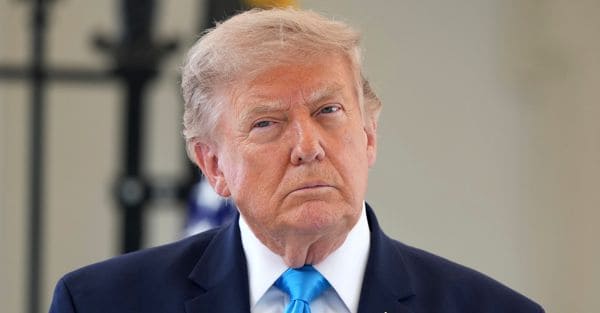
Il presidente Donald Trump ascolta durante un evento per annunciare l'iniziativa "Freedom Haulers" alla Casa Bianca, giovedì 30 luglio 2026, a Washington. (Foto AP/Alex Brandon)
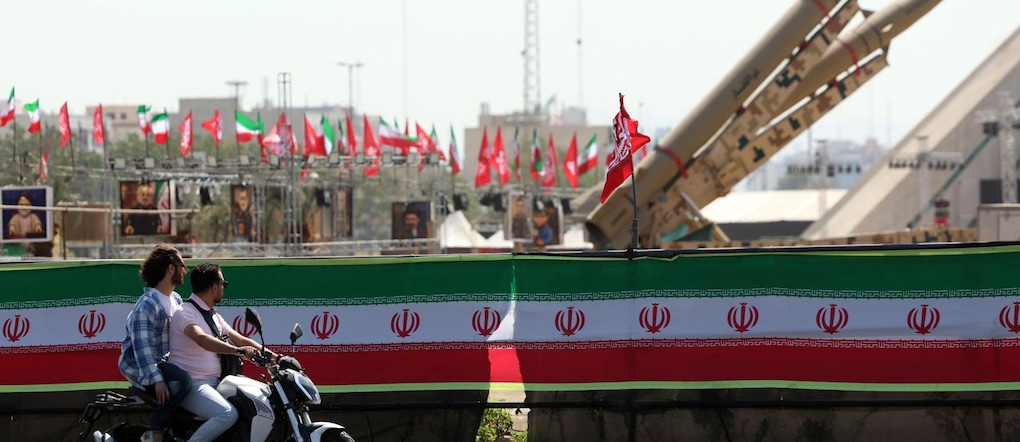
Il 30 luglio 2026, in Piazza Azadi a Teheran, in Iran, alcuni motociclisti passano davanti ai missili iraniani “Zolfaghar” esposti sopra uno striscione raffigurante il presidente degli Stati Uniti Trump. Il 29 luglio 2026 gli Stati Uniti hanno portato a termine una «pesante ondata di attacchi» contro decine di obiettivi del Corpo delle Guardie Rivoluzionarie Islamiche (IRGC) in Iran, in risposta ai tentativi di attacco missilistico sferrati da Teheran il giorno precedente contro le forze statunitensi di stanza in Medio Oriente, secondo quanto riferito dal Comando Centrale degli Stati Uniti (CENTCOM). EPA
Ask the editorial team
Have questions or feedback about this article? Contact our editorial team.
30 July 2026
US: Senate rejects another resolution to stop war with Iran
The US Senate has rejected yet another resolution on the President’s war powers, the latest attempt by the Democrats to put an end to Trump’s military intervention without Congressional approval. “We were told that this president would bring peace and lower prices,” said Democratic Senator Kirsten Gillibrand of New York, the sponsor of the resolution. “What is President Trump doing? He is squandering billions of taxpayers’ dollars on an indefinite war with Iran.” The result – according to the Associated Press – was 49 votes in favour and 50 against. Three Republicans – Senator Susan Collins of Maine, Senator Lisa Murkowski of Alaska and Senator Rand Paul of Kentucky – joined the majority of Democrats in supporting the resolution. Democratic Senator John Fetterman of Pennsylvania joined the Republicans in opposing it. Since the start of the war earlier this year – the AP notes – Democrats in the House and Senate have tabled more than a dozen resolutions on war powers, but none has been passed by both chambers.
30 July 2026
Iran: Riyadh is putting together a naval coalition for the Red Sea involving 43 countries
Today, Saudi Arabia chaired a meeting of 43 countries, plus a delegation from the European Union, concerning the creation of a multinational maritime defence coalition. This was announced by the Saudi Ministry of Defence, as reported by the international media, explaining that the coalition would aim to increase cooperation in the Strait of Bab al-Mandeb, the Red Sea and the Gulf of Aden – an area affected by renewed threats from the Houthis, the Iranian-backed Yemeni rebels. During the meeting, participants discussed the possibility of Riyadh hosting the mission’s headquarters. The Saudi Ministry of Defence specified that any country that “shares the objectives and principles” may join the effort. Fourteen countries have signed a joint declaration in support of the alliance: Saudi Arabia, Kuwait, Bahrain, Qatar, Pakistan, Turkey, Egypt, Jordan, Yemen, Bangladesh, Nigeria, Sudan, Djibouti and Somalia.
30 July 2026
Iran, Kuwait: Chief of the General Staff meets with the Bab el Mandeb coalition
Kuwait’s Chief of Staff, General Khaled al Shuraian, held talks in Saudi Arabia with a “maritime defence coalition” aimed at ensuring freedom of navigation in the Bab el Mandeb Strait. This was reported by Kuwait’s official news agency.
30 July 2026
Lebanon: Erdogan meets Aoun – ready to take on a role once UNIFIL’s mandate expires
Turkey is ready to participate in any international initiative aimed at supporting security and safeguarding Lebanon’s sovereignty once the mandate of the United Nations Interim Force in Lebanon (UNIFIL) expires this coming December. This was stated by the Turkish President Recep Tayyip Erdogan at a press conference held in Ankara alongside his Lebanese counterpart, Joseph Aoun. According to reports by the Anadolu news agency, Erdogan also stated that Ankara “is closely monitoring the diplomatic initiatives launched to put an end to the Israeli attacks and occupation” and that it is ready to provide “all possible support” for the reconstruction of southern Lebanon.
30 July 2026
Centcom: None of our aircraft have been destroyed by attacks from Tehran
The Revolutionary Guards claim “that three US F-35 stealth fighters and three other aircraft were destroyed during a recent Iranian attack on a US airbase. No US aircraft were destroyed or damaged in the recent Iranian attack attempts. All missiles and drones were intercepted or failed to reach their target areas.” This was stated on X by the US Central Command (Centcom). “Iranian state media report that a commercial oil tanker, the M/T Nora, has breached the US blockade. The merchant vessel did not breach the US ‘steel wall’. Over 20 US warships, hundreds of aircraft and thousands of military personnel remain on high alert and continue to fully enforce the blockade,” it added.
Over the past few hours, Iranian state media have continued to report false claims by the Islamic Revolutionary Guard Corps (IRGC) – three in particular.
— U.S. Central Command (@CENTCOM) July 30, 2026
🚫 FIRST CLAIM: The IRGC (again) claims free and open routes through the Strait of Hormuz are dangerous for commercial… pic.twitter.com/J34ILmDvyk
30 July 2026
Iran: never considered launching a drone over Damietta
Iran denies any responsibility for yesterday’s drone attack on two vessels in the port of Damietta, Egypt, and has suggested that Israel may have been involved in the attack. “We did not target the port of Damietta in Egypt,” a Foreign Ministry source told the Lebanese media outlet Al Nahar, adding that Tehran “never intended” to carry out such an operation. The source emphasised that “the deep and friendly relations between the Islamic Republic of Iran and the Arab Republic of Egypt, and between the Iranian and Egyptian peoples, are firmly established and strong, based on mutual respect and shared interests”. The source then alluded to the possibility of Israeli involvement in the attack, citing “a long history of disinformation and psychological warfare operations, including those known as false-flag operations”. The source added that “in recent months, Ukraine has also engaged in this type of false-flag operation”. The Iraqi National Security Adviser revealed the activities of elements linked to Ukraine who are conducting disinformation operations in the region, in collaboration with the Zionist entity, with the aim of expanding the scope of the war.”
30 July 2026
Iran, study: with ships grounded since the war, there is a risk of ‘superspreaders’
The thousands of ships that have been stationary for months in the Strait of Hormuz risk triggering an event with negative repercussions for the economy and the environment linked to so-called biofouling, namely the unwanted accumulation of microorganisms on submerged surfaces or those in contact with water. These include algae, microbes and invertebrates that have a ‘high probability’ of being spread once the ships resume their journeys. This is why the phenomenon is referred to as a ‘superspreader’ event. This is the finding of a study by the University of Maryland and the Woods Hole Oceanographic Institution. The scientists involved in the research argue that the estimated 1,500 ships currently moored could carry “invasive species that are harmful to the economy and the environment”. The threat described is not new in wartime scenarios. However, the new study warns that current regulations are insufficient to manage its potential impact.
30 July 2026
Pakistan: Negotiations are under way between Tehran and Washington regarding the Strait of Hormuz and de-escalation
Pakistan has insisted that negotiations between Iran and the United States are ongoing, whilst Washington has carried out a “heavy wave of attacks” against Tehran in retaliation for new attacks targeting Jordan. “Negotiations between the parties are ongoing, particularly regarding the Strait of Hormuz and de-escalation,” Pakistani Foreign Ministry spokesperson Tahir Andrabi told reporters in Islamabad after, over the past two days,Saudi Arabia, alongside the United States, had struck pro-Iranian militant groups in Iraq, whilst today Jordan reported that it had intercepted incoming Iranian missiles for the second consecutive day, and Kuwait stated that an Iranian attack on a building belonging to a Chinese company had killed one person. Pakistan had helped broker an agreement between the warring parties, laying the groundwork for negotiations on a permanent resolution, and Andrabi said the country was doing “its utmost to bring all parties back” to the technical talks provided for in the agreement. Previous talks between the two sides following an April truce had stalled, with the ceasefire collapsing earlier this month and Iran once again closing the Strait of Hormuz, a vital waterway for Middle Eastern oil and gas. Iran’s Revolutionary Guards said today that two oil tankers attempting to pass through the strait with US support had turned back.
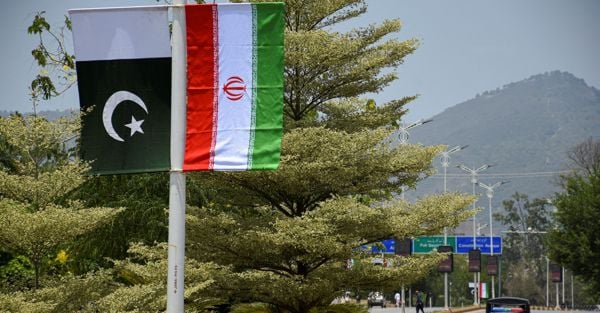
Le bandiere nazionali iraniana e pakistana sono esposte lungo una strada in vista dell'arrivo del presidente iraniano Masoud Pezeshkian a Islamabad, in Pakistan, il 23 giugno 2026. REUTERS/Waseem Khan/Foto d'archivio
30 July 2026
Iran-Bulgaria crisis: Tehran issues threats over the use of US bases
Iranian Foreign Minister Abbas Araghchi today lodged a protest with his Bulgarian counterpart, Velislava Petrova, over Sofia’s authorisation for the United States to use military bases on Bulgarian territory. He urged his counterpart to reconsider this decision and warned that the Islamic Republic “will not hesitate to defend its national interests”. In a telephone call, Araghchi stated that Bulgaria’s action was “repugnant, unacceptable and contrary to the traditional and friendly relations between the two countries”. He criticised the Bulgarian authorities for giving the go-ahead for the Bezmer airbase, located in the province of Yambol, to host eight US KC-135 tanker aircraft and 250 American military personnel, as part of Washington’s offensive against Iran. “We hope that the Bulgarian government will urgently reconsider its decision. Iran will not hesitate to defend its national interests and its security against any aggression or hostile action,” said the Iranian Foreign Minister, according to a press release issued by the Ministry.
30 July 2026
Iran, Pasdaran: US base in Kuwait attacked
The Islamic Revolutionary Guard Corps has claimed responsibility for an attack on “the US Ali Al-Salem base” in Kuwait, stating in a statement reported by Iranian media that it had “destroyed two drone hangars and a fuel depot for aeroplanes and helicopters”.
30 July 2026
Riyadh condemns Iran’s attacks on Jordan
The Saudi Ministry of Foreign Affairs issued an official statement expressing “firm condemnation of Iran’s ongoing and flagrant aggression against Jordan, and reaffirming its solidarity with any measures Jordan may take in response to these Iranian attacks, which constitute a violation of international law and the principles of good neighbourliness”.
30 July 2026
Axios: Netanyahu discussed the criticism of Israel with Vance
US Vice-President JD Vance and Israeli Prime Minister Benjamin Netanyahu held a “frank and direct” discussion about their differences during their face-to-face meeting last Tuesday in Washington. Axios reported this today, citing Israeli and US officials.
Vance has been the most vocal critic of Netanyahu within US President Donald Trump’s inner circle since the start of the war against Iran; and as the conflict has dragged on, his criticism has grown harsher, not least in the face of growing discontent amongst the American public and the MAGA base regarding the conflict and support for Israel.
Last June, Vance had publicly issued a stern warning to members of the Israeli government who had criticised the agreement reached by the United States with Iran: “If I were in the Israeli cabinet, I probably wouldn’t attack the only powerful ally I have left in the whole world.” Then, in recent weeks, in an interview on Joe Rogan’s podcast, Vance accused certain members of the Israeli government of waging a campaign of influence to persuade the United States not to engage diplomatically with Iran and to continue the war.
At the meeting at Blair House last Tuesday, Netanyahu discussed this with Vance. “It was a frank and candid conversation,” said an Israeli official. “The conversation was direct,” confirmed a US official.
30 July 2026
Iran: from Iraq to Jordan via Saudi Arabia and Egypt – a conflict that threatens to spread
From Iraq to Jordan and Lebanon, and on to Saudi Arabia, Kuwait and Egypt, where a drone struck an American LNG tanker in the port of Damietta yesterday. After days of apparent calm, the conflict with Iran – which began with attacks by the United States and Israel on 28 February – is escalating dangerously, with a growing number of countries becoming involved. Saudi Arabia – besieged on three fronts by Iran, the Yemeni Houthis and pro-Iranian militias in Iraq – has put an end to its reluctance and, on 29 July, together with the United States, struck targets belonging to the Popular Mobilisation Forces in Iraq. During the night of 28–29 July, Iran, for its part, launched ballistic missiles at a US base in Jordan. Last night, however, came a swift response from the United States in the form of air strikes on Iran, in line with statements by US President Donald Trump, who had promised to strike Tehran hard following the attack on the US base. Following an Iranian air strike in Kuwait today, an employee of a Chinese company in the north of the country has died. The escalation, notes the *New York Times*, “comes as attempts to resume peace negotiations have stalled and the scope of the conflict appears to have widened”. Since the breakdown of the ceasefire between the United States and Iran, groups linked to Tehran across the region have opened new fronts and reopened old ones, involving forces in Saudi Arabia, Iraq, Lebanon and Jordan. “Saudi Arabia’s involvement in Wednesday’s attacks,” writes the US newspaper, “marked an escalation. The kingdom had so far avoided becoming an overt, direct combatant in the US-Israeli war against Iran.” The Saudi military had launched a number of retaliatory strikes against Iran, but these had been carried out in secret, according to senior US officials. This reaction from Riyadh comes after Saudi Arabia faced dozens of drone attacks on its oil facilities this week. The attacks on Saudi oil tankers by Houthi militants, Iran’s ally in Yemen, which controls large swathes of that country along the Red Sea, have further threatened oil shipping routes, with potentially disastrous consequences for the Gulf states that rely heavily on supplies from the Middle East. “The spread of fighting in the Middle East,” the New York Times points out, “risks complicating the Trump administration’s ability to extricate itself from this unpopular war” – and this as the US mid-term elections scheduled for this autumn draw nearer. The latest escalation risks worsening the economic situation and, in particular, triggering a fresh surge in oil prices, thereby pushing up inflation.
The US military explained that Wednesday’s raids in Iraq were in retaliation for more than 30 drone attacks carried out by Iranian proxy groups over the previous 72 hours. A US official reported that the targets were members of the Popular Mobilisation Forces, a coalition of Iraq-based militias with links to Iran. The raids killed around 20 Iranian advisers, including senior technical advisers and liaison officers from the Islamic Revolutionary Guard Corps. No Iraqi militia group has claimed responsibility for the drone attacks. Indeed, today, Sabah Al-Numan, the Iraqi Prime Minister’s spokesperson, told the Iraqi news agency that there is no evidence that Iraqi territory was used to launch attacks against Saudi Arabia earlier this week: “No party has so far provided any evidence to support these claims.” The ceasefire in Lebanon is also holding together with great difficulty, whilst Israel and Lebanon are trying to implement the agreement to end months of fighting, which has been rejected by Hezbollah. Yesterday, the Israeli army accused Hezbollah of a “blatant violation of the ceasefire”, claiming that the Iranian-backed militant group had launched a drone at an Israeli vehicle in the area of southern Lebanon currently controlled by the Israeli army. According to Dana Stroul, a senior Pentagon official during the Biden administration, quoted by the *Washington Post*, both Trump and Tehran appear to be in a stalemate, as neither side sees any advantage in continuing the conflict nor believes that negotiations can lead to a decisive outcome. “There is growing pessimism in both capitals regarding the parties’ inability to reach a diplomatic agreement,” she noted. Stroul, now director of research at the Washington Institute for Near East Policy, added that “it almost seems as though both sides are continuing to launch military attacks from a position of weakness”. According to her analysis, Trump appears reluctant to launch large-scale military operations that could jeopardise support from his electoral base ahead of the mid-term elections, whilst Iran seems to believe it is in “a unique moment of maximum strategic leverage”. So far, according to the Pentagon, 18 US military personnel have been killed in the conflict and over 600 wounded. The Iranian Ministry of Health, however, puts the number of Iranian deaths at over 3,500.
30 July 2026
Progress in the Hamas-Israel talks on Gaza: an agreement is possible
“Things seem to be moving in the right direction: it appears that Hamas has given in and is agreeing to complete and total disarmament.” This was stated to Ynet by an Israeli source involved in the negotiations on Hamas’s disarmament. The Israeli newspaper reports that a series of developments are underway that could lead to “a breakthrough” towards an agreement between Israel and Hamas on the implementation of Trump’s plan for the Gaza Strip. According to Palestinian sources cited by Ynet, a statement announcing that agreements have been reached could be published today.
30 July 2026
F-35s for Turkey: Trump’s move that has left Israel stunned

A clear winner emerged from the NATO summit in Ankara: Erdogan’s Turkey. As well as receiving praise from US President Donald Trump – something the Europeans no longer enjoy – President Recep Tayyip Erdogan has secured significant victories in the defence, diplomatic and economic spheres.
The Americans have promised to lift the CAATSA sanctions imposed on the Turkish defence industry by the first Trump administration following the acquisition of the Russian S-400s in 2020.
30 July 2026
US Ambassador to Israel: ‘I don’t think Ankara will be receiving F-35s any time soon’
“I don’t think Turkey will receive the F-35s in the near future.” This was stated by the US Ambassador to Israel, Mike Huckabee, in an interview with Israeli military radio today. “Turkey has a problem since it decided to purchase the S-400 air defence systems from Russia, and this makes the sale illegal. I think it’s unlikely to happen, unless there are significant changes in Turkey’s stance towards our regional allies. Let’s just say I wouldn’t bet on this deal,” said Huckabee.
“The President has always been clear that Iran will not be allowed to possess nuclear weapons or retain enriched uranium on its own soil,” he added, responding to a question about the aim of the negotiations with Iran.
30 July 2026
Shell triples its profits in the second quarter of 2026 to 10.8 billion
Shell’s profits soared in the second half of 2026 , reaching $10.8 billion – three times the figure recorded in the same period of 2025. This is confirmed by the financial results published today by the British oil giant, which has benefited from soaring oil and gas prices against the backdrop of the war in the Middle East triggered by the US and Israeli attacks on Iran in recent months and the resulting stalemate over the passage of commercial maritime traffic through the crucial Strait of Hormuz.
“Shell’s operational performance has ensured very solid results during this period of severe tensions in global energy markets,” said Chief Executive Wael Sawan, commenting on the figures. The figures also showed a 45 per cent jump in revenue, rising to $96.4 billion.
This is despite the fall in the volume of barrels traded between April and June due to the effects of the conflict: which, amongst other things, resulted in serious damage to the Ras Laffan natural gas storage facility in Qatar, a key hub for the company in the region. Shell has finally announced the distribution of 3 billion in dividends to shareholders.
30 July 2026
Beijing: Reports of a supply of 400 missile launchers to Iran are unfounded
China has dismissed reports that it intends to supply Iran with 400 missile launchers, describing them as ‘false and baseless’. This was stated by the spokesperson for the Chinese Foreign Ministry, Mao Ning, in response to questions from journalists regarding rumours of an alleged military supply to Tehran.
“The reports are untrue and unfounded” said Mao, adding that Beijing has already made its position on the matter clear on several occasions. “China has always played a constructive role in promoting peace and easing tensions in conflicts,” the spokesperson added. The statements come following a report that Tehran is set to receive up to 400 portable surface-to-air missile systems (MANPADS) from China, including QW-12 and FN-16 models, to bolster its short-range air defence capabilities. According to sources cited by the Reuters website, the potential deal is estimated to be worth between 60 and 70 million dollars.
30 July 2026
Erdogan is due to meet the Lebanese president in Ankara today
The Turkish President, Recep Tayyip Erdogan, is to receive his Lebanese counterpart Joseph Aoun in Ankara this afternoon. The meeting is scheduled for 4.30 pm local time, 3.30 pm in Italia, and will be Aoun’s first official visit to Turkey since he became President of Lebanon in January 2025.
“Turkey occupies a central position in the current regional landscape,” said Aoun in an interview with the Anadolu Agency ahead of the visit, adding that “coordination (with Turkey) is a strategic necessity”. Emphasising that relations between Ankara and Beirut have the “potential to progress towards an advanced level of cooperation”, Aoun stated that Lebanon is counting on Turkey to support its economic recovery, reconstruction efforts and the implementation of the US-brokered framework agreement with Israel.
30 July 2026
Lebanon: Banker Sehnaoui faces prison after dining with Netanyahu
Judge Ahmad Rami al-Hajj of the Lebanese Court of Cassation has issued an order that could lead to the arrest of the prominent banker Antoun Sehnaoui should he return to Lebanon, following allegations of collaboration with Israel and of breaching laws prohibiting contact with Israelis. The order was issued just a few days after Sehnaoui dined in Washington with Israeli Prime Minister Benjamin Netanyahu. The 30-day notice instructs the security forces to track down and question Sehnaoui.
Once 30 days have elapsed, the order issued by al-Hajj will be closed and transferred to the country’s Military Court so that it may issue an arrest warrant for Sehnaoui. The banker is currently in the United States, but the order could result in his detention upon his return to Lebanon. Lebanese law prohibits its citizens from having contact with Israelis; the two countries have remained at war since Israel’s foundation in 1948, and offenders face prison sentences.
30 July 2026
Pasdaran: ‘Today we will punish the attacker’
“With the help of Almighty God, the aggressor will be punished today.” This was stated by the Iranian Revolutionary Guards, as quoted by the Fars news agency. The report is carried by Al Jazeera. The Pasdaran’s statements come after the United States announced that it had launched ‘powerful’ attacks against Iran overnight, with explosions heard in Qeshm, Kish, Bandar Abbas, Abadan and Bushehr.
30 July 2026
Egypt: Fire on ships in Damietta caused by a drone attack
The fire that broke out yesterday on tankers near the Egyptian port of Damietta was caused by a drone attack, the Egyptian government said today.
“After pinpointing the fire that broke out on 29 July on two ships in the port of Damietta, the relevant authorities carried out a preliminary investigation, which showed that the cause of the incident was an unmanned aerial vehicle,” the government said in a statement.
No one has claimed responsibility for the attack, according to the statement.
30 July 2026
Kuwait: Chinese firm targeted in attack in Tehran – one dead
The Kuwaiti armed forces report that an Iranian attack has struck a Chinese company’s building, killing one worker. The attack has severely damaged the building in the north of the country.
30 July 2026
Pakistan: working to bring the US and Iran back to the negotiating table
Pakistan, which is mediating between the United States and Iran, said today that it is doing everything possible to bring the two countries back to the negotiating table, in accordance with the terms of the memorandum of understanding signed in June, brokered by Islamabad, to bring an end to the war.
“We are doing everything possible to bring all parties back to the Islamabad Memorandum of Understanding,” the spokesperson for the Pakistani Ministry of Foreign Affairs, Tahir Andrabi, told reporters. Pakistan is encouraging both countries to “fully honour their commitments to hold technical discussions” under the agreement, he added.
30 July 2026
Netanyahu: ‘After the war, Hormuz will become less important’
Israeli Prime Minister Benjamin Netanyahu stated, in an interview given to the American broadcaster ABC, that once the war is over, the Strait of Hormuz will no longer be as crucial as it is today, as new infrastructure will be built that will render it secondary.
“Once this war is over, I don’t think the Strait (of Hormuz, ed.) will still wield such significant leverage, because the energy infrastructure will be shifted from the Strait to the Red Sea and, from there, to Israel and the Mediterranean Sea,” the Israeli leader explained.
“We can remove this strategic bottleneck, and we will,” Netanyahu stated.
30 July 2026
The War in Pictures
A few photographs from the conflict in the Middle East, 30 July 2026.
Guerra in Medio Oriente – 30 luglio 2026
Photogallery15 foto
30 July 2026
Gaza, Saudi newspaper: close to a possible agreement on Hamas disarmament
Talks in Cairo between Hamas and the mediators of the US plan for the post-war period in Gaza – Egypt, Qatar and Turkey – are reported to have come closer to an agreement in recent days on a proposal put forward by the former UN Special Coordinator for the Middle East Peace Process, Nikolay Mladenov, concerning the second phase of the ceasefire agreement between Israel and Hamas.
According to the Saudi newspaper Asharq Al-Awsat, there is broad consensus amongst the parties on the wording of the proposal concerning arms and disarmament.
Rather than requiring Hamas and other armed groups in Gaza to hand over their weapons, the proposal provides for them to be retained, but transferred to the Palestinian security forces linked to the National Technocratic Committee for the Administration of Gaza (NCAG), which has yet to be established. According to the Saudi newspaper, an agreement could be announced within a few days.
The report adds that the agreement would also include the NCAG’s entry into the Gaza Strip and the deployment of international forces in the territory.
30 July 2026
Netanyahu: ‘Trump is in full control of the war; Israel has no influence’
Benjamin Netanyahu has stated that Donald Trump is in full control of the war with Iran, revealing that the two leaders discussed options for resolving the conflict during their meeting in Washington. In an interview with ABC News, the Israeli Prime Minister dismissed allegations that he had pressured the US President to intervene in the war against Iran, and also denied having persuaded Trump to launch a new wave of attacks following their meeting on Tuesday. “No, nobody tells President Trump what to do”, said Netanyahu.
In the interview, the Prime Minister reiterated that he regards Trump as the leader of the partnership between the United States and Israel, describing the President as the ‘senior partner’ and himself as the ‘junior partner’.
“I am the Prime Minister of Israel, and when I have to defend my country’s interests and security, I do so,” Netanyahu said. “But I always do so with full awareness of the role played by the United States, under President Trump, which has joined forces with us against our common enemy that seeks to destroy us.” Although the meeting between Trump and Netanyahu took place behind closed doors, Netanyahu said he had discussed with Trump how to end the war with Iran. Among the topics discussed were the possibilities of negotiating with Iranian officials, the blockade of the Strait of Hormuz and the possible need for more decisive military action.
30 July 2026
Iran: Centcom releases video of US air strikes
30 July 2026
Jordan: 5 missiles launched from Tehran shot down
Jordanian air defences shot down five missiles launched from Iran this morning. This was reported by the Jordanian state news agency Petra. No casualties were reported following the interception of the missiles.
30 July 2026
Explosions rock several villages in southern Lebanon
A series of powerful explosions rocked several villages in southern Lebanon overnight, with the blasts heard as far away as the coastal city of Tyre. This was reported by the Lebanese National News Agency (NNA) and cited by Al Jazeera.
Israeli forces carried out controlled demolitions in the towns of al-Mansouri, Majdal Zoun and Mazraat Buyut al-Siyad between midnight and dawn today. The operations were accompanied by heavy machine-gun fire directed towards the Wadi al-Hujeir and Wadi al-Salouqi valleys, according to reports from NNA. There are no immediate reports of casualties or details of the extent of the damage.
30 July 2026
Lockheed Martin awarded a 59 billion Pentagon contract for Patriot systems
Lockheed Martin has been awarded a contract by the Pentagon worth 59 billion dollars to triple production of the Patriot. The plan is to increase production from around 600 missiles a year to around 2,000 by 2030, and Lockheed plans to hire 650 employees to set up a dedicated Patriot production line in Arkansas. In recent months, Lockheed had been awarded a 35-billion contract by the Pentagon to quadruple THAAD production.
30 July 2026
A two-week plan to step up attacks on Iran has been presented to Trump
Admiral Brad Cooper, head of the US Central Command (Centcom), presented President Donald Trump last week with a plan for 10–14 days of intense strikes against Iran to reduce its missile capabilities. This was reported by the Wall Street Journal, citing sources who said that Trump can choose between targeted strikes or the campaign proposed by Cooper in response to the Iranian attack on American targets in Jordan.
30 July 2026
Three people, including a two-year-old child, have been killed in a US attack on Qeshm
A US attack has killed three people, including a two-year-old child, on the Iranian island of Qeshm. This was reported by the Fars news agency. “A US attack on a house in the Chah Tangu neighbourhood on Qeshm resulted in the deaths of three members of a family: the father, the mother and their two-year-old son,” reported the Fars news agency, citing the Hormozgan University of Medical Sciences, adding that two other children were injured.

I soccorritori rimuovono le macerie alla ricerca delle vittime dopo un attacco a Qeshm, in Iran, in questa immagine tratta da un video diffuso il 30 luglio 2026. IRIB/via Reuters TV/Immagine fornita da REUTERS
30 July 2026
Centcom: ‘heavy’ night-time attacks against Iran
The US Central Command (Centcom) announced overnight at around 2.00 am Italian time that it had “struck dozens of targets belonging to the Islamic Revolutionary Guard Corps (IRGC) in Iran, including military command centres, missile and drone installations, surveillance and coastal defence sites, and maritime capabilities”.
“These attacks were designed to further reduce the threats that Iran and its allies pose to US forces, commercial shipping and neighbouring Gulf states,” explained the US military.
Iranian state media have reported attacks on the island of Qeshm and on the city of Abadan.
Attacks were launched following a day – Wednesday 29 July – in which the conflict had spread like wildfire, also involving Jordan (targeted by Iranian drones), Syria (the scene of incursions by Israeli settlers) and Iraq (where the US and Saudi Arabia have targeted pro-Iranian militias).

