
28 June 2026
War, latest news. The truce is under threat: Iranian drones target US ships in the Strait of Hormuz, retaliatory air strikes. Tehran attacks Kuwait and Bahrain
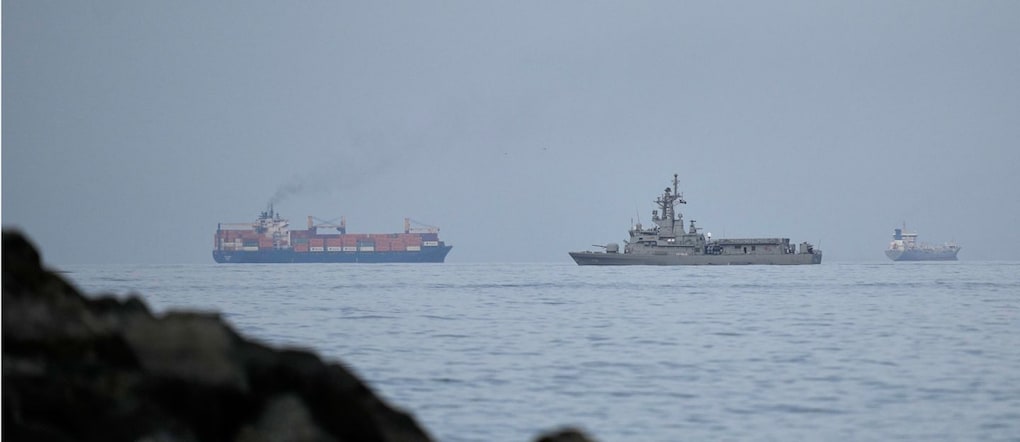
Last night, US Navy and Air Force fighter jets carried out strikes against 10 Iranian military targets in various locations within and around the Strait of Hormuz, in response to Iran’s drone attack on the oil tanker Kiku
For feedback, please contact
english@ilsole24ore.com
 Aggiungi Il Sole 24 Ore
ai preferiti su Google
Summary by points
28 June 2026
US: Attacks carried out against 10 Iranian targets in the Strait of Hormuz
“Last night, US Navy and Air Force fighter jets carried out strikes against 10 Iranian military targets in various locations within and around the Strait of Hormuz, in response to Iran’s drone attack on the oil tanker Kiku”. This was reported by US Central Command in a post on X.
28 June 2026
Kuwait and Bahrain under attack
Tension is mounting in the Middle East. The Kuwaiti army has announced that the country’s air defences are responding to “hostile threats from missiles and drones”.
This is reported by the online edition of Al Jazeera. Meanwhile, air-raid sirens are sounding in Bahrain. The Ministry of the Interior has urged the public to “remain calm and head for the nearest safe place”.
28 June 2026
Oil tanker struck by ‘unidentified’ projectile in the Strait of Hormuz
An oil tanker is reported to have been struck by an unidentified projectile on 27 June in the Strait of Hormuz. This is according to United Kingdom Maritime Trade Operations (UKMTO). “The captain of an oil tanker reported that his vessel had been struck by an unidentified projectile. The vessel sustained damage to the bridge. The crew are unharmed. No environmental damage has been reported so far,” the statement reads.
According to the British company Vanguard Tech, the vessel is the Kiku, flying the Panamanian flag. In the last few hours, UKMTO had already reported that a merchant vessel had been damaged by a projectile, an attack that the United States has attributed to Iran.
foto generica dello Stretto di Hormuz, vista da Khor Fakkan, Emirati Arabi Uniti, marzo 2026. (AP Photo/Altaf Qadri) AP
Ask the editorial team
Have questions or feedback about this article? Contact our editorial team.
27 June 2026
Lebanon, Netanyahu: the agreement states that Hezbollah and Iran have no role
Prime Minister Benjamin Netanyahu described the framework agreement signed yesterday with Lebanon as “a historic achievement for Israel”, stating that it promotes progress towards ending the bilateral conflict and opens up the prospect of “a possible peace agreement between Israel and Lebanon”. Speaking at a press conference, Netanyahu stated that the agreement represents “a major blow” to Iran and Hezbollah and argued that it enshrines the consensus of the United States and Lebanon that Israel should maintain a security zone in Lebanon for as long as necessary to ensure Israeli security.
“We will continue to maintain it until Hezbollah and the other terrorist groups have been disarmed,” he said, referring to the current security zone, “until there is no longer any threat to Israel from Lebanon”. He added that Iran wanted to force Israel to withdraw from southern Lebanon, but that he had opposed this demand, highlighting the harsh criticism levelled at the agreement by Tehran and Hezbollah. According to Netanyahu, with this agreement, Israel, Lebanon and the United States “are essentially telling Iran: ‘This is none of your business. You have no status, no involvement and no role. Neither you, nor Hezbollah, nor any terrorist group’”. He finally acknowledged that Israel will withdraw from two small areas currently under its control, as part of a pilot scheme, but, pointing to the areas on a map, he clarified that one lies outside the security zone, whilst the other is situated on the edge of it, in an area which, in his view, the Israel Defence Forces (IDF) no longer need to patrol.
27 June 2026
Lebanon, Ben Gvir: an agreement with Beirut is a huge mistake
“The agreement with Lebanon is a huge mistake: this evening I have already asked the Prime Minister to call a vote in the Council of Ministers, and I have been opposing this agreement for weeks.” Israel’s far-right Minister of National Security, Itamar Ben Gvir, wrote this on X. “It is true that, for now, we remain in most of the territory, but the Lebanese state will not disarm Hezbollah; Lebanese government ministers are members of Hezbollah, and we cannot rely on Lebanon to take weapons away from Hezbollah: I will call for a vote to be held in the Council of Ministers,” he added. “Only IDF soldiers will destroy Hezbollah: no other entity will do it for us!”, he concluded.
27 June 2026
Netanyahu: pilot schemes to be launched in two areas close to the Yellow Line
“Israel and Lebanon have agreed on two areas near the Yellow Line, where the pilot zone for the disarmament of Hezbollah and the redeployment of the Lebanese army will begin,” Netanyahu said at a press conference, pointing out the locations in question on a map.
27 June 2026
Vance: with or without a final agreement, America wins either way
“If we reach a final agreement, then that’s great; if we don’t, their nuclear programme remains in tatters and they remain a much weaker country, so my view is that America wins either way.” This is how JD Vance, in an interview with Bill Maher, defended the deal reached by Donald Trump with Iran, emphasising that the increase in oil shipments through the Strait of Hormuz is “a sign that something concrete is happening”. The vice-president’s interview – in which he nevertheless admitted that the ceasefire agreement would “always be a bit chaotic given that we’re dealing with the Iranians” – was broadcast just a few hours before Iran and the US exchanged attacks in the most serious escalation since the memorandum of understanding was signed, which launched the 60-day period of negotiations, with a new round due to take place in early July.
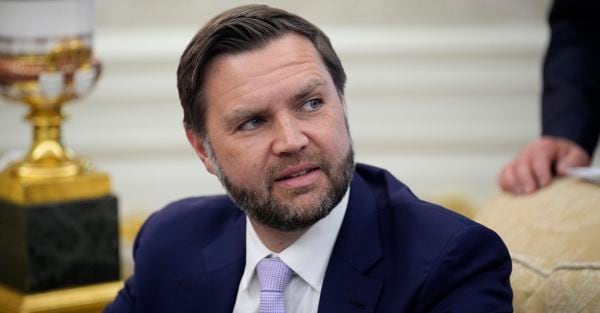
Il vicepresidente degli Stati Uniti JD Vance ascolta mentre il presidente degli Stati Uniti Donald Trump incontra Mark Rutte, segretario generale dell’Organizzazione del Trattato del Nord Atlantico (NATO), nello Studio Ovale della Casa Bianca a Washington, DC, Stati Uniti, il 24 giugno 2026. EPA/YURI GRIPAS / POOL
27 June 2026
Media: Israel-Lebanon collaboration to begin tomorrow in pilot areas
Cooperation between the Israeli and Lebanese armies on the ‘pilot zones’ in southern Lebanon is set to begin as early as tomorrow, under the supervision of the Commander of Centcom, Admiral Brad Cooper, who is currently in Israel and will travel to the northern border tomorrow for this purpose. This was reported by Channel 11, citing military sources. According to the broadcaster, the pilot project will begin in the villages of Froun and Zawtar al-Gharbiyah in southern Lebanon.
27 June 2026
New round of talks between Tehran and the US to take place in Doha in July
In recent hours, tensions have escalated between Iran and the United States – the first such escalation since the signing of the memorandum of understanding between the two sides in Switzerland on 17 June. Washington has accused Tehran of attacking a merchant ship in the Strait of Hormuz, prompting a US response in the form of strikes against various targets. This was followed by an Iranian response: Bahrain, home to the US Navy’s Fifth Fleet, reported that “numerous Iranian drones” had targeted the country. Iran today condemned Friday’s US attacks on its territory, describing them as a “flagrant violation” of the memorandum of understanding.
27 June 2026
Katz: ‘We will use force against Iran if it prevents the agreement from being implemented’
Israeli Defence Minister Israel Katz has stated that he will use “force” against Iran if it attacks Israel in an attempt to prevent the implementation of an agreement with Lebanon aimed at securing peace between the two countries. “If Iran attempts to attack Israel to prevent the implementation of the agreement, we will act against it with great force,” Israel Katz said in a video statement, adding that the agreement with Lebanon had dealt a “strategic blow to the Iranian axis”.
27 June 2026
Media: New round of US-Iran talks to take place in Qatar in July
A new round of US-Iran talks is expected to begin in July and take place in Doha, Qatar, to address the issue of frozen Iranian assets. This was reported by the broadcaster Al Arabiya, citing its own sources, on its Arabic-language channel. The same broadcaster reports that, following this, “Pakistan will host a round of negotiations between the United States and Iran on the nuclear issue”. The TV channel also mentions an official visit to Iran by Pakistani Prime Minister Shehbaz Sharif on 2 July.
27 June 2026
Iran, Tehran: trade with the United Arab Emirates has resumed
Trade between Iran and the United Arab Emirates has resumed. This was announced by Mohammad Sadegh Ghanadzadeh, deputy head of commercial services at the Iranian Trade Promotion Organisation.
“Now that relative calm has returned to the region, we are seeing shipments of goods and containers from the port of Jebel Ali to Iran. Trade is gradually picking up. We hope it will gradually return to the normal conditions that prevailed before the war,” said Ghanadzadeh, according to the IRNA news agency.
The Foreign Minister of the United Arab Emirates, Sheikh Abdullah bin Zayed Al Nahyan, discussed the regional situation yesterday in a telephone conversation with his Iranian counterpart, Abbas Araghchi, following the signing of the Memorandum of Understanding (MoU) between Tehran and Washington. During the conversation, the UAE Foreign Minister emphasised the importance of implementing the terms of the memorandum, respecting the principles of sovereignty and good neighbourliness, and ensuring freedom of navigation in the Strait of Hormuz. Abdullah bin Zayed also expressed the hope that the ongoing negotiations would yield positive results, thereby ensuring lasting security and stability in the region.
27 June 2026
Iran: annual inflation at 89 per cent in June due to the war; food prices have doubled
In June, inflation in Iran rose further to 88.6 per cent year-on-year due to the conflict with the United States and Israel, which lasted over three months. These are the official figures released by the Iranian Statistical Centre. Food prices between 22 May and 21 June, the month of Khordad in the Persian calendar, more than doubled, with bread and cereals recording a 138.8 per cent annual increase and red meat and poultry prices rising by 178.2 per cent year-on-year. In the month of Bahman, 21 January–19 February, prior to the attack on Tehran, prices were 68 per cent higher than in the same period of 2025 due to the hyperinflation that has been affecting the country for years as a result of international sanctions imposed on Iran and the depreciation of the national currency. In December, prices were rising by over 50 per cent year-on-year and street protests had broken out against the high cost of living.
27 June 2026
Media: Two Palestinian brothers killed in Gaza by IDF drones
An Israeli drone strike has killed two Palestinian siblings, including a 15-year-old girl, in southern Gaza and injured at least seven other people. According to the Times of Israel, this was reported by Nasser Hospital, where the injured were taken. The attack targeted the tents housing displaced Palestinians in the vast Muwasi camp, reportedly killing 15-year-old Islam Moussa and his 30-year-old brother Abdullah Moussa. The Israeli army admitted to striking the Muwasi area, claiming it had targeted a Hamas terrorist, but did not immediately provide further details. Palestinians also reported hearing a loud explosion in Gaza City. According to Shifa Hospital, the Israeli army struck a tent housing displaced Palestinians in the western part of Gaza City, injuring at least 12 people. The Palestinian Red Crescent ambulance service says that two people are seriously injured and that most of the injured are women.
27 June 2026
Iran, media: two drones were used in the attack reported by Bahrain
Two drones were used in the Iranian attack reported by Bahrain this morning. This was stated by a US official quoted by the New York Times. One drone, the source explained, was intercepted and shot down. The other landed, without causing any damage, in a remote area of an airbase, he added. This morning, Bahrain’s Foreign Ministry had reported a “dawn” attack by “several Iranian drones” after the Islamic Revolutionary Guard Corps, the Iranian Pasdaran, had announced that they had attacked US targets in the region following American operations against the territory of the Islamic Republic.
27 June 2026
Guerra in Iran e Medio Oriente, 27 giugno
Photogallery9 foto
27 June 2026
Jordan congratulates Lebanon on its agreement with Israel
The Lebanese Foreign Minister, Youssef Raggi, said he had received a phone call from his Jordanian counterpart, Ayman Safadi, who congratulated him on Lebanon’s signing of the US-brokered framework agreement with Israel. Safadi “expressed the hope that the agreement would serve Lebanon’s interests”, including the strengthening of its sovereignty and the restoration of stability, Raggi wrote on X. “For my part, I thanked him for Jordan’s continued support for Lebanon and reiterated that this agreement represents a victory for diplomacy and, above all, for the authority of the state and its institutions”, he concluded.
27 June 2026
Von der Leyen welcomes agreement between Israel and Lebanon: a “crucial” step
The President of the European Commission, Ursula von der Leyen, has welcomed the agreement reached between Israel and Lebanon in Washington, describing it as a “crucial” step towards de-escalation in the Middle East.
“There can be no peace in the Middle East whilst Lebanon is in the grip of conflict,” the President of the European Commission emphasised on social media. “The next crucial steps are the disarmament of non-state groups and the safeguarding of Lebanon’s sovereignty and territorial integrity,” she added in the post, assuring that the European Union is ready to “support” this path towards “lasting regional stability”.
27 June 2026
Lebanon: Hezbollah leader says agreement with Israel is humiliating and shameful
Hezbollah leader Naim Qassem has described the framework agreement between Lebanon and Israel, brokered by the United States, as “humiliating and shameful” and said it amounts to “a surrender of sovereignty”. This was reported by the Lebanese television channel Al Mayadeen. According to Qassem, the agreement is “null and void”, whilst “the provisions of the memorandum of understanding between Iran and the United States” must be implemented. “We have not abandoned the struggle even in the most difficult circumstances, and we will not abandon it,” Qassem added. “It is time for the Lebanese authorities to repent for their sin, which is destroying Lebanon.”
27 June 2026
Iran, media: Tehran is considering suspending technical talks with the US in Switzerland
Iranian negotiators are considering cancelling the technical talks scheduled to take place in Switzerland following yesterday’s US attack on Sirik, in southern Iran. This is reported by the Iran Nuances website, which states that, according to the negotiators, “this blatant violation of Article 1 of the Memorandum of Understanding must be met with the suspension of negotiations”. In recent days, US Secretary of State Marco Rubio had announced that technical talks between the United States and Iran would take place in Switzerland on 29 and 30 June.
27 June 2026
Iran: Gulf Cooperation Council condemns air strikes against Bahrain
The Secretary-General of the Gulf Cooperation Council (GCC), Jasem Mohamed Albudaiwi, said in a statement on X that he “condemns in the strongest possible terms the treacherous Iranian attacks” against Bahrain, following reports of drones allegedly targeting its territory. Albudaiwi stated that the raids had targeted “civilian infrastructure and property”.
27 June 2026
Lebanon, Tajani: Hezbollah is unhappy; Iran should support the agreement
‘It is clear that Hezbollah is not happy that its power might be curtailed, or that there might even be a move to disarm it. That goes without saying. We need to see whether Iran will at least support the agreement. That is the issue. However, the agreement reached in Novosibirsk is certainly not a victory for Hezbollah. They held a demonstration yesterday, so we’ll have to see how to proceed, but Hezbollah cannot continue to play a military role outside the institutional legal framework.” This was stated by the Foreign Minister, Antonio Tajani, at a press briefing during the Dubrovnik Forum.
27 June 2026
Media: Israeli drone spotted over Nabatiyeh in southern Lebanon
An Israeli drone struck the Nabatiyeh area in southern Lebanon today, according to the Lebanese state news agency, as reported by Al Arabiya. The attack took place the day after Israel and Lebanon signed a US-brokered security agreement aimed at reducing tensions along the border following months of cross-border hostilities with Hezbollah.
27 June 2026
Iran, Khamenei’s adviser: we will respond to any US violation
Mohsen Rezaei, an adviser to Iran’s Supreme Leader Mojtaba Khamenei and former commander of the Pasdaran, has accused the United States of breaching the memorandum of understanding, stating that Tehran’s response to any breach will be “swift and decisive”. “The United States has breached Article 1 of the Memorandum of Understanding by supporting the actions of its proxy forces in the region, and Article 5 by continuing to create tension in the Strait of Hormuz,” he wrote on X. “The response to any breach of the agreement will be swift and decisive.”
27 June 2026
Media Beirut: Israeli drone strikes on the south
According to the Lebanese news agency NNA, an Israeli drone is reported to have struck the Nabatieh area in southern Lebanon. The attack comes the day after Israel and Lebanon signed a framework agreement brokered by the United States.
27 June 2026
US Navy expands route near Oman to facilitate traffic through the Strait of Hormuz
A maritime agency overseen by the US Navy stated on Saturday that a shipping lane through the Strait of Hormuz, near the coast of Oman, is being widened to allow traffic in both directions. The announcement by the Joint Maritime Information Centre serves as a further warning to Iran that the United States is pushing for the strait to be reopened.
27 June 2026
Bahrain, attacked by several Iranian drones
Bahrain has announced that it has been targeted by several Iranian drones, accusing Tehran of “sabotaging peace efforts”, following the first exchange of attacks between the United States and Iran since the conclusion of the memorandum of understanding in mid-June. In a statement, Bahrain’s Ministry of Foreign Affairs condemned “the attack on its territory at dawn on Saturday by several Iranian drones, in flagrant violation of its sovereignty”, and “holds Tehran fully responsible for sabotaging peace efforts”.
27 June 2026
Iran accuses the US of a ‘blatant breach of the peace agreement’
The Iranian Foreign Ministry has condemned the US attacks on certain areas of the country’s southern coast, stating that such actions violate the United Nations Charter and the recent memorandum of understanding between Iran and the United States aimed at ending the conflict. According to the statement, reported by state television, the attacks targeted coastal surveillance facilities; the statement also emphasised that the armed forces had launched retaliatory strikes against US-linked targets, exercising their right to self-defence.
27 June 2026
Tehran media: no damage to Sirik port following US raid
The Iranian news agency Mehr – citing the head of the ports in Hormozgan, in the eastern part of the country – reported that the port of Sirik, which was targeted in a US air strike, had not sustained any damage. The agency added that the port was operating normally and that no damage had been caused to its equipment, despite the explosions previously reported within the facility.
27 June 2026
Lebanon, Tajani: “After UNIFIL? We need a multilateral agreement”
A “multilateral agreement” is needed for the new mission that is set to succeed UNIFIL in Lebanon; otherwise, “there is a risk of undoing all the work”. This was stated by the Foreign Minister, Antonio Tajani, at a press briefing in Dubrovnik, on the sidelines of the Dubrovnik Forum, commenting on the possibility that the Gulf monarchies might also be part of any new mission. “We’ll have to see what the composition will be. It will certainly have to be an international agreement under the United Nations or the European Union; we’ll see how it pans out, but it will certainly have to be the result of a multilateral agreement,” explained Tajani, who added that “it will not be a unilateral initiative. “We have the bilateral agreement on the training of the (Lebanese) armed forces,” he added, “but for the post-UNIFIL period, ‘we need to reach an agreement that will then allow the mission to be 100 per cent operational; otherwise, we risk undoing all the work’.”
27 June 2026
Media: “Israeli air strikes overnight near the border with Lebanon”
The Lebanese National News Agency, as reported by Al Jazeera, states that Israeli forces bombed the area around the town of Markaba overnight; the town is situated 1.5 km (1 mile) from the border between Israel and Lebanon. The news comes after Israel and Lebanon signed a ‘framework agreement’ in Washington, which US Secretary of State Marco Rubio described as a ‘first step’ in the negotiations.
27 June 2026
Iran, Revolutionary Guards: retaliatory attacks launched against US sites
Iran has launched attacks on US military sites in the region in response to the air strikes carried out by Washington on the Iranian coast. This was announced by the Islamic Revolutionary Guard Corps in a statement reported by local media.
Yesterday, the US Central Command (Centcom) reported attacks on Iranian missile and drone depots and coastal radar stations, in response to the attack two days ago on a merchant ship passing through the Strait of Hormuz.
“Following the Zionist regime’s breach of the ceasefire in southern Lebanon, a few hours ago the American regime, as always in breach of treaties, also reneged on its commitments – as stated in the Pasdaran’s statement – using various pretexts linked to the passage of a ship that was in breach of the treaty via an unauthorised route through the Strait of Hormuz, and launched an air strike against the Iranian coast. In response to this aggression, the Islamic Revolutionary Guard Corps Navy struck US military positions in the region.”
27 June 2026
Rubio: Agreement sets out a structured path to disarm Hezbollah
Israel and Lebanon have taken a “bold” step in agreeing on a “framework of understanding that sets out a realistic path to ending a never-ending conflict”. This was stated by US Secretary of State Marco Rubio, in a statement in which he commented on the “trilateral agreement” signed in Washington, which establishes a “clear and structured” process to “restore Lebanon’s sovereignty, disarm Hezbollah and dismantle its terrorist infrastructure, whilst also allowing Israel to return to its borders once the threat to its citizens has been eliminated”. The agreement, Rubio continues, “also provides for the creation of a trilateral Military Coordination Group for Lebanon (MCG4L), facilitated by the United States, which will enable the two parties to implement the aforementioned framework of understanding”. For Lebanon, Rubio emphasises, “this agreement offers a genuine way out of a protracted crisis”, whilst for Israel, “it creates a verifiable path to eliminating the persistent threat on its northern border”.
According to Rubio, the framework agreement “sets out a clear and structured process to restore Lebanon’s sovereignty, disarm Hezbollah and dismantle its terrorist infrastructure, and enable Israel to return to its borders once the threat to its citizens has been eliminated”
27 June 2026
Hezbollah takes to the streets in Beirut to protest against the agreement; the army intervenes
Supporters of the pro-Iranian Shia movement Hezbollah protested overnight on the streets of Beirut against the framework agreement reached between Lebanon, Israel and the United States, according to reports by the Lebanese news agency NNA and AFP journalists. According to NNA, “they rode motorbikes through the streets of Beirut”, particularly in the neighbourhoods near Parliament and along a road leading to the airport, blocking at least one road with burning tyres. AFP observed people on motorbikes travelling along a road, as well as temporary checkpoints set up by the Lebanese army on several streets.
27 June 2026
Here is what the 14-point framework agreement between Lebanon, Israel and the US sets out
The framework agreement between Israel and Lebanon, brokered by the Trump administration, is a ‘trilateral agreement’ comprising 14 points, reached between the governments of Israel and Lebanon, with the full support of the United States under the presidency of Donald Trump. The text, signed in Washington, states that the ‘common objective’ is to ‘achieve lasting peace and security’. As set out in this trilateral framework agreement, and through future agreements, ‘the two countries declare their ambition to end the conflict between them, guarantee the sovereignty and security of both countries, and establish peaceful, good-neighbourly relations between the two countries’.
Here are the 14 points of the agreement, signed in triplicate and written in English:
1. Israel and Lebanon affirm each state’s right to exist in peace and their mutual desire to live in security as neighbouring sovereign states. Israel and Lebanon hereby declare their intention to bring the conflict to a definitive end, to address its root causes and, in so doing, to formally end any state of war between them. This framework agreement, reached following multiple rounds of direct negotiations between the parties, builds on previous successful agreements and understandings and expresses the determination to make irreversible progress towards a comprehensive resolution of all issues between the two countries. Both countries affirm their intention to resolve these issues as sovereign states through direct bilateral negotiations, with the mediation and support of the United States.
2. The Government of Israel and the Government of Lebanon are committed to a reciprocal and sequential process, with clear conditions, under which the Lebanese Armed Forces (LAF) will restore effective sovereign authority over the whole of Lebanese territory, pending the verified disarmament of non-state armed groups and the dismantling of associated infrastructure, thereby enabling the Israel Defence Forces (IDF) to withdraw progressively from Lebanese territory. The components of this process will be set out in detail in a Security Annex, drawn up with the full support of the United States, which will form part of this framework agreement. The framework agreement will set out the necessary measures, security arrangements and verification mechanisms to advance this process. The effective implementation of this framework agreement will pave the way for a stable and peaceful relationship between the two countries and enable the Israel Defence Forces (IDF) to withdraw from Lebanese territory.
3. In accordance with the Security Annex, and as part of the broader effort aimed at establishing a state monopoly on arms and the Lebanese State’s sovereign control over its territory, the Lebanese Armed Forces will gradually assume full and effective responsibility for security in pilot areas, which will serve as a mechanism for the gradual and verified withdrawal of the IDF and for the deployment of the Lebanese Armed Forces. Two initial zones have been agreed between the IDF and the LAF, and future pilot zones will also be agreed by mutual consent. Once the disarmament of non-state armed groups and the dismantling of their infrastructure in these zones have been confirmed, the Lebanese Armed Forces will assume full and effective responsibility for security in these areas, internationally supported reconstruction efforts will begin, and Lebanese civilians will be able to return safely to these areas under the exclusive control of the Lebanese state authorities. The United States intends to work closely with both countries to monitor and support this process.
4. The Government of Lebanon reaffirms its resolute and irreversible commitment to restoring and exercising full sovereignty over its entire territory. The Government of Lebanon will re-establish the state’s monopoly on the use of force, achieve the complete and verifiable disarmament of all non-state armed groups, and ensure that such groups have no military or security role or armed capabilities anywhere in Lebanon. The Government of Lebanon therefore calls for the support of its international partners, and in particular its Arab partners, under the leadership of the United States, to achieve this objective.
5. The Israeli Government emphasises that its military actions in Lebanon are solely a consequence of the attacks, threats and hostile intentions of non-state armed groups, in particular Hezbollah. The Israeli Government reiterates that the cessation of this threat, through the disarmament and dismantling of these groups throughout Lebanon and further security arrangements to be agreed between the two countries, will eliminate any future need for military action or a military presence by the Israel Defence Forces (IDF) in Lebanon. In light of the above, the Government of Israel declares that it has no territorial ambitions in Lebanon.
6. The Government of Lebanon, in accordance with the Charter of the United Nations and in the exercise of its sovereign authority, reaffirms that its security forces have sole responsibility for the security and defence of Lebanon and that the Government of Lebanon holds the exclusive sovereign authority to declare war and peace. The Government of Lebanon rejects any claim by any state or non-state actor to use force on its behalf without its explicit authorisation and reaffirms that any claim by any state or non-state actor to exercise a military or security role is illegal under the decisions of the Lebanese Government and contrary to Lebanon’s national interests.
7. The Government of Lebanon and the Government of Israel affirm that nothing in this framework agreement prevents them from exercising their inherent right to self-defence, as recognised in the Charter of the United Nations and in accordance with applicable international law, whilst reaffirming that no third party may exercise that right on their behalf. Both governments undertake to establish a military coordination group, with the support and participation of the United States, to ensure the overall implementation of this framework agreement.
8. The two countries affirm that they share the objective of a secure and rebuilt Lebanon, under full Lebanese state sovereignty, in which no non-state armed group poses a threat to Israel, Lebanon or the citizens of either country. Furthermore, the two countries recognise that the restoration of security in southern Lebanon through the deployment of the Lebanese Armed Forces, the safe return of the civilian population and the security of Israel’s northern communities are essential for long-term stability and peace.
9. The Government of Lebanon is committed to a rigorous, performance-based programme to enable the LAF to exercise full military and security control within Lebanon in accordance with the security agreements, agreed upon during the negotiations, and to carry out the disarmament of all non-state armed groups and exercise effective authority throughout Lebanon. The Government of Lebanon welcomes the United States’ willingness to support these efforts, recognising that any new US assistance will be strictly contingent upon verifiable milestones, full transparency, demonstrated results and ongoing oversight. This commitment will enable the safe and orderly restoration of Lebanese sovereignty, whilst also contributing to the broader stability and security of the entire Middle East.
10. Separately and simultaneously, the United States will mobilise its international partners to actively support the Lebanese government in rebuilding the country, repairing its infrastructure, reviving the economy and creating opportunities for prosperity. This should include the mobilisation of substantial humanitarian and reconstruction aid for Lebanon, economic recovery programmes and investment initiatives, so that Lebanon can recover from years of conflict and ensure a better future for all its citizens.
11. Lebanon and the United States undertake to prevent funds from flowing to any entity, organisation or individual affiliated with non-state armed groups and to take all available legal measures to prohibit the activities of such entities, organisations or individuals. The Government of Lebanon explicitly undertakes to prevent reconstruction funds from flowing to non-state armed groups and associated entities.
12. Following the signing of this Framework Agreement, the two countries will work to establish working groups tasked with drafting the comprehensive agreement on peace and security. Furthermore, in order to achieve the objectives of the Framework Agreement, the two governments will immediately establish complementary channels for direct and ongoing engagement, facilitated by the United States. The two governments undertake to proceed in good faith until full and lasting peace is achieved, bringing security, stability and prosperity to the peoples of Israel and Lebanon.
13. In line with their shared objectives of establishing stable and peaceful relations, Israel and Lebanon undertake to take measures in good faith that demonstrate positive intentions, including the cessation of all hostile or adversarial actions in international political or legal forums, and undertake to work towards the search for and return of remains and the release of detainees.
14. The two governments recognise the role of the United States in supporting their efforts to end decades of conflict and establish lasting stability and comprehensive peace between the two countries, and express their deep appreciation for the vision and leadership of President Donald Trump.
27 June 2026
Hezbollah condemns the framework agreement, saying it “causes internal divisions”
Hassan Fadlallah, a Lebanese MP from Hezbollah, has issued a statement on the signing of the framework agreement in Washington, writing: “We reaffirm Hezbollah’s position rejecting direct negotiations with the Israeli enemy. We warn against the political and security drift of the negotiations, which undermines Lebanon’s sovereignty and causes dangerous internal divisions.”
27 June 2026
Lebanon, Israel and the US have signed the framework agreement
On Friday 26 June, Lebanon, Israel and the United States signed the framework agreement that paves the way for peace. The signing took place at the US State Department. “This represents a first step towards restoring Lebanon’s sovereignty, ensuring a permanent and definitive ceasefire that will enable our citizens to return to their lands and allow all Lebanese to live in peace, security and prosperity.” This was stated by Lebanon’s ambassador to Washington, Nada Maawad Hamad, during the signing ceremony for the framework agreement with Israel. “It was a long and difficult meeting. We thank our hosts and the delegations from both sides for their cooperation throughout the talks,” she added.

