Latest news on the war in Ukraine. The ceasefire in Oleshky holds. Zelensky acknowledges the need for security guarantees from Russia
US President Donald Trump has stated that a meeting between Putin and Zelensky will be arranged ‘very soon, and I think a great deal of progress can be made’. Meanwhile, the Ukrainian president has indicated that his country is receiving only 12 Patriot missiles a month
 Aggiungi Il Sole 24 Ore
ai preferiti su Google
Summary by key points
Kiev: the Government extends the state of emergency – aid can be sent to Ukraine

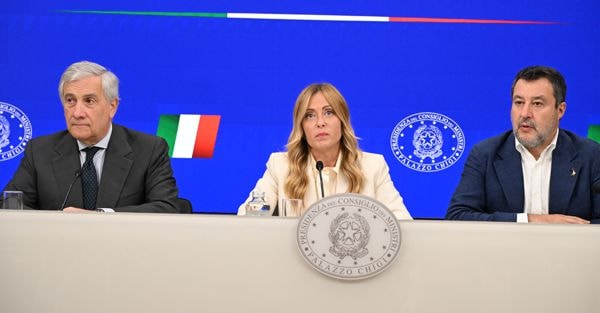
‘Incidentally, in Council of Ministers, amongst the many measures we have approved, there was also the extension of the state of emergency, which allows us to send aid to Ukraine. So I feel quite confident that the government, which has taken a clear stance on this, will be able to move forward. That said, I have great respect for and pay close attention to what a very important party within the coalition has to say.” During a press conference on the 2027 budget, which has been given the green light by the Government, Prime Minister Giorgia Meloni spoke about the differing positions within the majority regarding aid to Ukraine. She also announced the extension of the measure providing funding for the dispatch of further aid next year.
Confirmation came in the statement issued by the government following the meeting at Palazzo Chigi. ‘The Council of Ministers, on the proposal of the Minister for Civil Protection and Maritime Policy, Nello Musumeci, has approved a twelve-month extension of the state of emergency previously declared for overseas operations as a result of the ongoing events in Ukraine,’ the document states.
Switzerland is seeking an alternative solution following delays with the Patriot system
The Swiss government has stated that it does not intend to “abandon” the agreement to purchase US Patriot missile systems – which is experiencing serious delays – but is considering alternatives from Europe and Israel as a fallback option. Switzerland, a militarily neutral country, ordered five Patriot surface-to-air missile systems in 2022, with delivery scheduled for between 2026 and 2028. The US authorities have postponed deliveries due to the reallocation of resources necessitated by the conflict in Ukraine and, more recently, by the situation in the Middle East involving Israel and Iran. According to Switzerland, the delay could range from five to seven years. The government announced today that it has been examining the Samp/T NG missile system, developed by a French-led European consortium, and the Israeli Barak MX system; a South Korean option, however, has been ruled out. Against a backdrop of growing international tensions, the government has announced that, by 2039, it will invest over 70 billion Swiss francs (81 billion euros) in strengthening its defences. In a statement, the government emphasised that “abandoning the purchase of the Patriot system without having an alternative is not a viable option in the current climate”. It added that it is “essential” for the country “to rapidly acquire a second system that meets the requirements posed by the threat, allows for the expansion of the area to be protected, and reduces dependence on a single supplier or a single supply chain”. The government clarified that, alongside technical and military assessments, “aspects relevant to foreign policy and economic policy” will also be taken into account. The Samp/T NG system is produced by a joint venture between the French company Thales and the European consortium MBDA, whilst the Barak MX is manufactured by Israel Aerospace Industries.
The ceasefire is holding; preparations are under way for the evacuation from Oleshky
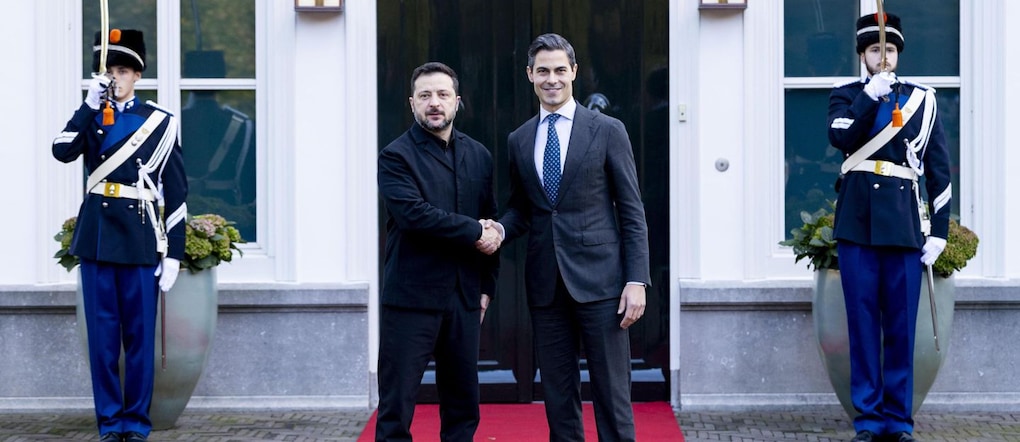
The humanitarian operation to bring aid to the civilian population of the town of Oleshky is now in full swing, in the Ukrainian region of Kherson, which is occupied by Russian troops, where, according to the latest reports, 2,000 civilians, including children and the elderly, are on the brink of collapse due to a lack of food, medicines and even drinking water. The Russian Commissioner for Human Rights, Yania Lantratova, has said that the humanitarian truce – which, according to the White House, was facilitated by the mediation efforts of First Lady Melania Trump – is holding, and that those wishing to leave the town will therefore soon be able to do so. On Tuesday, Vladimir Saldo, the pro-Russian governor of the Kherson region under Moscow’s control, said that the access roads to the town were being cleared of mines to allow for evacuations. “Temporary accommodation facilities have already been prepared and we will provide assistance to anyone who wishes to leave and stay in Russia,” announced Saldo, adding that citizens wishing to travel to Ukrainian territory to be reunited with their families would be able to do so. Oleshky, which had a population of around 24,000 before the conflict began, is situated on the left bank of the River Dnipro and has been under Russian occupation since 2022. The town is situated about five kilometres as the crow flies from the regional capital, Kherson, on the right bank, which Ukrainian troops recaptured in the autumn of that year. The parties accuse each other of preventing food and other essential supplies from reaching the remaining residents through drone and artillery strikes and the laying of landmines on the roads. The food situation in the town has deteriorated significantly since the start of this year, when the international media began reporting on the crisis in Oleshky. The Vatican has been working for some time to find a solution to the humanitarian crisis, and Pope Leo recently discussed the matter in telephone conversations with the Russian President, Vladimir Putin, and the Ukrainian President, Volodymyr Zelensky. The White House has, however, stated that the truce, which came into effect on the night between Tuesday and Wednesday, was agreed following Melania’s intervention. “In such cases, it doesn’t matter who did what; what matters is the result,” commented Monsignor Paul Richard Gallagher, the Holy See’s Secretary for Relations with States (Foreign Minister). On Tuesday, incidentally, the Pope’s Almoner, the Spanish Augustinian Monsignor Luis Marín de San Martín, sent by the Vatican with a consignment of aid comprising around 600 boxes of winter clothing, blankets, bed linen and food. Russian Commissioner Lantratova thanked the First Lady and emphasised that she remains in constant contact with the Ukrainian Parliament’s human rights representative, Dmytro Lubinets, with whom she is coordinating the implementation of the agreements. “We have just one objective: to help the people of Oleshky and do everything possible to ensure the safe departure of those in need,” said the official from Moscow. If it manages to overcome all the relevant obstacles, the Oleshky development will be a small but significant diplomatic achievement on what remains an uphill struggle towards a negotiated solution to the war. According to Donald Trump, a meeting between Putin and Zelensky will be organised “very soon”, though these remarks appear to clash with the Kremlin’s position, which has so far dismissed a summit between the leaders as premature. Meanwhile, Moscow has announced that Sergei Lavrov will travel to Atlanta for the G20 foreign ministers’ meeting on 30 and 31 October. And the trilateral Ukraine-Russia-US talks, expected to take place next month in Abu Dhabi – perhaps as early as 10 November, according to Zelensky, who is currently visiting the Netherlands – are taking shape. The talks will focus on possible security guarantees for Moscow and Kyiv once the war ends, sources told the Financial Times, adding that Washington had previously linked guarantees for Kyiv to territorial concessions. However, since then, it is reported to have indicated that it does not intend to pressure the Ukrainians into ceding territory at the negotiating table.