Warhol and his love for Italia
At the Refettorio delle Stelline in Milan, an exhibition recounts the Italian years of the 20th century's most iconic artist

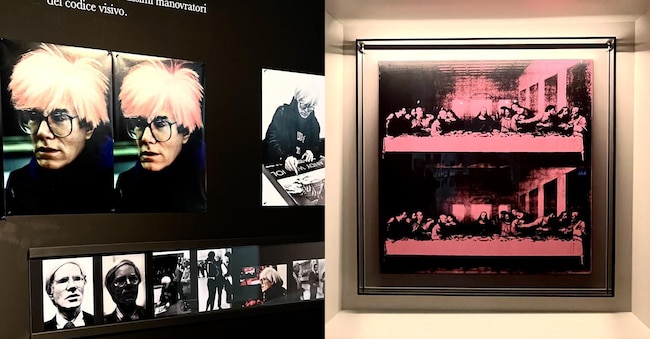
"I want to be a machine," said Andy Warhol. A phrase that sounds almost cold, but which speaks well of the way he thought about his work. No romantic aura around the figure of the artist, rather a continuous processuality of endlessly reproduced images. To many, this approach seemed more market-oriented than research-oriented. But therein lies the point. Warhol takes what circulates every day, studies it carefully and re-enacts it by extracting the essential, giving it a unique edge.
Fame, vanity, consumerism
Everything that fills the contemporary eye is present in his works: fame, vanity, consumerism. Serigraphy is a fundamental technique in this process, because it repeats and multiplies images in a cold, mechanical manner; nothing could better render the idea of the message he wanted to express than this. One of the most famous and recognisable artists of the 20th century, multifaceted and ingenious, he experimented with different languages in the course of his activity, with a clear impact on the visual culture of his time and on subsequent generations. A lesser-known but significant moment concerns the work he did during his time in Italia. The exhibition Andy Warhol. Passaggio in Italia 1975-1987, on show from 20 March to 20 June 2026 at the Galleria Crédit Agricole Refettorio delle Stelline, recounts precisely this phase. More than one hundred works, archive materials and works commissioned by key figures in the art system such as Alexander Iolas, Lucio Amelio and Luciano Anselmino, are on display, showing the natural ease with which the artist moved within the cultural climate and relationships of the period in Italia. Alongside Warhol's works, the exhibition also presents a selection of works from the Crédit Agricole Italia Collections, testimonies to Italian and international artistic research in the 1970s and 1980s, useful for understanding the cultural context and the extremely influential role of the artist on the world scene.
Naples and Milan
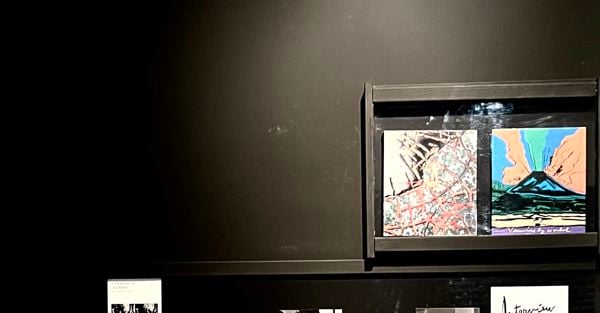
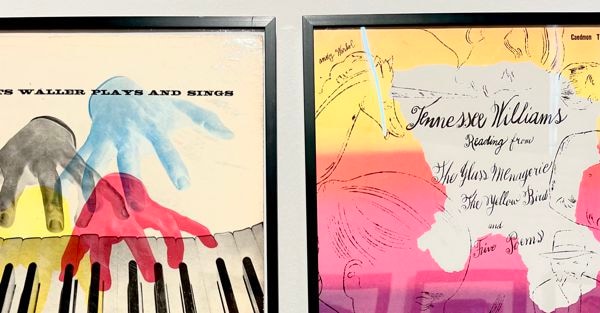
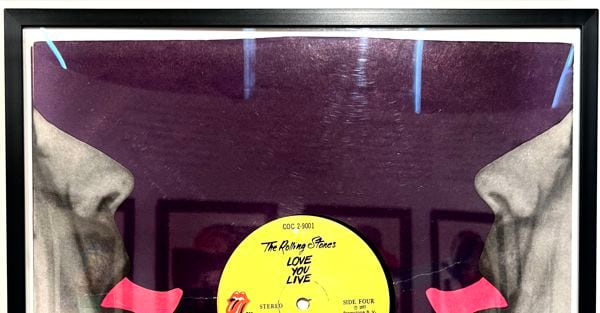
Naples and Milan are two places he is particularly fond of, where he creates central works for this exhibition. Naples is the city he observes with interest and perceives as similar to New York in some respects. He finds in Vesuvius a perfect subject for his language; its shape and iconic character lend themselves to his way of working on the image. This is how Vesuvius was born, in which the volcano is represented at the moment of eruption, an idea matured on the emotional wave of the earthquake in Irpinia and transformed into an image through pop colours and his unmistakable stroke. In Milan, the focus is on one of the most famous works of art in the history of art, the Last Supper by Vinciano. Warhol is aware of this and at the urging of his art dealer Alexander Iolas, decides to measure himself against Leonardo da Vinci's work by following his own language and rules. The result is The Last Supper, a series that reworks the image of the fresco through chromatic variations and enlargements of details. His intention was not so much to make people reflect on the original work as on its mass reproductions and their commercial use. The operation succeeded and the opening of the exhibition Andy Warhol. The Last Supper, staged in the Refectory of the Stelline in 1987, went beyond all expectations. It was almost a performative moment, more than a simple presentation. He was a magnetic character, and everything he touched acquired uniqueness. This series, created at a late stage of his career, is also the last one he devoted himself to before his death, taking on almost a prophetic value, "the last work". In the final section of the exhibition, a large selection of LP covers made between the 1950s and 1980s is presented, together with portraits from the Ladies and Gentlemen series, related to the phase of the so-called 'Second Factory', more commercially oriented than the first 'Factory'. The silkscreens also refer to the moment when collector Luciano Anselmino brought the project to his Milanese gallery, involving a major figure such as Pier Paolo Pasolini to write the catalogue. Pasolini was to be murdered shortly afterwards, without ever seeing the catalogue completed with his introductory text. The last section displays LPs transformed into art objects by the artist's intervention. Vinyl, already pop by nature, becomes an ideal surface for his work, made even more interesting by its technical reproducibility. Images and sounds are multiplied and spread endlessly. Here the encounter between sound and vision is born, in line with his research, in which repetition generates iconicity. Warhol shows us how consumer society saturates our attention, turning people into products and products into icons, anticipating central dynamics of contemporaneity. Thanks to his training as an advertising graphic designer, he immediately understood the communicative power of the image, using it to create art that is accessible, recognisable and deeply connected to social reality. This exhibition fully embodies his modus operandi by highlighting a lesser-known but particularly intense period of his artistic activity.