familyandtrends

Warren Buffet criticises family businesses and points to his son as chairman: why?

Bernardo Bertoldi (Lecturer in Family Business Strategy - University of Turin*)

(Ansa-Epa / Laurent Gillieron / Pal)

4' min read

4' min read

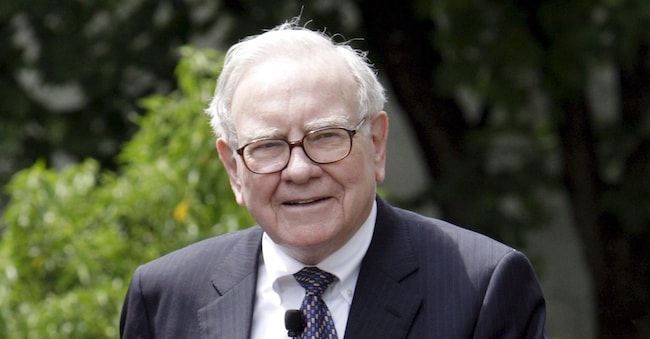
On 3 May at the end of five hours of questions from thousands of members attending his company's annual general meeting, a 94-year-old entrepreneur closed by saying: 'I think the time has come for Greg to take over as CEO at the end of the year'.

Warren Buffet is a great entrepreneur: 60 years ago, he bought a Massachusetts weaving mill on the brink of bankruptcy at a stock market price below its net worth, turning it into the world's largest 'investment company' with a return over the period of 5,000,000% (about 20% per annum) compared to the S&P of 39,000%.

Loading...

For familyandtrends the succession is interesting, too, because Buffet has always criticised family capitalism, stating that its hallmark is monopoly and nepotism and labelling entrepreneurial families as 'the lucky sperm club'. Despite this, he has left the shares to his children, in trusts, and has proposed Howard, his son, as Berkshire's future chairman (while the CEO will be Greg Abel): his succession has some aspects from which we can learn.

Firstly, one must prepare in time but not be in a hurry to leave. Buffet for 30 years has been talking about his succession, during these years he even fired a top manager who had been indicated as the future CEO without any major corporate cataclysms. Abel, for his part, was raised in the company for 25 years and gradually took on more and more operational roles in the company until he was chosen as his successor in the role of CEO. Today, Abel has responsibility for all of Berkshire's operations and investments except insurance. These represent the heart of the business model by offering low-cost money (the float, i.e. customer advances) for Berkshire's investments and this is perhaps why the founder kept the delegation to himself the longest.

Secondly, stability must be ensured by preparing the company and its partners. How much a 94-year-old can still be considered a value to the company was demonstrated by the -5% fall in Berkshire shares the day after the announcement, and this even though Buffet took care to warn his partners that Abel will do better than him, that the Buffet family will not sell a single share and that he will remain chairman.

Thirdly, companies can be owned with multiple voting. To those who claim that shares are 'counted and not weighed', one cannot fail to point out that the most successful investment company listed on the world's most sophisticated financial market is controlled with multiple voting shares. Buffet personally owns about 15 per cent of the shares, but because they are A shares, they grant him about 30 per cent of the voting rights.

Fourthly, values and the way of doing business outlast CEOs. For 25 years, Buffet has been pointing to his son Howard as future chairman, which is curious because the choice comes from an avid critic of family capitalism. When asked why he chose Howard as chairman Buffet replied in 2011: "I worry that whoever takes the reins of Berkshire will somehow use it as his personal 'playground'. This changes the way decisions are made and the relationship with shareholders. The chances of that happening are very, very, very low. But having Howie as chairman adds another layer of protection'. Buffet then enlighteningly responded to the reporter's next question: "I think someone looking in from the outside might object: but what does he ever know about the company?" "Oh he knows plenty... as far as the founding values of the company, he knows, certainly. Certainly. I mean, he doesn't know what insurance policies we are taking out today or how many seats the B.N.S.F. [the rail transport company] sold last weekend. However, he knows the values behind it all'. Even those who do not see much value in family capitalism have chosen his son to protect the values of the company he founded.

Among the tasks assigned to Howard in his 2014 letter to shareholders was that of being the 'safety valve': when a CEO is not doing well, he is to be turned to by the other board members 'to handle the situation promptly and correctly'. Here, perhaps, lies the weak point of Buffet's succession: when in the future there is a moment of crisis, of serious tension with a CEO, of attack by potential buyers or activist shareholders, of profound disagreement with his brothers: with what authority and strength given by the responsibility of the owner will Howard, who is not a shareholder in Berkshire (the shares have been left to charitable foundations), is not a founder, is not a manager and has no technical-operational knowledge gained from working inside the company? Is it possible that the greatest investor of all time, in planning the succession of his company, has forgotten the value of the investor's role in times of serious business crisis?

This question, as in any generational transition, will be answered by time, familyandtrends has only one opinion on it.

* bernardo.bertoldi@unito.it

Copyright reserved ©
Loading...

Brand connect

Loading...

Newsletter

Notizie e approfondimenti sugli avvenimenti politici, economici e finanziari.

Iscriviti