At the fair

Warsaw, art market in turmoil

Events such as Hotel Warsaw Art Fair reflect the growth of collecting. New museums and foundations open
by Silvia Anna Barrilà

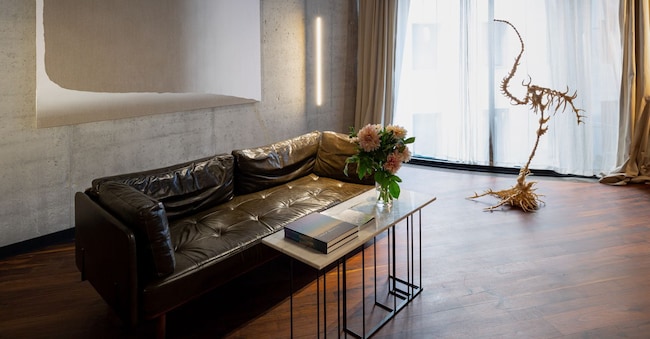
L’allestimeno di Gunia Nowik nella camera da letto alla fiera Hotel Warsaw Art Fair 2025 con opere di Agata Bogacka e Alina Kleytman

5' min read

5' min read

While galleries everywhere are lamenting the slowdown in business and the crisis in the sector, there is a different atmosphere in Warsaw. Talking to operators at the boutique fair Hotel Warsaw Art Fair, which took place from 5 to 7 September, a picture emerges of growth, especially since the post-Covid period, and a lively art and cultural scene with new events and openings.
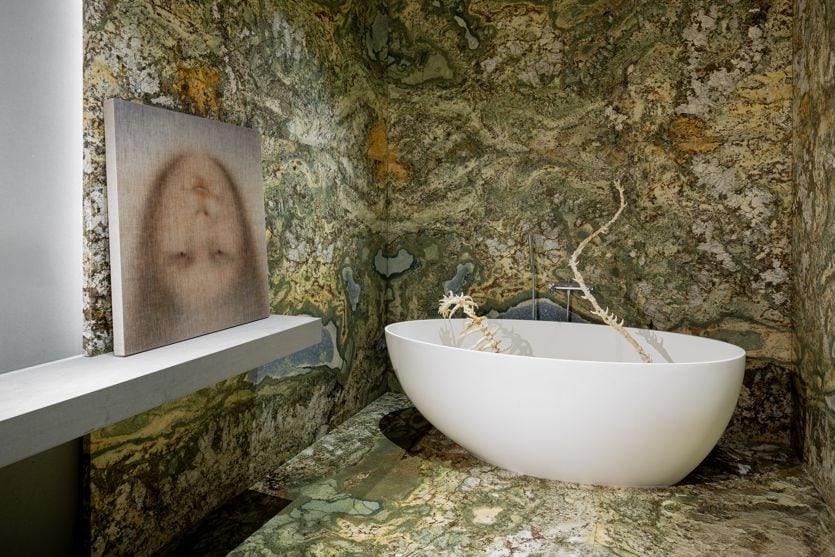
L’allestimeno di Gunia Nowik nel bagno alla fiera Hotel Warsaw Art Fair 2025 con opere di Jędrzej Bieńko e Alina Kleytman

The choice of hotel

.

Now in its fourth edition, the Hotel Warsaw Art Fair is an all-female initiative, the brainchild of four female gallerists - Gunia Nowik (Gunia Nowik Gallery), Marta Kołakowska (Leto), Justyna Wesołowska and Marika Zamojska (Polana Institute) - and Amanda Likus of the Likus Hotel and Restaurant Group, who provided the venue: the first and second floors of the Hotel Warszawa, an icon of modern architecture, built in the early 1930s in Art Deco style as the headquarters of the British insurance company Prudential. It was the city's tallest skyscraper until the 1950s, when it was overtaken by the Palace of Culture and Science, imposed on Warsaw's inhabitants by Russia, and transformed into a hotel in the style of socialist realism until its recent renovation in the name of contemporary luxury.
Loading...


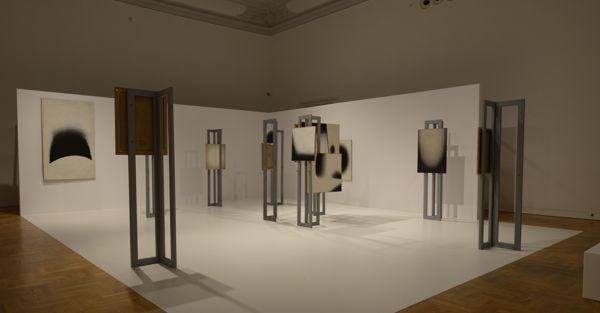
Wojciech Fangor e Stanistaw Zamecznik, «Studium prestrzeni», 1958, Zacheta Gallery

Polish Art Offer

.

The fair hosted some 20 local galleries and four international guests, with an offer that focused on contemporary Polish art, with some excursion into the modern. For example, there was the sculptor Magdalena Więcek (1924-2008, values between EUR 60,000 and 120,000), whom Olszewski Gallery will bring to Artissima in Turin, together with other modern artists such as the better-known Wojciech Fangor (2022-2015), an incredible room of which from 1958 is currently reconstructed at the Zachęta National Gallery of Art.

But the lion's share is taken by contemporary art, with a balanced offer of painting and sculpture. For example, Leto - a gallery with almost 20 years of activity behind it - exhibited three sculptors including Angelika Markul (class of 1977, values from around 6,000 to 20,000 euro), who creates organic effects using wax painted with eye shadow.
On Gunia Nowik's stand was the Ukrainian sculptor based in Turin Alina Kleytman (born 1991), who creates skeletons of disturbing beings somewhere between the futuristic and the mythological. Alongside her are the paintings of Agata Bogacka (born 1976), a name on everyone's lips, who uses abstraction to talk about tension and negotiation, presence and absence, and those of the young Jędrzej Bieńko (born 2000), who uses an airbrush to paint apparently abstract pictures in which figures that spy on the observer are concealed (stand prices from 5,000 to 25,000 euros). Another interesting painter is Magdalena Karpińska, born in 1984, exhibited by Polana Institute, who paints still lifes with flowers including herself in the reflection, with clear references to the history of art (values around EUR 2,600).

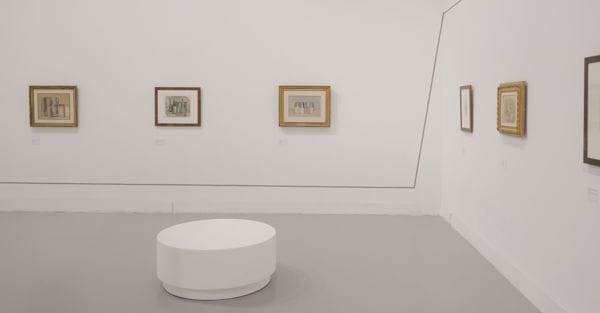
La mostra di Giorgio Morandi alla Zacheta Gallery

The vibrancy of the market

.

"The art market in Poland is not comparable to Western Europe," explained Gunia Nowik. "Being a former communist country, art collecting here has developed recently. After 1989, there was a social and economic transformation that is now bearing fruit. There is great dynamism'.
It is a view shared by all operators and observers of the Polish art and cultural scene, which is also confirmed by the numbers. According to Artprice, in 2023-24 the art market in Poland in the ultra-contemporary sector grew by 69%, partly driven by the success of the young surrealist Ewa Juszkiewicz (born in 1984), who joined the Gagosian stable. Poland thus came fifth in the global ranking for turnover in the segment.

The economic growth of the country is reflected in the art market, but one also feels the political tension due to the expansion of the nationalist right, which has sometimes come to influence the choices within museums.
Paradoxically, the war in Ukraine also contributed to the expansion of the art scene. "The conflict has caused artists, curators and patrons to flee here from Ukraine and Belarus," explained Lukasz Gorczyca of Raster Gallery, "enhancing and enriching the local scene." On display at the fair were two already established artists, both born in the 1970s, such as Aneta Grzeszykowska, who will be exhibiting at the Venice Biennale in 2022, and Oskar Dawicki (stand values from EUR 7,000 to EUR 30,000).

"Polish contemporary art is going through a moment of ferment and great vitality, but its international visibility is still rather limited," said Davide Boy, an Italian, medical director in Poland for a pharmaceutical company and art collector who has been living in Warsaw for ten months. "There are virtuous initiatives, such as the Warsaw Art Fair and Constellation, during which various Warsaw galleries have hosted realities from other countries (for two years there has also been another fair, Nada, and in a fortnight the Gallery Weekend Warsaw, ndr). I have noticed that the economic value attributed to some works is sometimes a little overestimated, especially when compared to the limited international presence of Polish artists and galleries. Even talented artists are known almost exclusively within the circle of local collectors'.

Museum of Modern Art Warsaw, foto di Maja Wirkus

Growing values

.

Opinions are often divided on this point, in fact, there are those who think they are in line with European standards, while for others they are still lower than in the West, but growing steadily. "Looking at the evolution of prices, it is certain that values will increase," commented Katarzyna Białousz, ceo of Instytut Fotografii Fort, a foundation dedicated to photography that sells works to support itself. "There are more and more players involved in the market interested in supporting and defending Polish art, but it needs to be more recognised abroad".

Less strong is the photography market, which still represents a niche. "There are only two galleries completely dedicated to this area and the market is not yet as developed," continued the gallery owner, "we do not see the same price growth that we see in the contemporary art market. At their stand were, among others, the promising Agnieszka Mastalerz (class of 1991), who explores the mechanisms of control and exploitation in relationships and in relation to nature, and Joanna Tochman (class of 1992), who paints imaginary worlds and then searches for them in nature for dreamlike photographs (value EUR 3,000-3,500).

New Events and Museums

.

Certainly, the number of foundations has grown, also facilitated by Polish legislation (according to ArtTactic, a thousand have been created since 2023). Among the most recent is the Visteria Foundation, created by Kasia Jordan, collector, patron and founder of Vogue Poland. These days it inaugurated an exhibition dedicated to Jorge Zalszupin, a Polish architect and designer who emigrated to Brazil in the post-war period, but it will close to undergo renovation and reopen as a permanent museum.

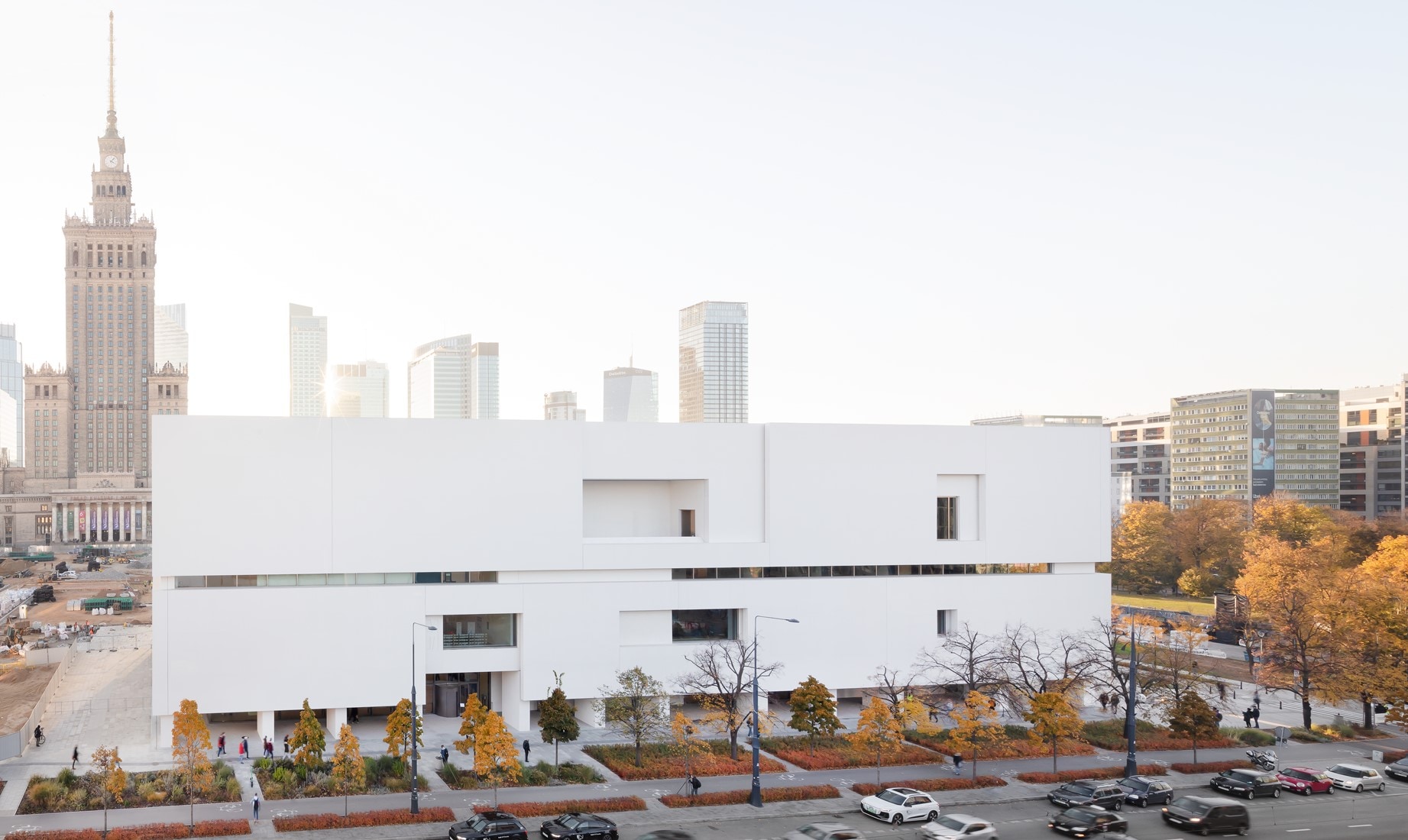
After 20 years of nomadism, the Museum of Modern Art (Muzeum Sztuki Nowoczesnej, or Msn), established in 2005 but without a fixed location until 2024, also recently opened. The building, a white concrete cube, was constructed thanks to a state investment of 629 million Złoty (about 148 million euro). The collection includes 4,300 pieces of modern and contemporary art and is enriched every year thanks to a budget of 2-3 million Złoty (approx. 470,000-700,000 euro). The latest acquisitions were of Ukrainians and Palestinians, a choice that underlines the museum's socially committed and minority-friendly orientation. In October it will also host the Kyev Biennial, which for obvious reasons cannot be held in Ukraine. This will be followed in November by a major exhibition on women artists in history from the Renaissance to the present, curated by Alison Gingeras (former curator at the Guggenheim, the Pompidou and Palazzo Grassi), entitled "The Woman Question", with numerous loans from Italy of artists such as Sofonisba Anguissola, Lavinia Fontana, Artemisia Gentileschi. Italian art, at this time, also at the Zacheta Gallery, with the first exhibition of Morandi not only in Poland, but in Central and Eastern Europe, curated by Lorenzo Balbi, director of Mambo. A further opportunity to consolidate the already solid relations between the two countries..

Copyright reserved ©
Loading...

Brand connect

Loading...

Newsletter

Notizie e approfondimenti sugli avvenimenti politici, economici e finanziari.

Iscriviti