
Warsh’s debut: interest rates held steady and five task forces for the Fed
At the new governor’s first meeting, the central bank left interest rates unchanged, but the board expects a rise by the end of the year. Trump: ‘Hard to believe, but I trust him’
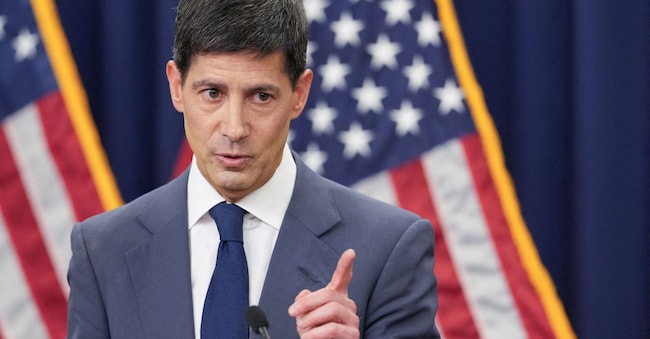
Kevin Warsh’s new Federal Reserve has made its debut with a policy of continuity on interest rates: by a unanimous decision, it has kept the cost of borrowing in the US stable within the range of 3.50 per cent to 3.75 per cent. However, the Fed’s top officials have significantly adjusted their outlook – the so-called ‘dot plot’ – with a growing number now forecasting an anti-inflationary tightening in 2026.
By removing explicit references to forward guidance, the Central Bank’s statement has abandoned its previous ‘bias’ – its preference – for growth-oriented easing. The reference to ‘further adjustments’ to interest rates, a traditional indicator of potential cuts, has disappeared from the text. Warsh, once a rate hawk, had made no secret during the campaign to be chosen by Donald Trump to lead the Fed that he now favoured, if possible, reductions in the cost of borrowing, in line with the White House’s concerns. However, the current economic landscape – characterised by sustained growth and galloping inflation – has tied his hands.
Nine of the 19 participants at the Central Bank meeting (18 in reality, as Warsh did not take part in the dot plot) predicted at least one rate rise by the end of the year. No one had made such a forecast at the previous meeting in March. Eight believe rates will remain unchanged, whilst only one member now anticipates a cut, compared with 12 previously. Goldman Sachs spoke of a ‘shift in favour of the hawks’, describing the ‘margin for avoiding rate rises’ as ‘narrow’.
Warsh acknowledged the dilemmas: “Inflation is well above target, but we will, without a doubt, achieve price stability,” he promised at his first press conference, addressing the most immediate challenges. He emphasised that the Fed’s updated economic outlook forecasts, on average for this year, first and foremost, PCE inflation accelerating to 3.6 per cent from the 2.7 per cent previously indicated, with GDP growth revised down slightly to 2.2 per cent and unemployment close to the current level of 4.3 per cent. This outlook was summarised in the Fed’s own statement as follows: “Economic activity is expanding at a solid pace despite high levels of uncertainty, partly due to the conflict in the Middle East. Inflation remains elevated relative to the 2 per cent target, partly reflecting supply shocks.”
The strongest wind of change was thus evident in Warsh’s statements on ambitious reforms at the Central Bank, foreshadowed by that initial press release issued under his leadership, which he described as ‘shorter and simpler’. He announced the creation of five task forces: communication; reduction of the Fed’s balance sheet; use of data and sources; productivity and labour (including AI); and the structure of inflation (which he would like to see more contained).


