
Washington’s diesel and Europe’s new dependence
With the closure of the Strait of Hormuz, Europe lost its Gulf suppliers and turned to American refineries. The price has doubled, and now the White House is in control of the tap

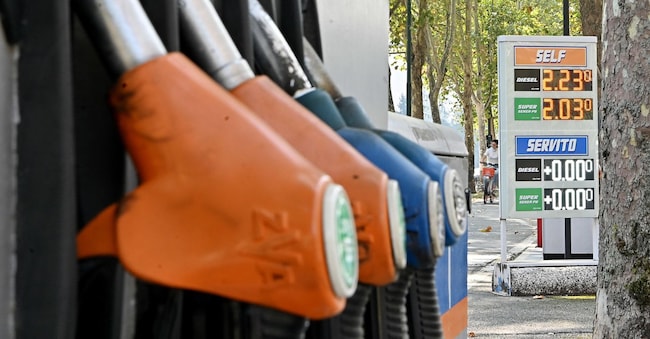
For three years, Europe told itself a reassuring story: giving up Russian gas and diesel was painful but necessary, and its American ally would make up the shortfall. ‘Freedom gas’ and diesel from Texas and Louisiana were supposed to be a secure energy supply, because they came from a friendly country. The Hormuz crisis has exposed the flaw in that narrative: Europe has diversified its suppliers without reducing its vulnerability. It has merely shifted it to the other side of the Atlantic.
The figures speak for themselves. Since the end of February, when the war between the United States and Iran began, the benchmark price of diesel in Europe has more than doubled. Refineries in the Gulf, Europe’s long-standing suppliers of diesel and aviation kerosene, have drastically cut their exports. Meanwhile, Ukrainian drones were striking Russian refineries, and in the summer Moscow banned diesel exports. According to estimates cited by the G7, the two crises have deprived the global market of around 1.6 million barrels of distillates per day: a devastating blow for a continent that produces less diesel than it consumes.
American refineries stepped in to fill the gap. In 2025, the United States supplied 17 per cent of the diesel that the EU imports from third countries. In 2026, the average share rose to 32 per cent – around 180,000 barrels a day out of 580,000 – and by August it had reached half. In just a few months, Washington has become the leading supplier of a product that powers lorries, tractors and much of the logistics sector, and whose price is passed on almost immediately to transport costs and, from there, to the shopping basket.
On 22 September, Donald Trump expressed his support for a ban, or at least a cap, on US diesel exports. The reasoning was entirely domestic: in the United States, diesel had just hit a record high of $6.52 per gallon, the mid-term elections were approaching, and Republicans from agricultural states and the Midwest were calling for the fuel to be kept at home. For Europe, it would have been a disaster: losing the only supplier capable of offsetting the Gulf and Russia would have driven prices up even further, causing real supply problems in some countries.
The threat worked. On 2 October, the G7 decided to release 100 million barrels from emergency reserves onto the market over a four-month period, with a substantial proportion of diesel in the first twenty days, and undertook not to impose any restrictions on energy exports amongst its members. A few hours later, Trump ruled out the ban, claiming rather brazenly that he would never have imposed it. For several commentators, the release of the reserves was a concession by Europe to avert a cut-off of supplies. Washington secured greater supply and lower prices ahead of the election, without the political cost of an embargo.

