
Waste paper: exports from Italia up 13 per cent, with half going to India
In 2025, 6.6 tonnes of material were produced, a quarter of which was sold abroad. Businesses are feeling the strain of high energy and transport costs

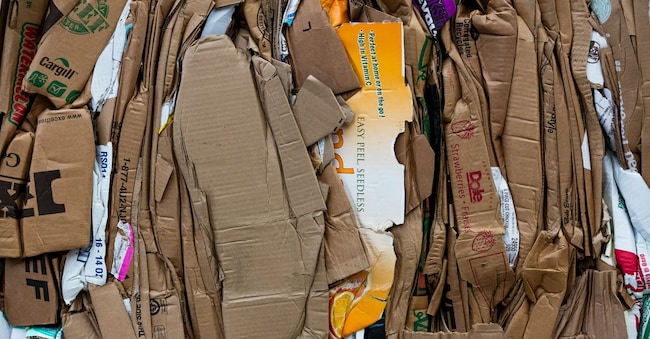
Waste paper: exports from Italy are on the rise. In the first half of 2026, exports totalled nearly 950,000 tonnes, representing a 13 per cent increase compared with the same period the previous year, with a sharp rise in the second quarter (+22 per cent). Almost half of the volume (44.8 per cent) went to India, followed at some distance by Indonesia (13.4 per cent) and Germany (7.7 per cent). Together with South-East Asia, India is now the new centre of gravity for global demand for waste paper, and the free trade agreement between the country and the EU – negotiations for which were concluded in January – presents an opportunity to place the surplus of domestic production on the international market.
This is according to Unirima’s 2026 Report, presented on 17 November. The National Union of Companies for the Collection, Recovery, Recycling and Trade of Waste Paper and Other Materials represents firms that handle around 90 per cent of the sector’s volume, with a total turnover of approximately 4 billion euros. In 2025, the sector’s approximately 700 plants, spread throughout the country, produced 6.65 million tonnes of waste paper.
The recycling rate
This work has helped to raise the recycling rate for paper and cardboard packaging in Italia to 93.1 per cent, the highest figure since 2009 and above the European target of 85 per cent set for 2030, as also certified by Comieco, the consortium for the recovery and recycling of cellulose-based packaging.
Company accounts
However, an increasingly unstable international climate is weighing on companies’ accounts. The use of tariffs as a means of exerting political pressure and the crisis in the Middle East, with tensions in the Strait of Hormuz, have driven up energy and sea freight costs. Meanwhile, waste paper is worth less than it was a year ago, and the latest Comieco auction for cardboard in September (average price around 100 euros per tonne) recorded a 15 per cent fall compared with last year’s auction.
The Unirima Research Centre’s survey shows that, for more than half of the businesses (51.8 per cent), the rise in operating costs has weighed on turnover. Overall, however, the survey paints a picture of cautious optimism for the sector.

