
Fuel from waste: mapping of production and demand under consideration
Cisambiente at Ecomondo: the sector is ready to contribute to energy self-sufficiency. Growth potential: 500,000 tonnes available for use in cement works in Italia

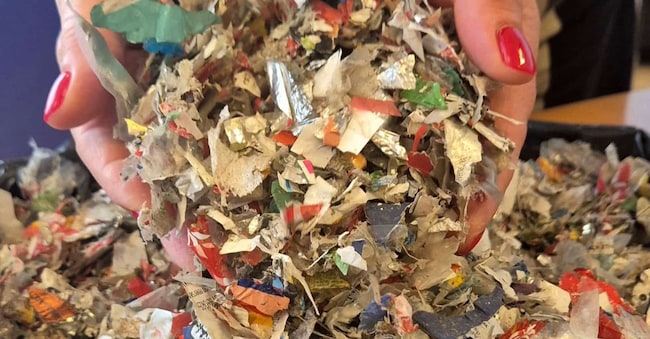
Secondary solid fuel (SSF), produced from non-recyclable waste, is set to make an increasingly significant contribution to Italia’s energy needs. This was the message that emerged from the conference on the subject organised by Cisambiente Confindustria at the Ecomondo trade fair in Rimini, entitled ‘Energy self-sufficiency: thank you, CSS!’.
Following the regulatory simplification set out in the recent ‘Ambiente-bis’ decree (see *Il Sole 24 Ore* of 6 October), this product is set to see an increase in both consumption and production. According to Lucia Leonessi, Director-General of Cisambiente Confindustria, ‘the simplification of the rules governing the use of CSS introduced by the decree is an achievement that we can certainly take credit for. For ten years, ever since Cisambiente was founded, we have fought for the recognition of secondary solid fuel as a strategic resource – and therefore as a product – in order to promote its use as befits a cost-effective and environmentally friendly resource. Today, this battle has become a reality and is precisely the result of a regulatory process that has successfully taken our demands on board. Analysing the concrete effects that the new rules have on the industry means understanding that CSS reduces energy costs across the country, cuts CO₂ emissions and adds value to non-recyclable waste fractions.”
Roberta Toffanin – a consultant to Mase, a member of the GSE board of directors and one of the conference participants – emphasised that, whilst the use of this fuel has increased today, there is still considerable room for improvement: according to the CSS Supervisory and Control Committee, 120,000 tonnes were used in 2023, 160,000 in 2024 and 220,000 in 2025: ‘In Italia, around 500,000 tonnes of CSS can be used in cement works,’ said Toffanin. This figure was confirmed by Margherita Galli, Head of Environment at Federbeton: “To remain on track with our decarbonisation roadmap, we need to increase the calorific substitution rate from 26.5 per cent to 47 per cent,” she added. There are also opportunities for its use in electricity generation. Now, the ‘Ambiente-bis’ decree appears to have resolved the regulatory issues and set the course: growth is expected for this product.
Corrado Clini, former Minister for the Environment and author of the decree that set the criteria for CSS production in 2013, has estimated future production in Italia at 6.7 million tonnes, based on 20 per cent of the waste produced plus half of the plastics collected in Italia. Other estimates suggest a potential 10 million tonnes. Clini has calculated, based on the average production cost of CSS, a saving on fossil fuel imports of 4.7 billion: ‘It is no longer just an environmental issue,’ he said, ‘but an economic one. It would be appropriate for the government, the Conference of Regions and the relevant associations to sign a programme agreement to promote this fuel within the national economy.”
As Ispra’s president, Alessandra Gallone, pointed out, production currently stands at 1,730,000 tonnes, with 500,000 tonnes being exported. To reverse this trend, Ispra aims to map CSS production flows, the energy requirements of our industries and, at the same time, the environmental quality of the regions.


