
Wastewater: from waste to a strategic and sustainable asset
The EU Waste Water Directive must be transposed by 31 July 2027. The issues raised by the pharmaceutical sector remain unresolved

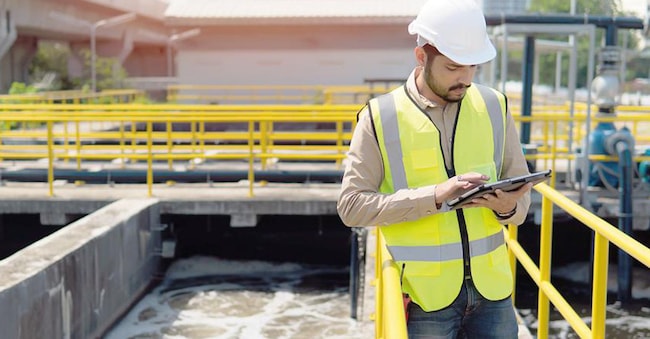
What would happen to the Italian economy if water were to become a scarce resource? Around 20 per cent of the national GDP could not be generated. The water crisis is indeed taking its toll: today it costs €227 per capita annually, double the European average (€112), a figure amounting to €13.4 billion – as if our country’s economy were to grind to a halt for two and a half days every year. These figures come from the 2026 White Paper by the ‘Valore Acqua per l’Italia’ Community, published by the Teha Group (The European House – Ambrosetti), which highlights how heatwaves, droughts and extreme weather events have brought water back to the forefront of Italian and European policy.
A paradigm shift
It is, in fact, this realisation that has led to the EU Directive 2024/3019 on urban waste water, which comes into force in January 2025, updates legislation dating from 1991, and must be transposed by 31 July 2027. It forms part of the new European Water Resilience Strategy, which aims to strengthen water security and the circular economy and introduces a paradigm shift: ‘We must stop viewing wastewater as waste to be disposed of and start seeing it,’ observes Gabriella Chiellino, founder of eAmbiente, ‘as a resource to be recovered to produce new water, energy and raw materials, thereby contributing to the circular economy and adaptation to climate change, whilst ensuring water supplies. The directive represents an opportunity to transform an environmental challenge into a driver of competitiveness and resilience.”
What’s new
There are many new developments: the gradual extension of these obligations to include small municipalities, the introduction of quaternary treatment to remove organic micropollutants, such as PFAS and cosmetic residues, monitoring of microplastics and emerging contaminants, energy neutrality for treatment plants by 2045, and incentives for renewable energy production, nutrient recovery from sludge and water reuse. Today, Italia treats a staggering 9 billion cubic metres of wastewater every year, but the paradox is that it still reuses only a limited proportion of it: less than 5 per cent is reused by households and businesses to irrigate fields. Yet studies show that this ‘recycled’ water could meet up to 45 per cent of Italy’s total irrigation and agricultural demand, reducing withdrawals from aquifers and rivers during periods of severe drought. ARERA, the sector’s regulatory authority, has introduced new incentives to reward those who invest in water recovery: encouraging increased reuse of treated wastewater, reduced electricity consumption and plant operations, on-site renewable energy production, and circular economy projects in the water sector.
Uphill road
The transposition of the directive will require the Consolidated Environmental Act (Legislative Decree 152/2006) to be updated by 1 January 2028 to bring it into line with the new EU standards. For this reason, the stakes are very high for businesses and water service operators, and targeted action and governance are required. “The main obstacle is not technological but strategic: we need the courage to recognise that water is a priority issue for our country,” emphasises Chiellino. According to the expert, “clear structural and economic decisions are essential in the face of administrative fragmentation, a lack of investment in modernising facilities to reduce wastage, and bureaucratic complexity in procurement procedures”.
Among the necessary measures, Chiellino cites public-private partnership (PPP) schemes, which can help to mobilise capital and provide the necessary managerial, technical and technological expertise through private operators. “With a few caveats: the water sector,” he points out – requires investments running into billions to bring facilities up to the advanced standards set out in the new EU directive, and the new Public Contracts Code has streamlined PPP procedures by removing the 49 per cent cap on public contributions, which favours the low-profit projects typical of wastewater treatment.” The transformation required, therefore, is also cultural: for businesses and institutions, including citizens. “Italia is among the largest water consumers in Europe,” adds Chiellino, “and pays less than the European average: it uses almost double that amount, around 120–165 litres per day, at a cost of approximately 2.10 per cubic metre, whilst the average cost in the EU is 3.20 euros.”

