
Water crisis, why a systemic approach is needed
Cross-cutting phenomenon impacting multiple aspects of our lives. Perspectives based on Unccd's World Drought Atlas

3' min read
3' min read
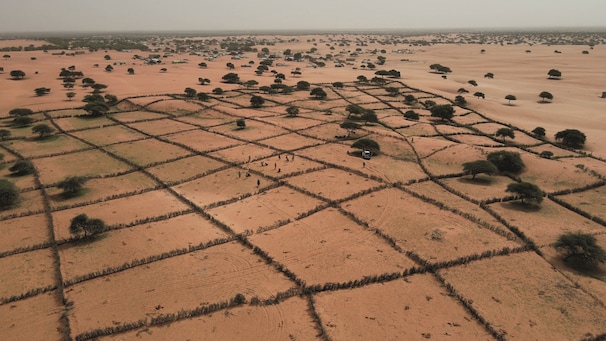
Drought is a cross-cutting phenomenon and must be addressed in a systemic manner. The impacts on supply, agriculture, hydropower capacity, inland navigation, ecosystems (and related services) are multiple and globally intertwined, with direct consequences on human activities. This is why work must be done at various levels, starting with international and local politics, to manage and adapt to new environmental conditions, part of climate change and human action. This is the message that spreads from the World Drought Atlas published by the United Nations Convention to Combat Desertification (Unccd) on the occasion of last December's Cop16 in Riyadh against desertification. And which continues to offer food for thought, for proactive choices, not merely reacting to emergencies, on the eve of a summer that once again this year promises to be critical in Italy, especially in the South.
Italy at the heart of complexity
.Commissioned by the European Commission's Joint Research Centre (JRC) and Unccd, and coordinated by the Cima Foundation (an international environmental monitoring centre), the World Drought Atlas highlights the most critical aspects of the water crises of recent years, offering perspectives, 'pathways' and virtuous examples of management of the phenomenon that policy makers can look to. Italy is an example of the complexity of the impacts that the droughts of the years 2022-2023 in the North and 2024 in the South have brought on very important sectors, starting from agriculture and ending with water rationing for part of the population. In fact, the appointment of an extraordinary national commissioner for the adoption of urgent interventions related to the phenomenon of water scarcity, Nicola Dell'Acqua, dates back to 2023.
"Italy is in a difficult position in terms of both water availability and use," explains Edoardo Cremonese of the Cima Foundation: "On the one hand, it is located in the centre of the Mediterranean, a hotspot where climate change is already a reality, and less rain and less snow cause national water availability to be under stress. On the other hand, it is home to a society that is very demanding when it comes to water, for various reasons: it is at the top of the consumption charts for its main uses, civil and irrigation, which account for 85 per cent of today's consumption. So we use a lot of water but have less and less of it: in order to manage this balance we have to look further afield and address the causes to reduce the risks.
Coordination effort
.Cremonese continues: 'An effort is underway to coordinate governance in the various administrative, political, and technical components. Work will be needed on simplifying the regulatory framework, which contributes to complicated management. And on numbers, to close the information gap on uses, for which we now have estimates. Finally, the provision of both economic and political capital will be indispensable, so that important choices on the management of water use can be put on the agenda'.
The atlas data contribute to the definition (and the urgent need) of new water resilience objectives, given the estimated economic losses linked to drought (+$124 billion per year globally) and the increase in the duration of the phenomenon: Italy has recorded a 45% increase in days of extreme drought in the last decade, a figure that makes it one of the most affected countries in Europe.

