
Water, between floods and droughts here is what is happening in the world
Providing findings on the water cycle is the World Meteorological Organisation in its annual report. The picture is worrying due to climate change

3' min read
3' min read
Insufficient water levels and an irregular hydrological cycle. The reportState of Global Water Resources for 2024 - produced by the World Meteorological Organisation - continues to paint a worrying picture, including water shortages, ice losses, and prolonged droughts. In short, it is not just unfounded theories of climate change, but something that is inexorably progressing.
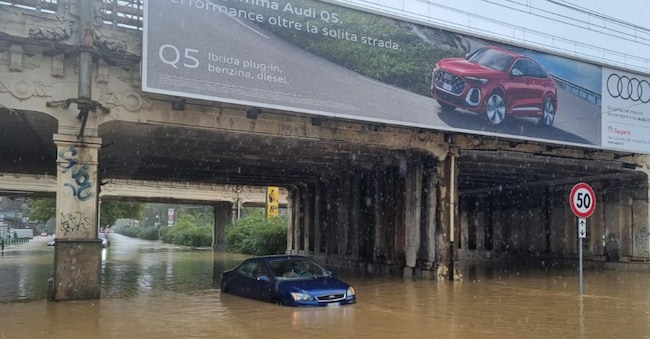
As a whole, the report, which is on a global scale, points out that 2024 was a dry and hot year with marked differences between areas: some had long periods of severe drought, others suffered multiple floods. This was also a problem in Italy given the many floods that occurred in 2024, alternating between many consecutive days of code red for extreme heat (with consequent drought). In general, last year, all the 'glacial' regions of the world recorded a loss of ice and this accelerates the need to invest in monitoring global water resources to avoid reaching a point of no return. On the other hand, the aim of the report is precisely to offer a global overview that is easy to understand and allows comparisons to be made between different years: the more data there is, the easier it is to get a good understanding of the situation and, the report emphasises, "to encourage the participation of countries to better understand and describe the dynamics of the water cycle".
Water cycle, what's going on
.The fact that the hydrological cycle is undergoing significant changes is due to two aspects that create increasing global variability: climate change on the one hand, and human interventions on the other. In order to best adapt to these phenomena, the World Meteorological Organisation explains, we need continuous monitoring and constant assessment of our water resources. And, as stated earlier, this means making more investments. There are three major geographical areas where we need to invest more: Africa, Asia and Latin America. Suffice it to say that despite improvements in recent years, both Africa and Asia remain underrepresented in hydrological data collection: the two continents cover only 3% of the world's stations.
Rivers and Lakes
.In 2024 (as well as in 2023), river flow showed deviations from normal conditions in about 60 per cent of the global catchment area, an alarming figure that hints at how conditions can change over time. In both central and northern Europe, as well as in parts of Asia, there have been marked differences: basins such as the Danube, Ganges, Godavari and Indus have 'recorded above or far above normal conditions'. Furthermore, 'severe drought, which began in late 2023, has persisted in South America'. Areas in West Africa (e.g. Senegal and Niger) were affected by extensive flooding.
Lake levels remained below normal in, for example, the north-west of Canada, while in Africa most lakes recorded opposite levels and were therefore well above normal, with the exception of Kariba, an artificial lake on the border between Zambia and Zimbabwe. In Europe, lake levels - especially in the northern part - were above normal. In general, the 75 largest lakes worldwide recorded higher temperatures. In 2024, the report explains, 'positive anomalies in terrestrial water storage were observed in sub-Saharan Africa, northern Australia and central Africa'.

