
Water, Italia under water stress: record water withdrawals in Europe
According to the Italy for Climate report, our country is first with 36 billion cubic metres
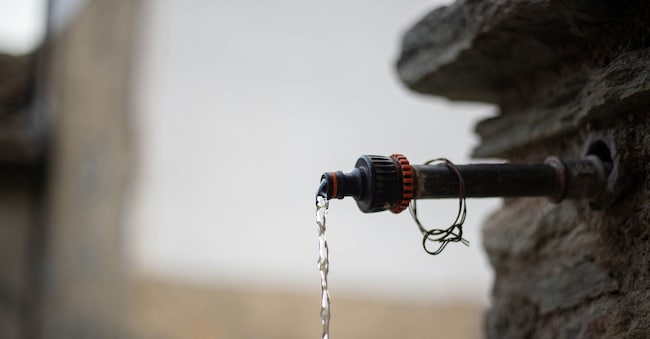
The link between climate change, the water crisis and extreme weather events is increasingly evident. This is brought into focus by the report "Too much or too little. Water in Italia in a changing climate" presented on 5 June, World Environment Day, as part of Venice Climate Week 2026, and produced by Italy for Climate, the climate and energy study centre of the Foundation for Sustainable Development.
Extreme events
Italy is warming up at a faster rate than the global average (+2°C in the last 50 years), which intensifies droughts, water bombs and floods: in 2025, 1,670 hailstorms and intense rainfalls were recorded in Italia, compared to 660 in 2019, and between 1980 and 2024, the damage caused by extreme events cost 145 billion, with a very strong acceleration in recent years.
Water stress
The context remains one of water stress: Italia withdraws 27% of available water: like Malta, Cyprus and Spain it exceeds the 20% alert threshold. And it has the record of withdrawals in Europe: 36 billion cubic metres in 2023, more than Spain (33), France (26) and Germany (24), with particularly high levels in agriculture, civil uses and industry, while glaciers are disappearing. While Italia now has about half the amount of water per capita of the European average, down 20% from a century ago.
Reuse and Adaptation
"The ongoing climate crisis generates, with spatial and seasonal variability, significant dangers of both droughts and floods. To increase resilience and reduce vulnerability to these dangers we need, on the one hand, a change of model in the management of water resources, moving from the linear use of water to a circular one, aiming at water saving in all sectors, the renewal of networks to put an end to huge dispersions, the irrigation reuse of refined waters with recovery of phosphorus and nitrogen from sewage sludge, and the collection and reuse of rainwater. On the other, structural adaptation measures are needed: halting cementification and soil sealing, increasing expansion and restoration of river and wetland areas, rainwater storage in urban and peri-urban areas. All of this requires awareness, use of the risk analysis and climate adaptation planning tools that are now available, and resources that are certain, stable and lasting, even after the Pnrr funds are no longer available," explains Edo Ronchi, president of the Foundation for Sustainable Development.
Direct risks
"In Italia, we have been witnessing the worrying changes induced by global warming on the water of our Planet for years. An increasingly warmer Mediterranean brings direct risks for biodiversity, as witnessed by the exponential increase in alien species, but also for coastlines and coastal cities, threatened by rising sea levels. On land we witness the paradox of too much or too little water. Increasingly heavy rainfall, which is now the norm rather than the exception, is endangering the lives of millions of people, especially in northern Italia. On the other hand, increasingly high temperatures and the absence of rain in the summer months for prolonged periods threaten the southern regions in particular, with the inhabitants of some capitals now getting used to a new normality: that of water rationing, which is no longer an exception in the summer season,' concludes Andrea Barbabella, Scientific Director of Italy for Climate.


