Utilitalia

Dal Fabbro: 'Water, we need a 30 billion plan to ensure efficient management'

The Federation's number one outlines the priorities: 'Investment in purification and new infrastructure must be accelerated in order to avoid the much higher bill for not doing'.

by Celestina Dominelli

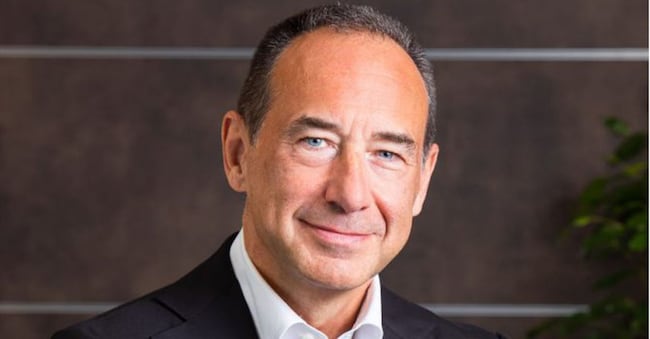
Luca Dal Fabbro

4' min read

4' min read

"We need 30 billion in five years to build a Marshall Plan on water, which must be placed at the centre of the country's agenda because it is the engine of agriculture and industry, as well as a fundamental asset for the lives of citizens". Luca Dal Fabbro, the new president of Utilitalia, starts from this point to outline, in this interview with Il Sole 24 Ore, the first after his appointment, the challenges of his term of office at the head of the Federation that brings together 400 companies in the public services of water, the environment, electricity and gas in Italy and can count on 68.6 billion euro of production value and over 100,000 employees. Numbers that make Utilitalia, adds Dal Fabbro, "an important and reliable interlocutor for the institutions, to which we want to make a concrete contribution and from which we aim to receive the right recognition".

Let's start with water. Why is a structured plan still missing?

Loading...

Water is considered a Cinderella of commodities and has never experienced systemic crises but seasonal emergencies, especially in the South. Things, however, are already changing and we are about to enter an era in which the problem of drought will not only involve the South, where investments are much lower, but will also affect the North of the peninsula because there are so many unresolved knots.

What in particular are you referring to?

I am thinking, for example, of the generalised problem that Italy has with purification, with 856 agglomerations that are subject to European infringement procedures: 27 million inhabitants are in areas subject to the yellow card from Brussels, 76% of which are located in the South. Not to mention the impact of the fragmentation that characterises water governance.

On this front, Europe has repeatedly asked Italy to correct its course, but countermeasures are slow to arrive.

Yes, there is a long way to go and we must speed up. Not least because fragmentation brings with it the presence of a few industrial entities in the South, where economy-based management prevails, which has a number of problems, not least of which is not having the capacity to put the necessary funding on the ground. And this generates large discrepancies between the different areas of the peninsula: in the northern and central regions, the average per capita investment varies between 63 and 73 euros, while in the south the bar drops to 32 euros and is even lower for the economic managements.

How much is needed to overcome these imbalances and where should we start from?

As Utilitalia, we have estimated at 6 billion a year for a five-year period the investments needed to solve the purification issue, but also to build new works, starting with the catchment basins, which will help us not only to improve the management of the resource but also to solve any hydrogeological risks. This is a real Marshall Plan that we can no longer put off because, if we do not proceed with the definition of a medium-long term strategy, we could find ourselves paying much higher costs. I am referring to the costs associated with infringement procedures, but also to those we would have to bear if we were to run out of water for agrifood production or for the operating cycles of industries, to name but a few examples. Not to mention the equally significant costs associated with public health if this commodity - which we mistakenly take for granted - were to become scarce.

Are there areas where the risk is more concrete?

In the meantime, it is worth pointing out that this is not just a problem in southern Italy. Many studies tell us, in fact, that in the next 10 to 15 years water will start to run out even in the Po Valley, which is the engine of Italian industry. We are facing the chronicle of a death foretold, which is why we must act quickly, also working on a plan to reuse waste water that we still disperse in large quantities, while elsewhere, in France but also in Germany, there are high recovery rates.

In the bill of new simplifications for companies, approved in recent days by the Council of Ministers, there is a partial opening on water reuse in the industrial sector. How do you judge it?

It is a first signal, but it is not enough. The sector has been waiting for a long, long time for the regulation that will govern this type of activity, but we can no longer afford further delays. Not least because, soon, industry, agriculture and the citizens themselves will be faced with a series of knots that are coming to a head.

What will be the priorities of your presidency besides the water issue?

We will focus on three other fronts. The first is all-round network security, from water to energy infrastructure. The second is the efficient management of the waste cycle. And finally, we will have to work on the efficiency of the smallest utilities or those in economy by favouring the topic of aggregations on which we have been insisting for years. These are demanding challenges on which, as Utilitalia, we want to make our voice heard, being able to count on strong expertise and a considerable level of investment. We are among the country's most important associations and we aim to be heard.

Copyright reserved ©

Brand connect

Loading...

Newsletter

Notizie e approfondimenti sugli avvenimenti politici, economici e finanziari.

Iscriviti