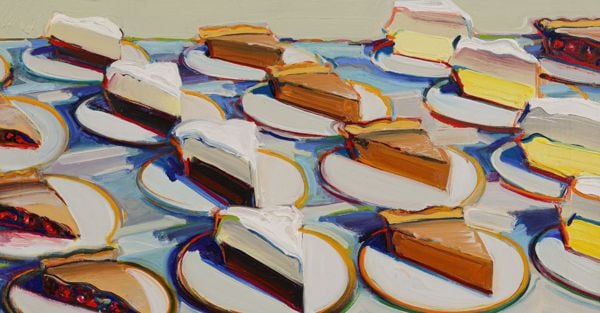
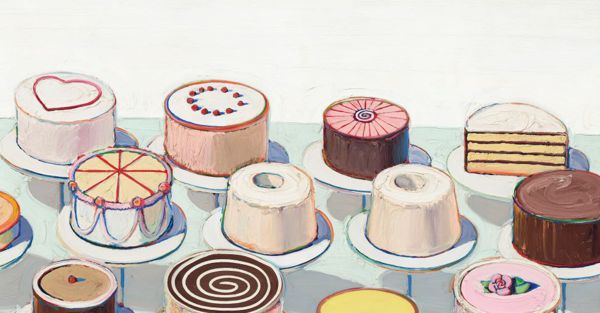
Wayne Thiebaud, still life made in the USA
The exhibition 'American Still Life' is on view at the Courtauld Gallery in London until 18 January

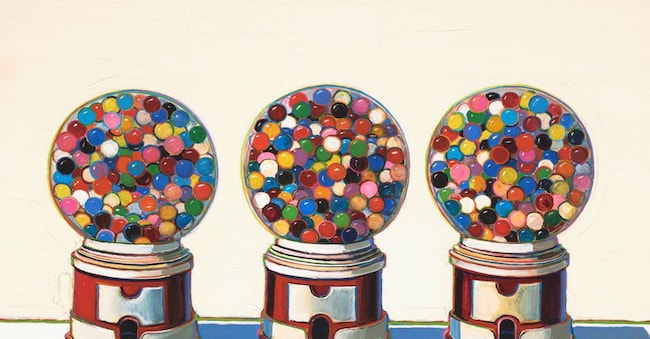
Wayne Thibaud has been called the American Giorgio Morandi and visiting the first exhibition dedicated to him in Great Britain, at the Courtauld Gallery, one understands why: although the subjects and colours chosen by the Californian artist are quite different from those of the Bolognese painter, both redefined still life, giving new importance, value and content to everyday objects.
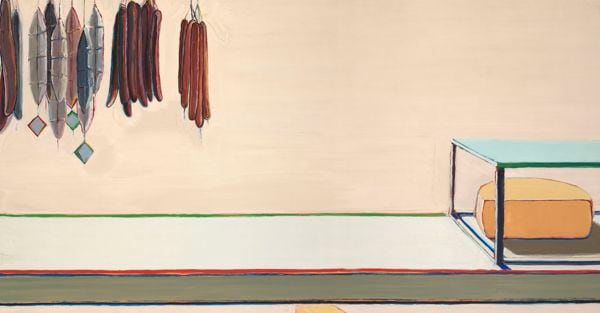
Thiebaud, born in 1920, is often associated with Pop Art, but he actually created a unique style to express his vision of post-World War II US culture. Typical American shops and objects - pinball machines, hot dogs, frosted doughnuts, multicoloured candies, chewing gum - become the absolute protagonists of paintings full of life and energy, with sharp images and vivid colours.
Goods and objects of everyday life as symbols of US culture
"Every era produces its own still life," said Thiebaud, who as a keen student of art history was keenly aware of the traditions of the past and determined to create his own narrative to reflect his time. In the 1960s, at the height of American consumerism, the artist elevated commodities and objects of everyday life to symbols of US culture, without judging but rather giving them great dignity.
The beauty of the paintings invites the viewer to enter for a moment into the world the artist depicts - you don't need stars and stripes flags to say American, just a lemon meringue pie, a bowl of corn flakes, the tables of a diner or a counter with a row of hot dogs on display.
Thiebaud's style is crisp and precise, the result of his work as an illustrator, graphic designer and also cartoonist and cartoonist for Walt Disney, but the simplicity of the works is only apparent: as in Morandi's still lifes, which the American artist greatly admired, there is a whole world to discover and a thousand reflections to be made in and behind the images.