Mind the Economy/Justice 101

We cannot be someone without being part of something. The communitarianism of Charles Taylor

Taylor suggests the path of a 'rooted' modernity, which does not renounce individual autonomy, but recognises the fact that it only flourishes in a shared cultural terrain

by Vittorio Pelligra

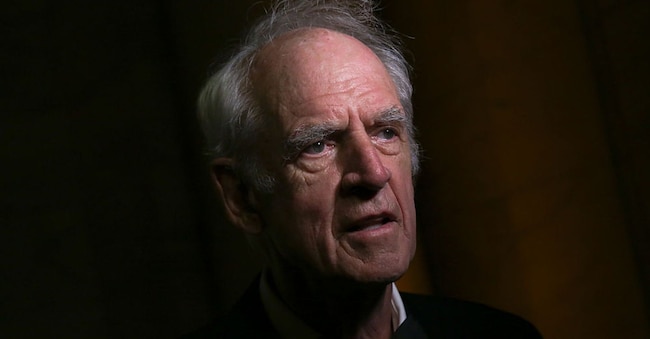
Charles Taylor. (Getty Images)

8' min read

8' min read

The claim of founding a just society on the idea of an abstract moral and political subject - a 'disembodied self' - is the main target of the communitarian critique of liberal individualism, heir of Locke, Kant, up to Rawls. The caricature of a self that chooses its own ends rationally but is totally independent of the life context in which it moves and the human relationships that have shaped it. Even the construction of the Canadian philosopher Charles Taylor, as we have seen for Michael Walzer and Alasdair MacIntyre, originates from this critique of a 'self without moral depth', a self incapable of generating meaning and value.

Taylor starts from this critique and reverses the perspective by elaborating a vision in which personal identity has, instead, a dialogic nature: the self is constituted only in the relationship with significant others. "Our identity," he writes in The Malaise of Modernity, "is forged in continuous dialogue with the other" (1994, p. 51).

Loading...

The path

But how did we arrive, then, at modern individualism and its claim to autonomy? Through a long historical process that Taylor identifies in The Roots of the Ego (1993) and that had as its decisive stages Augustinian thought, Renaissance humanism, the Protestant Reformation and the Enlightenment. The reconstruction of this genealogy is the necessary premise to question our 'self-understanding': the operation by which we can define ourselves alone, in isolation from others, without reference to a shared background framework. For Taylor, on the contrary, identity is always narrative, relational and dialogical. We construct ourselves in confrontation with other meanings, other values, other human beings.

It is this 'horizon of meaning' that is the moral context within which our choices acquire meaning. We cannot choose what matters to us, what is right or wrong, good or evil, without referring to a collective framework, without being situated in a space of evaluation. The individual who presumes to be independent of the community, as the most abstract liberalism would have it, is nothing but an illusion. An illusion that, according to the Canadian philosopher, lies at the root of the 'malaise of modernity', the existential crisis of our time. If it is true, on the one hand, that we live in a culture that exalts individual autonomy and 'freedom of choice', it is also true that this same culture often leaves us orphans of a profound orientation. Modernity has severed the strong ties between individuals and shared traditions, promoting an ideal of authenticity that risks becoming nothing more than narcissism.

True authenticity

.

Taylor's position is critical not so much of the idea of authenticity itself, but of its degeneration. True authenticity, says Taylor, is not doing whatever we 'feel' without constraint. Rather, it is responding to an inner call that connects us to a greater good. It is in this tension between the self and that which transcends it that true freedom is born.

We are beings 'situated' in time and space, not solipsistic entities. Ours is a 'dialogical self' whose moral existence is defined in the confrontation with shared frames of reference, always historically given. These frames are those of the group, ethnic or national, which are the places where our very human need for recognition is most appropriately expressed. A recognition and form of social respect that allows each individual to express his or her identity without being reduced to an abstract category.

It is therefore the task of a just society to deal not only with purely distributive issues, but also with respect for cultural differences and a genuine recognition of various traditions and identities. A just society, although characterised by plurality, should succeed in guaranteeing every individual the right to participate fully in social life without having to renounce his or her cultural identity. Because the communities, cultures, and histories to which we belong provide us with the language, values, and moral maps with which we explore our selves. And without these maps, says Taylor, the self risks being lost.

The situated self lives in 'community' and is the child of a 'tradition'. These are central concepts in the thought of communitarians from which, to a certain extent, Taylor deviates so much that he is often referred to as a 'weak communitarian' with his attempt to rescue the idea of individual rights, but placing them within meaningful cultural frameworks.

Comparisons

.

With Alasdair MacIntyre, who takes a more radical approach, Taylor shares the critique of the abstract moral subject, but differs profoundly from it in terms of the outcomes to which this critique leads. Taylor, for example, does not share the Scottish philosopher's critique of the culture of rights. In After Virtue MacIntyre goes so far as to write that 'The concept of rights was created to serve a set of purposes as part of the social invention of the autonomous moral subject; the concept of utility was devised for an entirely different set of purposes. And both were devised in a situation where the artificial creation of substitutes for the concepts of an older, more traditional morality was required (...) Thus, when claims that invoke rights are pitted against claims that appeal to utility, or when either or both are pitted against claims based on some traditional conception of justice, it is not surprising that there are no rational ways of deciding which type of claim should be given priority or how one should be evaluated in comparison to the others. Moral incommensurability is itself the product of a particular historical conjuncture' (p. 36). Taylor, on the other hand, does not reject the concept of entitlement, but rediscusses its universal scope in the light of particular cultural needs.

The comparison with Michael Walzer revolves mainly around the idea of contextual justice. In Spheres of Justice, Walzer writes that 'the principles of justice are multiple and different depending on the goods to be distributed, and the greatest good to be distributed remains membership in the political community' (p. 136). Taylor shares this idea, but goes further: not only must the distribution of what Walzer calls the 'social goods' be pluralist, but also the construction of identity. His insistence on recognition implies that distributive justice, even Walzer's pluralist one, is not enough if it is not accompanied by symbolic and cultural respect for collective identities. Taylor takes up Hegel's lesson here: recognition is a primary need. Without it, our identity weakens and eventually dies out.

The need for full recognition of cultural diversity thus puts the issue of pluralism and multiculturalism in a new light, because coexistence between different groups claiming equal dignity and respect requires a policy that goes beyond mere tolerance. "The politics of equal recognition," he writes in The Malaise of Modernity, "has ended up taking two directions: universalism of rights and recognition of cultural differences" (p. 70). On the one hand, the universalism that is typical of abstract liberalism imagines a state that, in the name of impartiality, refuses to publicly recognise the cultures, languages, and religions of minority groups. This state is not really neutral, however. It is rather a mask for the imposition of the values of the dominant culture.

A 'politics of difference'

.

The alternative may be, then, according to Taylor, to imagine a 'politics of difference'. A politics, that is, capable of recognising the intrinsic value of cultures, not in the name of a generic relativism, but as a guarantee of real equality and inclusion. Just societies must guarantee not only formal rights, but also cultural and identity recognition. Perhaps also because of his Canadian origins and experience, the issue of multiculturalism took centre stage in Taylor's thinking and led him to argue for the need for legal recognition of minority cultures, even in cases where this would imply derogations from abstract egalitarian principles. Because the just society, according to the philosopher, is not the one that eliminates differences, but the one that preserves them and makes them fruitful for all.

The crux of the 'politics of difference' is that society should not only accept cultural and identity differences, but make an active effort to recognise and value them. There is no need to eliminate them or hide them under a single banner of formal equality, but rather to ensure that each group can live out its identity freely. In a pluralist society, a liberal approach might simply demand that everyone enjoy the same rights and opportunities, ignoring the fact that various ethnic or religious minorities are often not in the same situation as others.

A policy of difference would recognise the need for specific measures for these communities so that they can fully participate in social and political life without having to renounce their traditions and values. For example, in political life, this could translate into specific laws that allow cultural groups to express their religion, teach their language, or celebrate their holidays publicly. But, as Taylor suggests, these rights should not be seen as 'favouritism' towards minorities, but rather as a way to ensure that everyone can participate fully in social life without feeling forced to sacrifice their identity.

However, the risk, as Taylor again points out, is that this policy can lead to social fragmentation if not carefully managed. Acknowledging differences does not mean making each group live in a separate and isolated world, but on the contrary, it implies building bridges between communities, allowing them to interact, confront and enrich each other. The politics of difference, therefore, does not reject the idea of a common identity within society. Rather, it hopes that this common identity is born out of the recognition of differences, authentic dialogue and mutual understanding between the different communities that make it up.

A philosophy of limit and relationality

Taylor's communitarianism is neither nostalgia for the past nor a call to confine oneself within the confines of identity groups. It is a philosophy of limitation and relationality: it reminds us that individual freedom needs roots, a shared moral frame of reference. Unlike abstract liberalism - which thinks of the subject as autonomous regardless of its culture or history - Taylor proposes a 'liberalism of roots' in which it is possible to defend individual rights without denying the importance of collective belonging. This does not mean sacrificing the individual to the group, but recognising that there is no I without we.

Taylor's challenge is philosophically and politically radical: to rediscover the roots of modern identity without giving in to the temptation of cultural fundamentalism or abstract universalism. In an era marked by the crisis of strong narratives and the dispersion of belonging, Taylor offers us an idea of freedom understood not so much as a solitary possibility, which isolates us when it promises to protect us, but rather as a high and sincere form of mutual recognition.

Where MacIntyre proposes a return to the virtues of closed communities - waiting for a new St Benedict - and Walzer relies on the local grammars of the spheres of justice, Taylor suggests a more subtle and perhaps impervious path: a 'rooted' modernity, which does not renounce individual autonomy, but recognises the fact that it only flourishes in a shared cultural terrain. This is not an easy position, which lends itself neither to the liberal cult of the individual nor to communitarian nostalgia for a lost order. In a way, Taylor's 'weak communitarianism' complicates things: it forces us to think that there is no freedom without belonging, no identity without memory. But perhaps in this very complexity lies the originality and strength of his proposal. In a world that demands and rewards simple and populist solutions, Taylor offers only questions; difficult questions. Just as difficult are the challenges of authentic and peaceful coexistence between different people.

Copyright reserved ©
Loading...

Brand connect

Loading...

Newsletter

Notizie e approfondimenti sugli avvenimenti politici, economici e finanziari.

Iscriviti