
Environment: light winds reduce CO₂ uptake in the Mediterranean
This is the finding of a study by researchers at ENEA, which collects continuous data on the exchange of carbon dioxide between the atmosphere and the sea

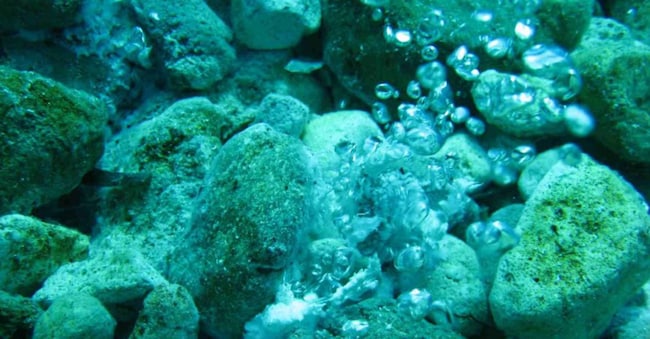
Light winds reduce CO₂ absorption in the Mediterranean. Specifically, in early 2023, the central Mediterranean absorbed 30 per cent less carbon dioxide than in the same period the previous year, coinciding with light winds and an intense marine heatwave. This is one of the key findings of a study carried out by researchers at ENEA and published in the *Journal of Geophysical Research: Oceans*, which, for the first time, compiles continuous data on carbon dioxide exchanges between the atmosphere and the sea in this part of the Mediterranean.
The impact of the heatwave
According to Alcide di Sarra, a researcher at ENEA’s Laboratory for Air Quality Modelling and Measurements and Climate Observations, the exceptional heatwave that occurred ‘most likely also had a significant impact on CO₂ exchange between the atmosphere and the ocean, resulting in a significant release from the ocean into the atmosphere’. ‘The data collected at the Lampedusa Oceanographic Observatory during the exceptional marine heatwave of summer 2026 – adds di Sarra, who, together with Damiano Sferlazzo, is in charge of the Lampedusa Oceanographic Observatory – show temperature readings that exceeded 31°C at a depth of 1 metre, and 30°C at depths of 5 and 18 metres. Such high values, sustained over such an extended period, have never been observed since records began.”
Measurements between 2021 and 2023
At the heart of the study are measurements taken between 2021 and 2023 in the central Mediterranean, which, as di Sarra points out, ‘acts as a large carbon dioxide reservoir, absorbing CO₂ from the atmosphere in winter and releasing it during the summer’. Hence the sea’s role in removing carbon dioxide. “The data collected are the first to show that, on an annual basis, this region of the Mediterranean helps to remove CO₂ from the atmosphere,” he adds. ‘Between May 2022 and April 2023, however, we observed a marked reduction in CO₂ exchange between the atmosphere and the sea, coinciding with an intense and prolonged marine heatwave,’ he adds.
Temperatures have risen
The study also reveals that, as early as 2022, the surface temperature of the Mediterranean Sea was ‘significantly higher than the average values for the period 1991–2020, due to an intense and persistent marine heatwave, which lasted from May 2022 to April 2023’. On average, across the entire basin, the increase reached around 1.5–2 °C, whilst in the central Mediterranean even higher peaks were recorded, up to 4 °C above the seasonal average. During the same period, the researchers observed ‘a marked reduction in the frequency of strong winds, with 42 daily average wind speeds exceeding 8 m/s, compared with the 71 recorded in the previous year’. Conversely, ‘the number of days characterised by light winds increased, with 47 days on which the average daily wind speed was below 5 m/s, compared with just 26 days in the previous year’. These conditions, the researchers emphasise, ‘have helped to sustain the marine heatwave in the study area, the central Mediterranean’.
The basis for new observations
Not a final result, but a starting point for further research. “Thanks to over a year and a half of continuous monitoring, we have been able to measure the impact of this extreme weather event on the marine carbon cycle,” concludes di Sarra. ‘These data form the basis for building a long-term set of observations, which will help us better understand the evolution of these phenomena in a climate hotspot such as the Mediterranean, which is particularly sensitive to climate change and increasingly characterised by extreme events such as Mediterranean hurricanes – known as medicane – and marine heatwaves,’.

