
Weavers, dyers, embroiderers: the artisans behind Africa’s finest crafts
It is not merely a collection of decorative motifs or a source of raw materials. The continent embodies a wealth of artistic and craft-based diversity. Bubu Ogisi breaks down the hierarchy that separates the designer from the craftsman.

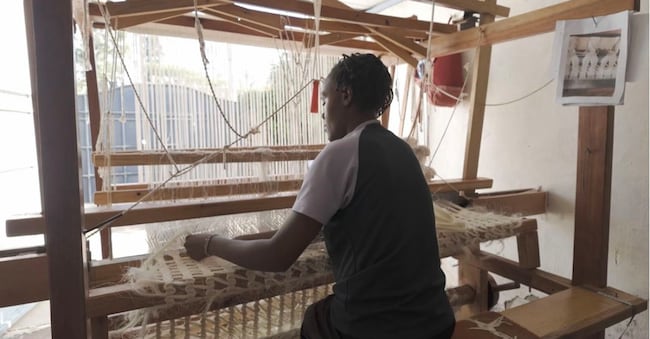
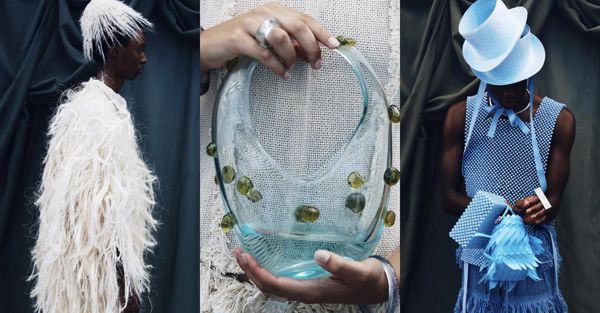
Her work can be described as wearable art, with garments that resemble wearable sculptures. Their fibres embody the artisanal expertise of many African cultures: hand-crafted textiles, metals and organic elements become vehicles for storytelling. Bubu Ogisi is a Nigerian-born designer and artist who founded Iamisigo in 2009, before redefining its purpose in 2013 to combine beauty and responsibility, emphasising weaving, process and materiality whilst challenging the more traditional categories of fashion. Each of her creations – from dresses to majestically shaped hats, from jewellery to glass bags – stems from a dialogue with artisans, local communities, traditional techniques and often overlooked stories.
At the heart of Ogisi’s practice lies a question: what happens when fashion becomes a means of preserving knowledge that is at risk, rather than simply producing new objects? For decades, the discourse on African fashion has reduced a continent of immense diversity to a collection of visual motifs and aesthetic references, or to a mere source of raw materials, whilst value creation took place elsewhere. Ogisi’s work takes the opposite approach: rather than extracting symbols from African cultures, the artist immerses herself in the systems of knowledge that gave rise to them. Her projects stem from research into diverse techniques, materials, rituals and communities whose stories are often absent from the dominant narratives of fashion and design.
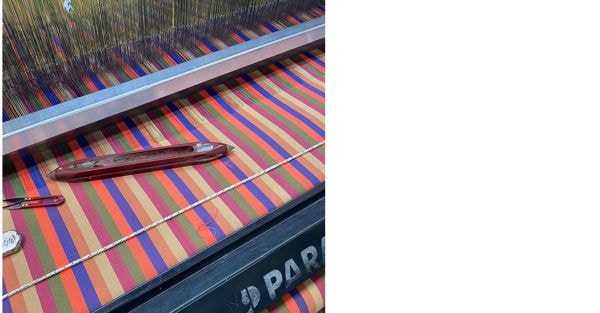
What’s more, weavers, dyers, leather and glass workers, metalworkers and embroiderers become active participants in his creative process, rather than anonymous suppliers hidden away within a production chain. His approach challenges the hierarchy that separates the designer from the craftsman – recognised here as a co-creator – whilst preserving practices that once shaped community life and now risk disappearing within a single generation. Whilst sustainability is often reduced to an environmental issue, Ogisi speaks of social and cultural responsibility. Materials may be recycled, but traditions, languages and systems of knowledge disappear if they are not supported. For her, craftsmanship is not about nostalgia, but a tool for imagining the future: ancestral techniques evolve through experimentation, and traditional weaving methods are combined with unconventional materials, such as agave sisalana or jute from the Spring/Summer 27 collection, ‘Dual Mandate’.
With Iamisigo (which stands for ‘I am’ plus an anagram of the surname Ogisi), produced in Lagos (Nigeria), Nairobi (Kenya) and Accra (Ghana), the designer supports local economies, helping women in particular, who often play a central role in textile production. But the social dimension of Ogisi’s work goes beyond employment. Her projects also explore issues of visibility, representation and ownership. Who has the right to tell these stories? Who benefits from cultural production? How can traditional knowledge circulate globally without the kind of misappropriation that fails to recognise the true value of the communities that created it?
Thus, Ogisi’s work resonates strongly with current discussions on decolonisation, which does not merely mean increasing representation, but requires us to challenge the structures of production, authorship and value. It means recognising that expertise exists beyond established institutions, and that innovation often arises from practices developed outside Western frameworks.

