The exhibition at the Ara Pacis in Rome

Webuild, 120 years of Italian history through its infrastructure

Bridges, railways, dams, subways and much more narrated as works of ingenuity and art

by M.Mor.
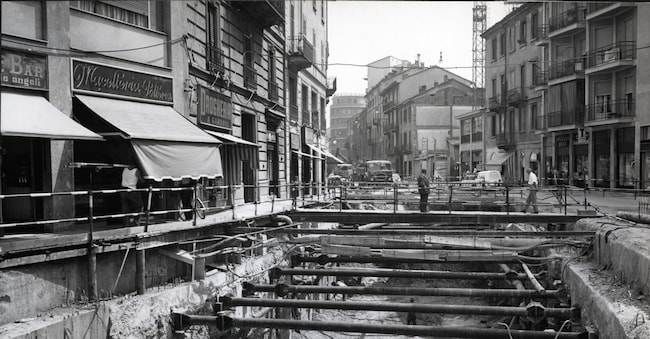
Il cantiere della linea 1 della metropolitana di Milano negli anni Sessanta

3' min read

Translated by AI
Versione italiana

3' min read

Translated by AI
Versione italiana

What would Italy be without the Autostrada del Sole, where more than 100,000 vehicles pass through every day; without the Ridracoli dam, which provides drinking water for more than a million people, serving 50 municipalities in Romagna as well as the Marche; or without the high-speed railway, which from the Pendolino to the Frecciarossa has put tens of millions of Italians on the move?

It would be a country orphaned of its economic boom, of that propulsive thrust that from its agricultural roots inherited from World War I and World War II accelerated its run on the tracks of history to lead it among the world's leading industrial powers.

Loading...

The Evolutio project launched and supported by Webuild, a world leader in the construction of large-scale works, is dedicated to the infrastructures that have modernised the country, accelerating its development and breaking down the economic and social gaps between North and South.

The idea of the exhibition

From 7 to 9 October 2025, the Ara Pacis Museum in Rome hosts 'Evolutio. Building the future for the last 120 years', the exhibition that tells how the infrastructures built by Webuild in over a century of history have contributed to the development of Italy and the changing lifestyles of Italians.

Le grandi opere che hanno fatto la storia d’Italia

Photogallery9 foto

Spiega Pietro Salini, amministratore delegato di Webuild: «L’idea di questa mostra nasce dall’archivio storico di Webuild, da tutte le opere realizzate in questi 120 anni, 3.700 progetti importanti portati a termine. Ma soprattutto per vedere i volti degli uomini e delle donne che li hanno costruirti e come questo ha cambiato la nostra società in meglio, dandoci quei servizi che oggi diamo per scontato. Parliamo di energia, acqua, luce, trasporti, metropolitane, aeroporti, tutte cose realizzate da persone. Questa è l’idea che c’è dietro la mostra. Con Evolutio - dice ancora Salini - abbiamo voluto restituire la memoria di un secolo di trasformazioni, mostrare come strade, dighe, ferrovie, porti e aeroporti abbiano cambiato la vita delle persone e continuino a farlo oggi. È il nostro contributo a una riflessione collettiva: ricordare da dove veniamo, per capire meglio dove vogliamo andare».

A long journey through history

The exhibition is a journey through history with videos and immersive installations that take the visitor into the past, from the 1930s to the present day, inside the construction sites where the iconic works that everyone knows were built. The installations are accompanied by more than 100 historical and contemporary images of the infrastructures that have marked the country's development, as well as period and current testimonies of the protagonists of the great works, workers, technicians and engineers who contributed to their construction.

Following the exhibition itinerary, the visitor takes a journey from the development of the energy and water system in the 1930s and 1940s, through the transport revolution of the 1950s, the construction of the first metro lines and motorways, to the development of large urban centres. It is a journey that has no end, because the works of the past are followed - in a continuous flow - by those of the present and the future: the Terzo Valico dei Giovi (the high-speed train linking Genoa to Milan), the new breakwater in Genoa, the Brenner Base Tunnel (the longest railway tunnel in the world), Line C of the Rome metro, the high-speed train linking Naples to Bari, and the bridge over the Strait of Messina, which Webuild is ready to build at the head of the Eurolink consortium.

Evolutio recounts this journey as part of a cultural initiative that does not end with the exhibition but becomes permanent thanks to the launch of the Digital Museum, which took place at the same time as the inauguration on 7 October. This is one of the first examples in the world of a digital museum of infrastructures, a site that collects unpublished testimonies, videos and photos, together with unique archive materials such as those signed by the photographer Guglielmo Chiolini or the film director Ermanno Olmi. Within the Evolutio site it is also possible to consult over 400 files on the 3,700 works built by Webuild, and by the companies that have merged into Webuild, from the beginning of the 20th century to the present day, access a multimedia area with over 10,000 photos and an edutainment area dedicated to young people between 15 and 25 years of age.

For Webuild, launching a project such as Evolutio means continuing to invest in corporate culture by continuing the great Italian tradition inaugurated by brands such as Olivetti, Pirelli, Armani and Fendi.

Salini concludes: 'Infrastructure annoys while it is being built, but then it changes people's lives for the better.

Copyright reserved ©
Loading...

Brand connect

Loading...

Newsletter

Notizie e approfondimenti sugli avvenimenti politici, economici e finanziari.

Iscriviti