Weightless: when the material of art is lighter than air
Since the 20th century, sculptures have lifted off the ground and defied gravity. A quest that began with Duchamp, which today is explored by quoted authors represented by the best galleries.
5' min read
5' min read
When one speaks of sculpture, from the Greeks onwards, one thinks of statuary and the artist's ability to painstakingly carve shapes and figures from a block of marble. The great sculptors, from Phidias to Michelangelo to Canova, were appreciated for their ability to challenge the hardness of stone to bring the material to life, creating the illusion of a gesture, a movement, or the expression of a face.
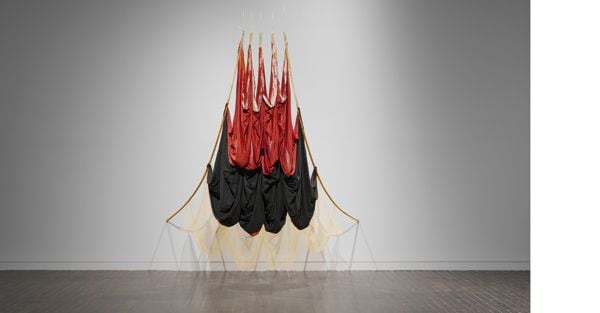
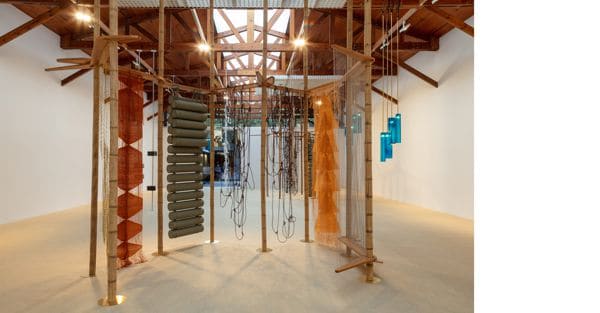
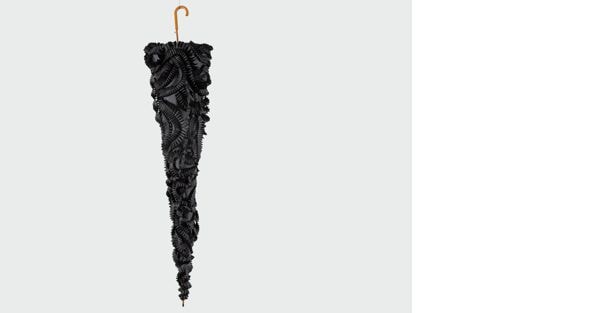
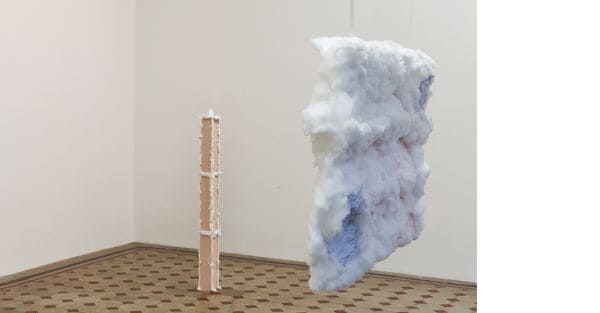
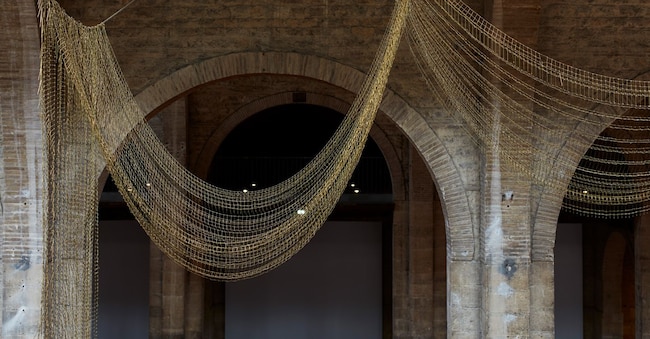
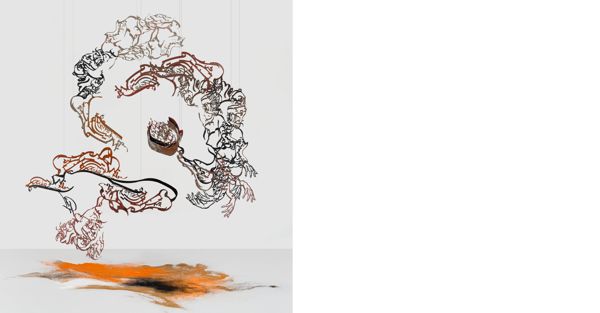
But since the beginning of the 20th century, sculpture has lifted itself off the ground, to hover in the air. The entire art history of the last century and art practice today are punctuated by works of art suspended from the ground, hanging from above, transforming space and the perception of it. "It is an aesthetic typology connected with the dynamic spatialisation of the modern gaze, as well as with the questioning of traditional modes of displaying art," wrote French art historian Matthieu Poirier in the book Suspension, published on the occasion of a double exhibition organised in 2018 by the Olivier Malingue gallery in its spaces in London and at the Palais d'Iéna in Paris. "It is a genre linked to cosmogonic imagination, to the conquest of air and, after the Second World War, of space, but also to fear of the void, chandeliers, hanging, falling, levitation and floating. While recalling such images, this type of sculpture rebels against the idea of representation and, in fact, its birth is contextual to that of abstract art. By coming down from the traditional pedestal, sculpture comes into conflict with the force of gravity and acquires transparency, balance, movement.
As with so much of modern art history, Duchamp was a trailblazer. In 1915, he hung one of his ready-mades, specifically a shovel, from the ceiling of his studio, ironically titling it In Advance of the Broken Arm, for the object's ability to shovel snow while avoiding slipping and, thus, breaking the arm. A few years later, he made another hanging sculpture out of pieces of swimming caps, calling it Sculpture for Travelling, because it could easily be put in a suitcase and taken on a trip.
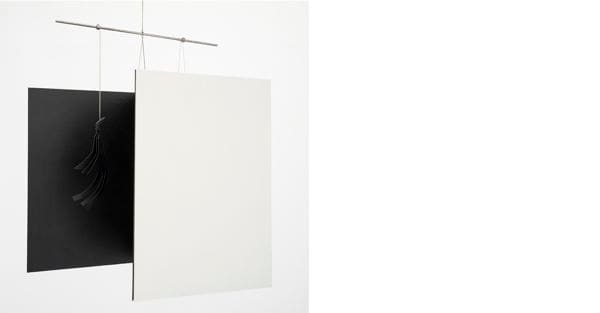
But it was Alexander Calder in the 1930s who made this genre of sculpture famous. A mechanical engineer turned artist, a great astronomy enthusiast, his 'mobiles' replicate the solar system and the universe, dominated by chaos and balance. Even the prices are stellar: starting at a few thousand dollars, they have recently reached close to 26 million at auction.
Another milestone in the 1960s was kinetic art, which played with movement, interaction with light and the viewer's perception. In the case of the large spheres made of a shower of coloured vertical elements by the Venezuelan Jesús Rafael Soto, represented by Perrotin, the visitor is invited to walk through the sculpture, immersing himself in it and changing its shape as he passes.