
What else are we looking for in the objects we collect?

In 1936, the German philosopher Walter Benjamin published an essay destined to become a cornerstone of reflection on art: ‘The Work of Art in the Age of Mechanical Reproduction’. The crux of his argument was that, with the advent of the industrial age, technology had radically transformed the very nature of the work of art, stripping it of that ‘aura’ of uniqueness and sacredness which had, until then, an object of aristocratic worship, and turned it into an instrument of mass communication.
And yet, uniqueness, authenticity, materiality and durability – the intrinsic values of the past – continue to this day, in a modern age dominated by digital acceleration, mass production and artificial intelligence, to fascinate passionate collectors and private individuals.
“The collector is bound to a relationship with objects that does not prioritise their functional value – and thus their utility or usability – but studies and loves them as a stage, a theatre of their own destiny,” writes Benjamin in another essay from the same period. What fascinates the collector most deeply is placing the new acquisition within a magical sphere in which, whilst it is coursed by the final thrill – the thrill of being acquired – the object becomes still. Every memory, thought and realisation becomes a base, a frame, a pedestal, a cell for the new treasure. Era, place, workshop, previous owner – the true collector sees all this converge, for every piece in his collection, into a magical encyclopaedia whose innermost essence is the destiny of that object.”
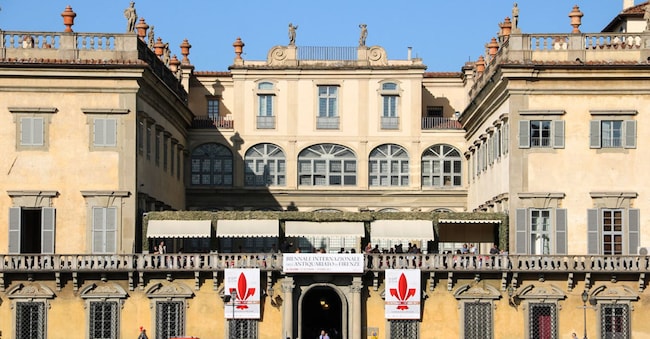
It is precisely uniqueness, authenticity, material and durability – values that seem to run counter to the pace of contemporary life – that make the Florence International Antiques Biennale (BIAF), now in its 34th edition, an event increasingly eagerly anticipated by collectors, scholars and the simply curious.
From 26 September to 4 October 2026, Palazzo Corsini will host around eighty carefully selected exhibitors, offering a snapshot of the absolute excellence of the national and international art market. The shortlist brings together the leading figures from Italy’s major art centres – Milan, Rome, Florence, Naples, Bologna and the Veneto region – alongside prestigious international players from London, Paris, Munich, Geneva, Lugano and Palm Beach.
Over the course of two days, a committee of the highest calibre will examine and evaluate all the works and objects presented by the gallery owners. This panel comprises 63 leading figures, representing every possible area of expertise and role, from conservators to leading museum directors and curators, ensuring the works are in optimal condition and authentic.
The highlight of 2026: Michelangelo’s Unfinished Work
This year, the conservation project will focus on a work of inestimable historical value by Michelangelo, currently held at Casa Buonarroti, which will be on display at the Biennale from 24 September to 4 October 2026: ‘The First Design for the Façade of San Lorenzo’, a work that was intended to seamlessly blend architecture and sculpture, but which never saw the light of day. Pope Leo X entrusted Michelangelo with the entire project for the basilica’s façade, but in 1520 he cancelled the contract due to delays and excessive costs, leaving the façade unfinished to this day – despite the fact that the artist’s revolutionary designs remain a milestone in the history of architecture.
This important and delicate conservation project, promoted and fully funded by the Fondazione CR Firenze, will be carried out by the Opificio delle Pietre Dure in Florence (OPD).
Special opening hours at the Horne Museum
To mark the Biennale, the Fondazione CR Firenze is also organising two special opening sessions at the Horne Museum, the institution founded by Herbert P. Horne, a cultured connoisseur and refined art collector. The guided tour of the collections, entitled ‘The Connoisseur’s Eye: Herbert Horne, an English Collector in Florence’, has been specially designed for this occasion. The free tours, reserved for collectors taking part in the BIAF, will take place on Wednesday 30 September and Friday 2 October 2026, from 5.30 pm to 6.30 pm.
The relaunch of the Lorenzo d’Oro Award
This dialogue between the arts also includes the relaunch of the Lorenzo d’Oro Award, which this year is closely linked to excellence in craftsmanship. A number of master Florentine silversmiths have been commissioned to create the award, called upon to craft the work of art that will be presented to a public figure from the worlds of cinema or culture who has distinguished themselves in promoting Italian art around the world. An exceptional jury will select the winning silversmith. The piece will be presented on Saturday 26 September, during the official opening ceremony of the BIAF, to be held in the Salone dei Cinquecento at Palazzo Vecchio, in the presence of Mayor Sara Funaro.

