
What the Old Cybernetics can teach us

3' min read
3' min read
Lewis Mumford, one of the best sociologists of the 20th century, taught us to distinguish between 'utopia of flight' and 'utopia of reconstruction'. The first resembles the wishful building of castles in the air, ending up leaving the world as it is. The second, on the other hand, seeks to change it, preparing tools and methods to define a better future. It is by no means certain that this utopia of positive thinking will succeed. But at least it shows the horizon towards which to walk, the commitment, the hope.
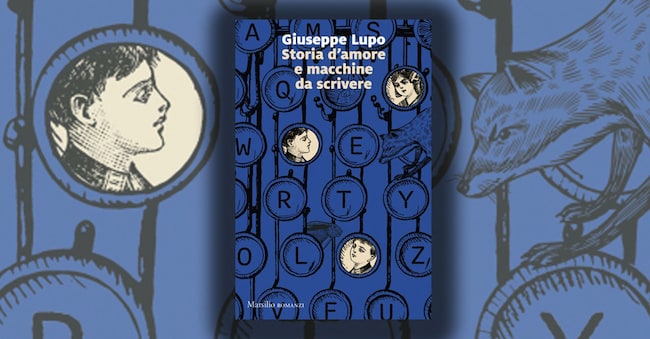
Mumford's lesson comes back to mind when reading Giuseppe Lupo's skilful pages on "Storia d'amore e macchine da scrivere" (Marsilio), a novel that has as its protagonist a young scientist fortunately escaped the risks of Soviet repression in Budapest in 1956, (thanks also to the start of a great love affair) and then forced "to play a chess game against the contingencies of history" with an "odyssey" that takes him to Prague, Hamburg, Milan, Ivrea and Palo Alto and, from station to station, from research to research, makes him "the Old Cybernetic", known throughout the world, ready to reveal a shocking technological discovery called "Qwerty", from the letters on the first line of the typewriter keyboard (an Olivetti Lettera 22 is the talisman he carries with him during all his wanderings).
Qwerty is 'a computer machine that seeks no hands, without the rust of memory, without the dross of silences, light that becomes speech': a revolution in the structures of communication. Its roots can be traced back to the years of research in Ivrea, in the wake of the knowledge matured in the season of Adriano Olivetti and Mario Tchou, when the Elea prototype was created, the first personal computer that would have given Italy the role of technological and industrial vanguard, had history not taken an inauspicious course. And in the 'Olivettian novel' written by Lupo (who confirms a brilliant inclination to cultivate relations between literature and industry in the name of sustainable development and civil thought), scientific and technological issues intertwine with ethical and social themes. The focus on the 'civilisation of machines' hybridises with the values of the 'city of man'. And the key emerges to address the pressing topical issues with which this book also forces us to come to terms.
"Before you can use them, you have to understand machines," explains the Old Cyberneticist in an exhausting interview that also becomes a painful review of an entire life. Here it is again, the 'utopia of reconstruction'. With all its ambivalences.
The spread of Artificial Intelligence, in fact, presents us with extraordinary opportunities for scientific research, productivity and knowledge, but also with moral, cultural and political dilemmas on the limits of science and on the outcome of a word, 'progress', which during the 19th and 20th centuries, always had positive connotations but which now fuels deep disquiet and doubts on the 'magnificent fates and progress' (Leopardi was right to be wary of novelty fanatics at all costs).

