
AI is particularly worrying when it comes to work: one in two Italians believe it will destroy jobs
According to a new survey by the Pew Research Centre carried out in 37 countries, there is a clear prevailing view that artificial intelligence will reduce employment and widen inequalities.

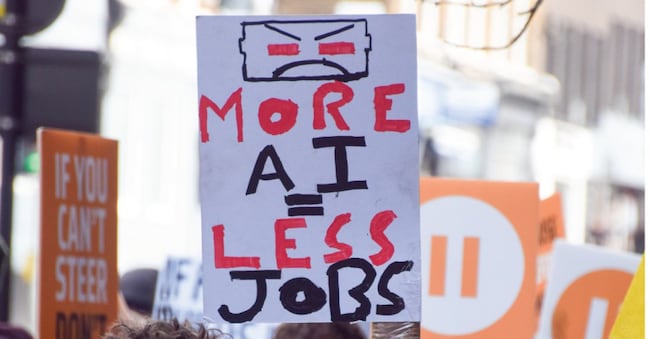
According to a new survey by the Pew Research Centre conducted across 37 countries, the prevailing view is that artificial intelligence will reduce employment and widen inequalities. In Italia, 55 per cent expect there to be fewer jobs over the next twenty years, and almost one in two views AI with more concern than enthusiasm.
Smarter, more widespread and increasingly less invisible: the clearest finding relates to employment. In 34 out of 37 countries, more people believe that AI will lead to job losses than those who expect the opposite to happen.
This is not an economic forecast, of course, but a measure of expectations. And these expectations are based on a very large-scale survey: 42,151 adults in 36 countries, interviewed between February and May 2026, plus two separate surveys in the United States.
Italia is part of this wave of pessimism.
55 per cent of Italians believe that AI will lead to job losses over the next twenty years. Only 8 per cent expect more jobs, 15 per cent believe there will be little change, and around 23 per cent are still unsure what to expect. The Italian figure is, however, far below the peaks seen in Australia and South Korea, where the proportion of those expecting fewer jobs reaches 76 per cent, and in the United States, at 71 per cent.
There is also a less intuitive finding. Fear of automation increases with wealth: Pew has measured a correlation of 0.60 between per capita GDP and the proportion of people who expect job losses. In short, in the wealthiest countries, AI is perceived more as a competitor to human labour than as a driver of new employment. In the United States, this belief has increased by seven percentage points compared with 2024.


