Digital Economy

What changes for programmers with GPT-5-Codex from OpenAI?

The market is driven by Microsoft's GitHun Copilot and Anysphere's Cursor. Apple integrates Claude and now the novelty of OpenAi. Ai is now a coding tool.

by Alessandro Longo

3' min read

3' min read

Programming with artificial intelligence: tech companies continue to raise the stakes. They improve the solutions that can be used for what is one of the most disruptive uses of AI and deepen partnerships. The latest late-summer news fully confirms this.

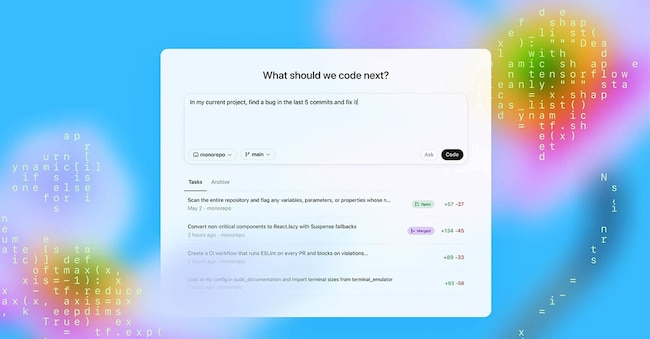
OpenAI has just presented GPT-5 Codex, an evolution of the model dedicated to coding, while Apple is going full steam ahead with the integration of Anthropic's Claude into its Xcode development environment. Two moves that redraw the balance in a sector already animated by Microsoft's GitHub Copilot and an alternative player such as Anysphere's Cursor.

Loading...

The main novelty of Gpt-5 Codex is its ability to operate as a software agent: the model does not just suggest lines of code, but can work for hours on complex tasks, iterating, testing and refining on its own. A step towards the virtual developer, capable of large-scale refactoring (code optimisation) and deep debugging.

Codex is integrated in the paid versions of Chatgpt. For Plus users, usage limits are more stringent, a handful of coding sessions per week, while Pro users should rarely encounter limits in normal use.

The company claims to have trained GPT-5-Codex to perform code reviews and asked experienced software engineers to evaluate the model review comments. The engineers allegedly found that GPT-5-Codex sends fewer erroneous comments and instead adds more 'high-impact comments'.

Positive feedback is also coming from early customers. For example, Aaron Wang, Senior Software Engineer at Duolingo, notes that Codex outperformed other tools in backend code review benchmarks; it found compatibility issues and bugs that others had failed to detect.

In a press conference, Alexander Embiricos, OpenAI's Codex product manager, said that much of the performance improvement was due to the dynamic 'thinking capabilities' of GPT-5-Codex (a bit like the GPT-5 system in Chagpt, which directs queries to different models based on the complexity of a task).

GPT-5-Codex, on the other hand, can decide after five minutes of working on a problem that another hour is needed. Embiricos claimed to have seen the model take up to seven hours in some cases. In total autonomy.

We know that this is a different approach from the one chosen by Microsoft, where AI is a support for the programmer (and the human in general). In short, OpenAI seems to be telling us that the path is no longer that of self-complete AI, but of increasingly autonomous AI, even in programming.

In parallel, Apple chose to focus on Claude to enhance Xcode, the reference Ide (development environment) on macOS and iOS. References to Claude Sonnet and Opus, the latest generation of Anthropic, are already appearing in the betas of Xcode 26, which will officially announce full integration on 15 September. "Developers can now connect their Claude account to Xcode 26 to enhance coding intelligence capabilities with Claude Sonnet 4," he writes in a blog note.

For Apple developers, this means having an AI assistant directly integrated into the working environment, without external plugins: from writing to debugging to testing, everything becomes more fluid and native. For Apple, the move confirms a broader strategic shift. The company has always been characterised by its choice to work with software developed in-house. Apple's AI ones, however, have presented delays and problems, both in programming and in smartphones. Two areas where it now seems to prefer the path of agreements with third parties specialising in AI.

For software developers, the expected impact is clear: increased productivity, reduced time, and the ability to focus on higher areas such as design and architecture. A study with Microsoft, Accenture and other companies showed that those who use code assistants such as GitHub Copilot achieve an average increase in the number of tasks completed per week of around 26 per cent. The greatest benefits are among less experienced programmers, but older people would also benefit.

There are conflicting studies. According to one from the Metr organisation, experienced developers working on code bases familiar to them spend 19% it.n more time when using AI tools as assistants. The problem: AI does not understand the specific context. A problem that also emerges in alother areas of use, as a well-known recent study by Mi notes.

In spite of what productivity studies say, it is mainly junior developers who are suffering at the moment. It is now much more difficult for them to find work and wages have also fallen, in coding and other fields. Lastly, this was confirmed by a Stanford study on Adp data in the United States (2022-2025), which came out in August. A sign that companies, rather than empowering juniors through AI, prefer to use it to replace them altogether, for basic tasks.

Copyright reserved ©
Loading...

Brand connect

Loading...

Newsletter

Notizie e approfondimenti sugli avvenimenti politici, economici e finanziari.

Iscriviti