International Criminal Court

What happens after the arrest warrant against Netanyahu and Gallant

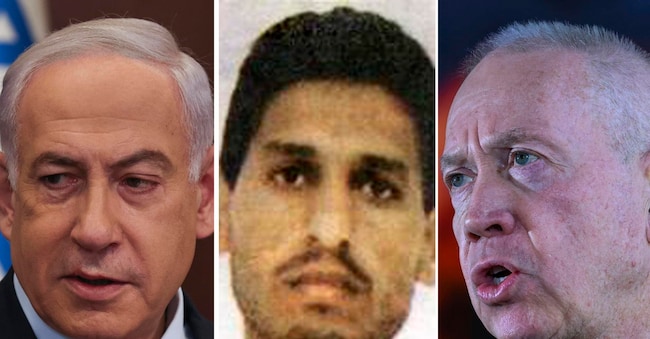
The ICC issued arrest warrants for Israeli Prime Minister Benjamin Netanyahu, Yoav Gallant, former Defence Minister, and Mohammed Deif, military commander of Hamas

by Angelica Migliorisi

4' min read

Translated by AI
Versione italiana

4' min read

Translated by AI
Versione italiana

The International Criminal Court (ICC) has issued arrest warrants for Benjamin Netanyahu, Prime Minister of Israel, Yoav Gallant, former Minister of Defence, and Mohammed Deif, military commander of Hamas. Since it became operational on 1 July 2002, the Hague-based court has never issued an arrest warrant against a Western-backed leader. Until today.

The accusations against Netanyahu and Gallant

The Pre-Trial Chamber I of the ICC has laid charges involving alleged violations committed between 8 October 2023 and 20 May 2024, a period that includes Israeli military operations in the Gaza Strip following the 7 October Hamas attack. The Court finds that Netanyahu and Gallant have orchestrated a widespread and systematic attack against the civilian population of Gaza. Among the main allegations: the uuse of starvation as a weapon of war, the ohumanitarian assistance and the aintentional attacks against civilians.

Loading...

According to the judges, the times Israel increased humanitarian aid were motivated by international pressure. This aid would then have been insufficient to prevent a humanitarian crisis.

Accusations against Mohammed Deif

Also in the crosshairs of the ICC is Mohammed Deif, commander of the Al-Qassam Brigades. The charges are of crimes against humanity and war crimes, which include the umass murder of Israeli civilians (during the 7 October 2023 attack, Hamas conducted raids on Israeli kibbutzim and the Supernova Festival, causing hundreds of casualties), the hostage-taking (at least 245 people, including women, children and members of the Israel Defense Forces - IDF - were kidnapped and taken to Gaza, in inhumane conditions) and the vsexual violence and torture.

Although Israel claimed to have killed Deif in a bombing raid in July 2024, the ICC decided to proceed because there is no firm evidence of his death.

The jurisdiction of the Cpi

The International Criminal Court is based on the Rome Statute, the founding treaty signed by 124 countries in 1998 and entered into force on 1 July 2022, but not recognised by Israel, the United States, Russia and China. The Court rejected Israel's objections to its jurisdiction, stating that Palestine has been a member since 2015 and that crimes committed on its territory fall within its jurisdiction. Moreover, the judges made it clear that the acts charged against the Israeli leaders are not justified by military necessity.

The ICC is an institution with supranational jurisdiction and can try individuals, not states, responsible for serious crimes such as genocide, war crimes, crimes against humanity and crimes of aggression. Its jurisdiction applies when such crimes have been committed on the territory of a state party to the Rome Statute or by nationals of a state party. It intervenes in cases where the states involved do not have the capacity or the will to prosecute the perpetrators through their own legal system, in accordance with international law.

The jurisdiction of the ICC also extends to crimes committed by nationals of states not party to the territory of a state that has ratified the Rome Statute. However, it should be made clear that states that are not party to the Statute are not obliged to extradite their own nationals indicted by the ICC. And there are no instruments of international coercion to force their cooperation.

International reactions

The Israeli reaction was firm and unanimous in condemning the arrest warrants. Netanyahu called the charges "absurd and false", declaring that the ICC is a politically tendentious and anti-Semitic body. President Isaac Herzog spoke of a "dark day for justice", accusing the court of siding with "terror and evil" instead of democracy. National Security Minister Itamar Ben-Gvir also called for a political response, calling for the extension of Israeli sovereignty over the West Bank.

Enthusiasm from Palestinian officials. Husam Zomlot, Palestinian ambassador to the UK, said the warrants were 'not only a step towards accountability and justice in Palestine, but also a step to restore the credibility of the international rules-based order'.

Washington categorically rejected the Court's decision. A spokesman for the White House National Security Council reiterated unconditional support for Israel, criticising the Court's initiative as politically motivated. Lindsey Graham, a senator very close to Donald Trump, called for new sanctions against the Court. During his first term in the White House, in fact, The Donald had already done so. The subsequent Biden administration had then lifted them.

The Netherlands, the seat of the Court, confirmed their commitment to execute arrest warrants should the accused enter their territory. At the same time, many other European countries, close allies of Israel, may choose not to cooperate for political reasons.

Implications for Netanyahu and Gallant

The arrest warrants significantly restrict the freedom of movement of the two Israeli leaders. In theory, if Netanyahu or Gallant travelled to one of the 124 member countries of the ICC, they would have to be arrested and transferred to The Hague. In practice, however, the Court has no means to enforce its decisions. The two illustrious precedents of Vladimir Putin and Omar al-Bashir show that governments often ignore these mandates, especially when they involve high-profile political figures. And the fact that neither Israel nor the United States has signed the Statute of the Court may make the execution of the warrants even more complex.

Copyright reserved ©
Loading...

Brand connect

Loading...

Newsletter

Notizie e approfondimenti sugli avvenimenti politici, economici e finanziari.

Iscriviti