
Xi Jinping recalls Thucydides' trap in summit with Trump. Here's what it is
Thucydides' trap refers to the way in which, historically, tensions between an emerging power and one in power have often led to war

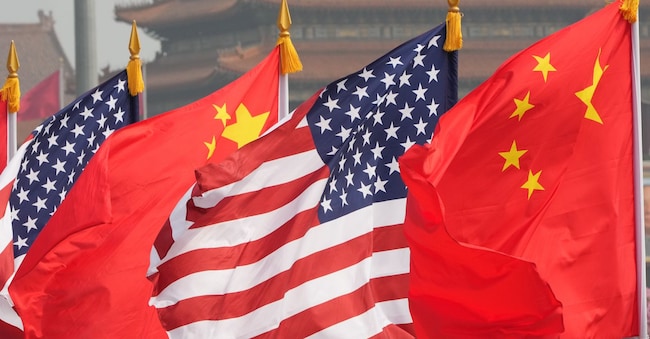
US President Donald Trump met with his Chinese counterpart Xi Jinping in Beijing, kicking off a high-profile summit that is expected to touch on topics such as trade, tariffs, Taiwan and Iran, and will conclude on Friday.
According to official broadcast footage, Trump told Xi in his opening speech that relations between the two countries will be "better than ever". Trump, who previously visited China in 2017 during his first term, said the two leaders have known each other personally for longer than any other US or Chinese president.
Xi, for his part, emphasised the global focus on the meeting and stated that a key issue for the two countries is to avoid the 'Tucydides trap', according to an official English translation of his Chinese statements broadcast by CCTV.
The Thucydides trap refers to the way in which, historically, tensions between an emerging power and one in power have often led to war. However, Graham Allison, the Harvard professor who popularised the concept, told CNBC that he expects the trade truce reached by Trump and Xi during their meeting in South Korea last autumn to become a formal agreement. In particular, the Thucydides trap occurs when an emerging power (today's China) threatens to supplant a dominant power such as the United States. The emerging power challenges the position of a dominant power not necessarily because either wants war, but because fear, rivalry, miscalculation, and competition for prestige can make confrontation increasingly difficult to avoid.
Allison discussed the concept at length in his book "Destined for War: Can America and China Escape Thucydides' Trap?", published in 2017. Allison applied a lesson from the Peloponnesian War, the conflict that pitted Athens and Sparta against each other in the 5th century BC, to the relationship between Washington and Beijing. According to Allison's analysis, China represents the rising power, while the US embodies the already dominant power, called upon to manage the relative loss of primacy without turning it into a military confrontation.

