
What money cannot buy
"There are some things that money cannot buy, though not many these days."

9' min read
9' min read
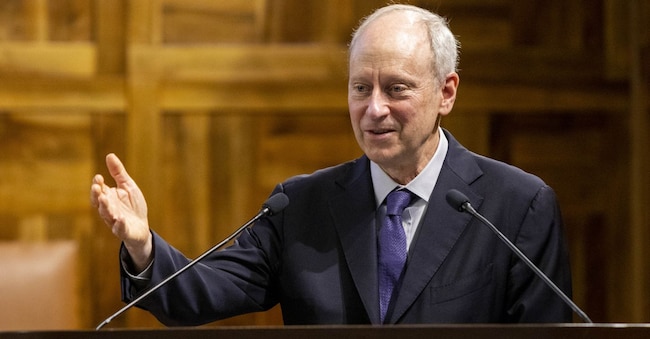
"There are some things that money can't buy, though not many these days". So writes Michael Sandel in the fulminating opening of his What Money Can't Buy. The Moral Limits of Markets (2012). And he continues with a non-exhaustive list of things that are for sale even though they probably shouldn't be: More comfortable cells in a prison, access to emergency lanes during traffic hours, surrogate mothers in various nations around the globe, permanent residence permits in the United States, the ability to kill an endangered rhino, the right to emit polluting gases, the time of a person to stand in line for you, the forehead of those willing to get an advertisement tattooed, the private number of a doctor you can call any day, any time. It is even possible to buy life insurance on the life of a terminally ill person in the hope of being able to collect it as soon as possible upon the latter's death.
They are not provocations. They are symptoms of an age," Sandel tells us, "ours, in which market logic is no longer one tool among others but the dominant metric of social life, 'the cornerstone of modern societies' as Steven Levitt and Stephen Dubner proudly write in their Freakonomics. The Calculus of the Incalculable (2010). Sandel's diagnosis is as sobering as it is alarming: we have entered what can properly be called a 'market society', a cultural horizon where truly everything has a price. "So what? - one might legitimately ask - what's the problem?" The problem is that," Sandel continues, "our reluctance to engage in moral and spiritual argumentation, along with our adherence to markets, has come at a high cost: it has drained the public debate of moral and civic energy and contributed to the managerial and technocratic policies that afflict many societies today.
That is why it is necessary to start asking explicitly and systematically how the meaning of things changes when we start treating them as commodities. Even the research of economists, on this point, is beginning to agree: blood, for example, when donated voluntarily, instead of sold, is more abundant and of better quality. Personal relationships, even in the workplace, only have true value if they arise and develop outside the logic of exchange. Sentimental and intimate relationships when they take place against payment naturally become something else. Any prize, just like a degree, if bought, totally loses its original meaning. This is what Fred Hirsch called the 'commercialisation effect'. The effect, that is, that manifests itself on the characteristics of an activity or product when these are offered exclusively or predominantly in commercial terms rather than on the basis of informal exchange, mutual obligation, altruism or love.
This effect stems from the fact that markets are not neutral places. They are not just 'efficient allocation mechanisms'. They express and promote certain norms and values, which often compete with those in other areas of life: gratuitousness, honour, respect, trust. Thus, putting goods that have a moral and civic dimension up for sale risks deforming their nature and emptying them of their original meaning. In a controversial study published in Science in 2013, Armin Falk and Nora Szech confronted participants with a rather complicated real-life choice: accept a sum of money to let a lab rat die or give up the money and save its life. The choice was made by different groups under different conditions: an individual decision, where the choice was limited to accepting or rejecting the sum offered, or a market choice where the sum was negotiated in a bilateral auction by the individual participants. In the latter case, participants negotiated in a simulated market with another party and had to agree on a price to sell the rat's life or save it. The results of the experiment show that in the individual context, the majority of subjects refuse money in order not to cause the death of the animal. In the market context, on the other hand, many more participants are willing to sacrifice the life of the mouse in exchange for the same or a smaller sum.
People, according to Falk and Szech's study, are less inclined to avoid moral injury when they act in a market exchange context. In practice, market mechanisms seem to 'dilute' individual responsibility: by negotiating, one also negotiates with one's conscience. A result that challenges the classical idea of the market as a simple instrument of efficiency, morally neutral. The efficiency paradox is then revealed in all its ambiguity: economically incentivising a behaviour can reduce its value. This is the phenomenon of 'motivational crowding-out'.


