Curiel (Christie's): 'When a name is worth more than a diamond at auction'
Interview with François Curiel, President of Christie's Emea and one of the world's most respected jewellery experts: the most sought-after brands, the types of clients and the famous auctions he has conducted, such as that of Elizabeth Taylor's jewellery in 2011, with proceeds of almost $116 million

3' min read
3' min read
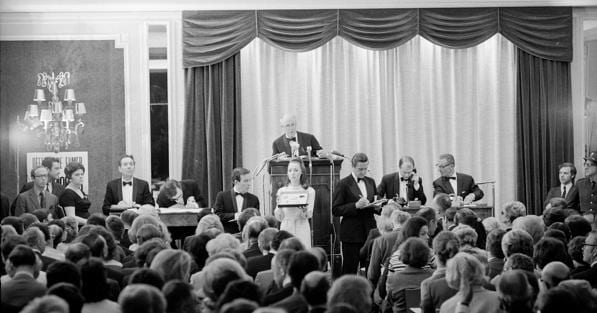
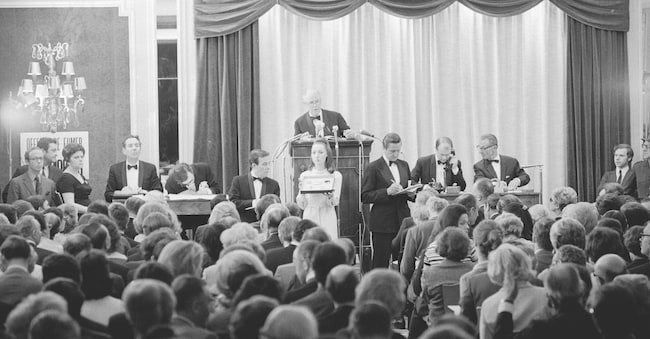
One of the countless auctions in his 55-year career was that of Elizabeth Taylor's jewellery, which closed in 2011 with the monstrous proceeds of almost $116 million. Today, at 76 years of age, François Curiel, president of Christie's Emea area and protagonist of the jewellery auctions of the last half-century, continues to observe this world that he helped shape as we know it today, with the same enthusiasm and curiosity as when on 1 May 1969, as a simple enthusiast, in the newly opened Christie's premises in Geneva he witnessed another famous event, the sale of the 37-carat emerald brooch belonging to Nina Dyer, who had received it as a gift from her husband, Prince Aga Khan. A month later, she began her long career in the auction house.
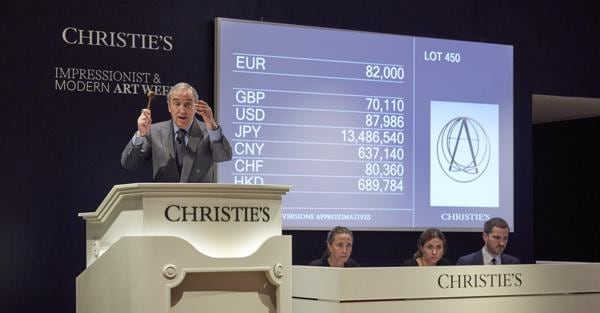
Monsieur Curiel, when the emerald was hammered at Christie's last 12 November, you yourself picked up the $8.8 million final bid over the phone. What differences do you find between the auctions of your early days and those of today?
I can tell you that finding high quality jewellery is still difficult, and even more difficult is finding the ones the market wants, whether they have an interesting provenance or belong to the most sought-after period. Today this means vintage pieces from the 20s and 30s, from Cartier, Van Cleef & Arpels, Boucheron, Chaumet. But also coloured diamonds and gemstones.
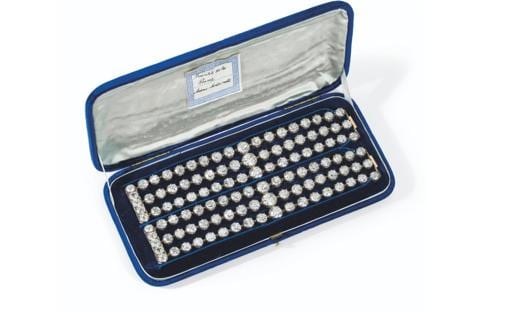
How much does a famous provenance weigh on the final price of a piece of jewellery? I'll give you this example: if I had only had to value the diamonds in the bracelets that belonged to Marie-Antoinette that we hammered out in 2021, I would have struggled to come up with $100,000. They sold for over $8.5 million. There are no rules, but I would say that the final price of a piece has increased by an average of 30-50% since it belonged to a celebrity. Yet, when we sold Liz Taylor's jewellery, those high prices were achieved not only because she was a diva, but also a fine collector.
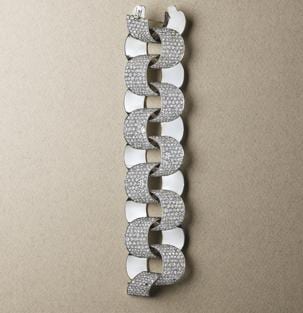
Beyond the most well-known brands, which ones do you think should be kept an eye on today?
If I knew, I would be a millionaire! (smiles). But I know what people are looking for most these days, for example the jewellery of Belperon, Boivin, Verdura, Jar, but also Bhagat, an Indian designer specialising in natural pearls. 'It is the signature that counts', as Jacques Arpels used to say: a signed piece is worth much more than an identical one that is not.
In China, luxury purchases have slowed down, but auctions are doing very well. Why do you think so?
In Hong Kong, which along with Geneva and New York is our main marketplace, there are only two auctions a year, in May and November, where pieces are offered that cannot be found in retail, such as old sapphires from Kashmir, old diamonds from Golconda. There is a certain chic in buying at auction, where you can also choose how much to pay and the choice is much wider than in a shop.