
When football is a dance between historical, political and cultural rivalries
Even in the quarter-finals of the North American World Cup, events on the pitch, disputes over independence and socio-economic tensions between countries are intertwined in an increasingly complex landscape of sports diplomacy

It is not unusual for certain sporting contests, particularly in team sports, to take on or acquire political significance. Take, for example, the Hungary v Soviet Union water polo match in Melbourne in 1956, when legend has it that the pool turned red from the intensity of the athletes’ contest, just a few weeks after Russian tanks had rolled into Budapest; the (in reality, very friendly) matches between Chinese and American table tennis players in Beijing in 1971, which heralded a period of Sino-American détente that would culminate in President Nixon’s visit to the Middle Kingdom; the 1976 Davis Cup final between Chile and Italia in Santiago, which the Azzurri contested (and won) despite it taking place at the Estadio Nacional, the scene of repression under Pinochet’s regime, which gained a boost to its image from the tennis event; the 1980 ‘Miracle on Ice’, the ice hockey match in which Team USA, made up of young amateurs, defeated the Soviet professionals at the Lake Placid Olympics; or, to limit ourselves to the most emblematic examples, the ‘Cricket for Peace’ initiative which, in 1987, saw the President of Pakistan, General Zia-ul-Haq, travel to India to watch a match of South Asia’s most popular sport (which, perhaps paradoxically, had been introduced there by the British Empire) and thus prevent the particularly heated tensions in the border areas from escalating into a full-scale war, possibly even a nuclear one.
Although the matches over the next few days do not carry quite such intense political significance, each one has a historical and even cultural significance that goes beyond mere footballing rivalry.
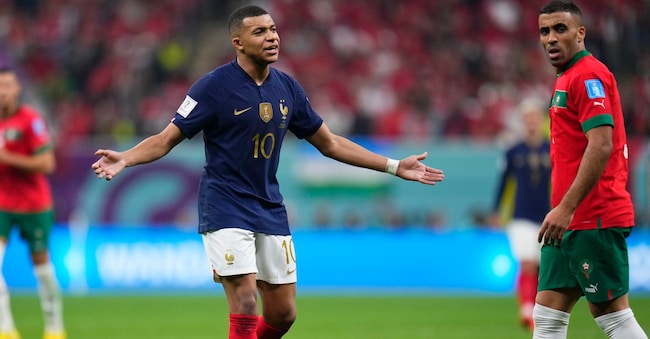
Let’s start with France v Morocco, the first quarter-final to be played and also the one with the most tangible symbolic significance. From 1912 to 1956, the North African country was a protectorate, governed from Paris under the terms set out in the Treaty of Fez, signed ‘sight unseen’ by Sultan Moulay Abdelhafid. Although the French were not guilty of criminal acts against the population, unlike the Germans in Namibia or the Italians in Ethiopia, they constantly suppressed the independence movement; even an enlightened politician such as Foreign Minister Robert Schuman could, in 1951, defend before the General Assembly ‘the inalienable rights of France in North Africa’ and assert ‘the UN’s lack of jurisdiction over Tunisian and Moroccan issues’.
In 70 years of independence – during which the Lions of the Atlas have beaten Les Bleus only once, in a friendly in 1998 that was celebrated as a global triumph – economic ties have remained strong, particularly in terms of migration flows. Moroccans born in Morocco, numbering almost 1 million, represent the second-largest foreign community in France, after Algerians; those who have emigrated to France (including French nationals born in France) account for a third of remittances sent to the Kingdom of Morocco. Further strengthening bilateral ties, in addition to Moroccan players born and raised in France, there are subjects of Mohammed VI living in mainland France (notably the writer Leila Slimani) and French Jews born in Morocco, such as the musician David Guetta, the journalist Éric Fottorino and the film directors Éric Toledano and Olivier Nakache.
The Furias Rojas and the Diables Rouges have faced each other on several occasions, but the rivalry between Belgium and Spain is somewhat muted. Admittedly, there hasn’t always been love lost between them … but it’s been at least four centuries since the actual war! In reality, it was the Protestant Dutch provinces that rejected the strict Catholicism of Philip II, who, unlike Charles V, had been educated in Spain, and it was over this issue that the Eighty Years’ War was fought. The Belgians, particularly the French-speaking Walloons, remained subjects of the Spanish crown until 1713.


