
AI in games? “A toy must remain a tool for development, without causing emotional dependence or replacing human relationships”
Maurizio Pardi, country manager at VTech Italia, speaks out: from controller-free consoles to companion robots, what are the limits of innovation in children’s products?

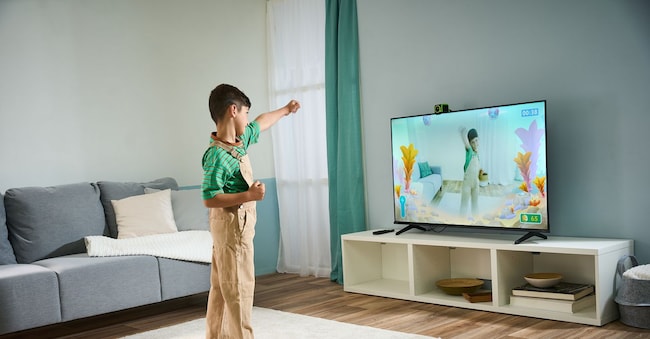
Any parent knows this: today’s children learn to interact with a screen even before they can read. Against this backdrop, toys have also evolved, transforming from simple pastimes into increasingly sophisticated learning tools. Today, they track children’s movements, recognise their faces and, in the products that various start-ups are bringing to market, are even capable of conversing with them thanks to generative artificial intelligence. This technology is becoming increasingly widespread and capable of influencing behaviour; it blurs the line between play and human interaction, raising questions about privacy, the reliability of content and the risk of emotional dependence.
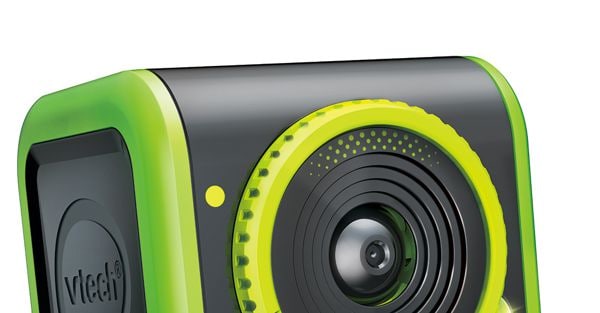
It is against this backdrop that VTech, a Hong Kong-based multinational, is celebrating fifty years of interactive toys. Founded in 1976 by two engineers, Allan Wong and Stephen Leung, the company has navigated half a century of technological evolution: from its first electronic educational product, the Lesson One in 1980, to motion-tracking systems such as LeapMOVE, a controller-free console designed for playing, training and learning. Today, it distributes its products in over 90 countries and operates in three sectors: educational toys, telecommunications and electronic manufacturing services.
In Italia, where it has had a direct presence since 2023, VTech is focusing on the localisation of its products and educational content, seeking to gain a foothold in a market that faces competition from digital entertainment and the legitimate expectations of parents. We spoke to Maurizio Pardi, country manager of VTech Italia, about the evolution of educational toys, the company’s strategies and the challenges facing a sector that must strike a balance between technological innovation, creativity and children’s development.

VTech celebrates its 50th anniversary: what has been the most significant transformation in the educational toy industry over the past half-century?
‘The shift from a predominantly passive toy to an interactive play experience, capable of adapting to the different stages of a child’s development. When we were founded in 1976, the use of electronics in toys was in its infancy, and we helped to create a whole new category. Technology has made giant strides, but what has changed most is the way we conceive of learning: today, children interact, experiment, move about and take the lead in their own discoveries. One principle, however, has remained unchanged: technology is never an end in itself, but a tool to stimulate curiosity, creativity and a desire to learn.”

