Religions

The excommunication of the Augustinian Martin Luther by Leo X

Leo X excommunicated Martin Luther in 1521, marking the beginning of the Protestant Reformation and a significant break in the Church
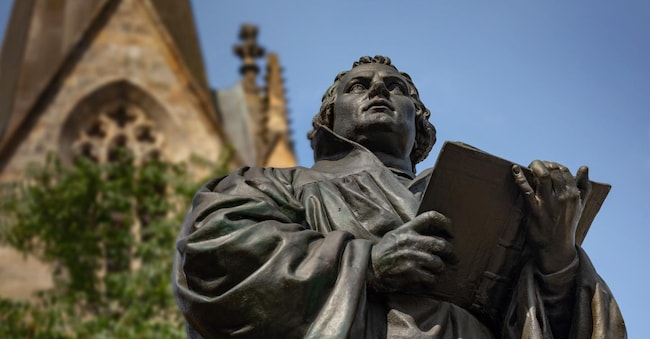
by Enrico Bronzo

Martin Lutero. (AdobeStock)

3' min read

3' min read

The name Leo - chosen by Robert Francis Prevost - was borne by no fewer than 13 popes before Leo XIV, the name chosen by the new pontiff, from the 5th century until the beginning of the 20th century.

This name, reminiscent of strength and majesty, has been adopted by some of the most influential pontiffs in the history of the Church.

Loading...

The legacy of these popes spans more than 1,500 years and embraces eras of crisis, spiritual rebirth and profound political and religious transformations

Leo X (1513-1521), son of Lorenzo de' Medici

In particular, Leo X (pontiff from 1513 to 1521), son of Lorenzo de' Medici, represents the apex of the papal Renaissance.

Under his pontificate, Rome flourished artistically, but it was also the time when the Protestant Reformation exploded: in 1517 Martin Luther posted his 95 theses. Leo X excommunicated him in 1521.

A phrase was attributed to him - by some detractors - as soon as he ascended the papal throne: 'God gave us the papacy, let us enjoy it'.

Martin Luther was an Augustinian monk from Wittenberg

.

Martin Luther was born on 10 November 1483 in Eisleben. In 1501 he began his studies in Erfurt in Thuringia where he passed his magisterial examination in 1505 and went on to study law.

Martin Luther was initially an Augustinian friar in Wittenberg before starting the Protestant Reformation.

On 3 January 1521, with the Bull decet romanum pontificem, Luther was declared a heretic and excommunicated.

He entered the Augustinian Order in 1505 and was a member of the observance congregation of Saxony. He belonged to the convent community first in Erfurt and then in Wittenberg. He held various government posts: vice-prior and regent of studies (1512-1515), then provincial vicar of Thuringia and Meissen (1515-1518). He was a renowned professor (doctor of theology) and accredited preacher; he dealt with the conflict between Observants and Conventuals that took him to Rome in 1511-1512.

Until 1521, he used to sign himself 'Martin Luther, Augustinian' and wore the habit until 1524, retaining much of his friar-like piety and style until his death.

Text taken from the website of the Northern Italy Religious Province of the Dehonians (Priests of the Sacred Heart).

Protestantism is not a 'protest' movement

.

The Reformation was an internal movement within the church in the 16th century, which aimed at the healing of certain theological disruptions (the trade in indulgences, the tendency towards secularisation, the excessive proliferation of hierarchies, incorrect liturgical drifts). A fracture in the church

continuity with the old church, understanding themselves as a 're-established' (reformed) expression of the church itself.

Protestantism is therefore not a 'protest' movement, the term 'Protestant' actually derives from a legal term: 'protest',

of the Old World into several religious congregations was not the intention, but became a de facto consequence since the conflict around Martin Luther's doctrine could not be resolved by consensus.

This soon followed other new movements in Europe, of which those in the Swiss cities of Zurich and Geneva propagated most strongly. The new Christian communities and movements continued to refer to the idea of unity and

during the Diet of Speyer in 1529, was a kind of 'restrictive ordinance' in the sphere of opposition, to be referred to as 'pro-testarians' in the sense of 'bearing witness', and not rather to 'protest' in the sense of making a protest.

The most important ramifications of Protestantism today are represented by the two families, the Lutheran and the so-called Reformed - linking in this to the beginnings of the Reformation in Wittenberg and Zurich/Geneva.

Because of the importance of the distinction - mostly unknown - the full text was taken from the website of the Lutheran Church.

a

Copyright reserved ©
Loading...

Brand connect

Loading...

Newsletter

Notizie e approfondimenti sugli avvenimenti politici, economici e finanziari.

Iscriviti