
When public and private team up: the new face of cultural heritage management
With Circular No. 10 the MiC introduces an operational model for the Special Public-Private Partnership for the integrated development of immovable and movable cultural heritage

5' min read
Key points
5' min read
With the Circular No. 10 signed by the Head of the Department for the Enhancement of Cultural Heritage (DiVA), Alfonsina Russo, published at the beginning of August, the Ministry of Culture dictates the guidelines for special public-private partnerships (PSPPs) for cultural institutes and sites. The strategic-administrative act had been awaited for about four years, ever since a decree of the Directorate General for Museums, Massimo Osanna, established a special Technical Table in July 2021. The guidelines are the result of the legislative innovations that have taken place in recent years; among the most important are the changes made by the new Public Contracts Code, Legislative Decree 36/2023, the Constitutional Court ruling no. 131/2020 and Ministry of Labour Decree no. 72/2021, which better specify the procedural framework for public-private collaboration in the third sector. To these are added the positive results that have emerged from the pilot projects promoted by the MiC. In addition to the Circular and the Guidelines, the published acts are completed by a public notice scheme, which constitutes a reference for the definition and development of the procedures, while leaving each institution the freedom to adapt the acts to its own contextual needs.
The Guidelines
.It is structured in seven points, basically divided between the legal framework, the comparison with the old instrument of service concessions and the peculiar aspects of the PSPP regarding the renewed balance, procedures and the Third Sector. The document proposes a new governance model for cultural heritage management, based on the implementation of a shared cultural project. This approach effectively overcomes the traditional institution of the concession - introduced by the Ronchey law and used for decades for the management of additional services - today relegated to merely operational or accessory functions, such as cleaning, guarding, ticketing and access control.
The intention of the DiVA is to offer cultural venues a practical and concrete operational model of management aimed at ensuring maximum public inclusion of cultural assets. The use of the PSPP is governed by Article 134, paragraph 2 of Legislative Decree no. 36/2023 and Article 89, paragraph 17 of Legislative Decree no. 117/2017, respectively the Public Contracts Code and the Third Sector Code. This is a simplified procedure, but not devoid of complexity, which has some peculiarities. Firstly, it makes it possible to capture the great heterogeneity that characterises cultural institutes, offering the possibility of adapting and innovating project implementation. Furthermore, it allows for the experimentation of innovative forms of merchandising and economic collaboration with the business world. The contract is free of charge, thus without any financial burden for the public administration. The PSPP envisages a strong involvement of private parties, regardless of their size or legal form, in the management not only of enhancement activities, but in the management of entire assets, entrusting them not only with the provision of a single service, but with the management of the asset itself. Although there is a preference for Third Sector entities, in reality the instrument is aimed at all productive entities, as in the case of the Reggia di Caserta, which has entrusted the valorisation of the Bourbon greenhouses located in the English garden to for-profit companies. Furthermore, the guidelines call for a connection between public institutions (local authorities, schools, universities, branches of the Ministry, etc.) and private subjects in order to synergistically steer their action in the conservation and enhancement processes of the cultural heritage. A very important aspect that constitutes a decisive innovation concerns the possibility of activating forms of PSPP for cultural heritage in its entirety, i.e. both immovable and movable assets. With regard to the last point, this includes all activities for the enhancement of collections and movable cultural heritage regardless of the container that houses them. This means that repositories, archives and the resulting digital objects could be managed and the brand development policies promoted by the Made in Italy law could also be covered.

PSPP projects
.Over the years, the relationship between museums and businesses has profoundly changed from a concessionary and in many cases servile regime, in favour of the creation of a more balanced economic system, where public and private co-design solutions and services, in a logic of open innovation. The open innovation model, borrowed from business economics, is based on collaboration between organisations and other external entities such as universities, research institutes, start-ups, established companies, customers, communities or other partners to stimulate the creation and development of new products and services or new technologies. The PSPP model outlined in the guidelines goes in this direction.
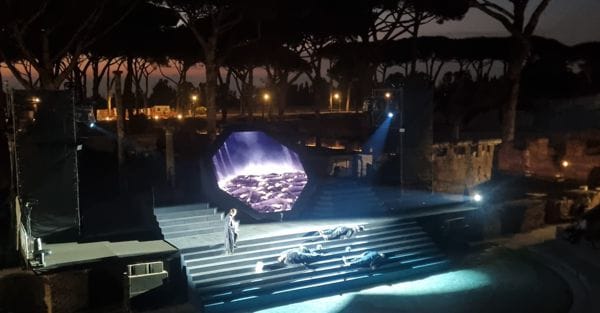
Over the last few years, the MiC has developed several pilot projects, from Northern to Southern Italy: from the Miramare Castle in Trieste to the Rocca Albornoz in Viterbo, from Ostia Antica to Pompeii, and the Castle of Carlo Va Lecce. Let's look at some of the first results. For example, the private concessionaire of the Reggia di Caserta employs eight people and has recovered four greenhouses, investing 422,000 euro in the redevelopment of the surrounding area. More than 3,500 plants are to be produced in two outlets (of which 1,000 were acquired by the Reggia). There are currently 700 plants in the seedbed, obtained from seeds owned by the museum. The total turnover amounts to 60 thousand euro: 35 thousand from the sale of plants and 25 thousand from educational activities, workshops and other initiatives. In the Campi Flegrei Archaeological Park, the partnership management project involved the Piscina Mirabilis in Bacoli and the Macellum in Pozzuoli (NA). Significant results were achieved in the three-year period 2021-2023: an overall increase in visitors, amounting to 66,000 at the two sites, and an increase in income from cultural services, with about EUR 310,000 in turnover and royalties of about EUR 70,000. For the Ostia Antica Archaeological Park, which has entrusted the management of the festival hosted in the splendid theatre, the numbers for 2024 are significant: 9,700 concert admissions. Also in the Mezzogiorno, which is particularly dynamic in this sphere, the Regional Directorate National Museums Puglia of the Ministry of Culture, in collaboration with Fondazione con il Sud, has promoted a notice for the management of the Carlo V Castle in Lecce. The planned activities range from catering to didactics, from workshops to guided tours, with a focus on innovative use and the active involvement of citizens, cultural operators and educational institutions. The Foundation has made available a grant of 500,000 euro for the best selected project. Other examples include Pompeii, where the initiatives focus on didactic, recreational and educational activities, and the Miramare Castle, where the catering and cafeteria services become an expression of the area's gastronomic culture. Here, the economic operator, in addition to providing basic services, is called upon to renovate and fit out contemporary greenhouse buildings, transforming them into multifunctional spaces and laboratories for scientific and cultural dissemination, as well as organising events and maintaining other buildings.

