
When small states dictate the rules of the game
If these niches continue to operate as grey areas, the risk is to fuel a race to the bottom that undermines the entire European project

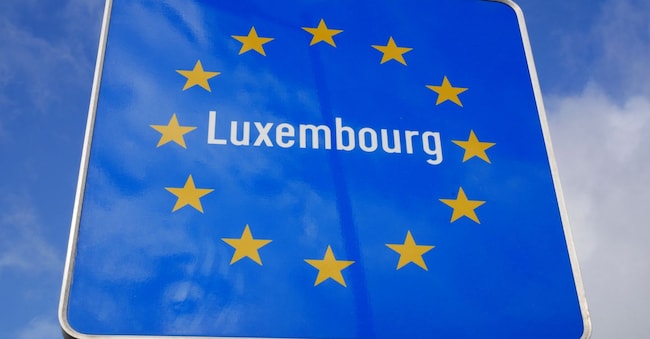
There is a paradox that runs through European economic history: giants often stumble over their own size, while the small ones, if well organised, manage to dictate the rules of the game. This is the case in Luxembourg, which between the wars still lived off steel and agriculture and which today, with just 650,000 inhabitants, is the world's second largest hub of mutual funds after the United States. In our research, recently published in 'Business History Review', we reconstructed the mechanisms that made possible the acceleration of this metamorphosis in the post-war period: the intertwining of political and financial elites, the creative use of regulations and the ability to transform vulnerability into competitive advantage.
Does size matter? In a way, yes. The driving force of the Grand Duchy (but also of other 'little ones' like Monaco or the Tangier enclave, further examples of tax havens that developed in the inter-war period) is to be found in what we call 'asymmetry management'. Through flexible interpretations of the 1929 law on holding companies (the law that de facto turned Luxembourg into a tax haven) revolving doors between public and private and, later, a selective application of European directives, Luxembourg's elites have created tailor-made regulatory spaces to attract foreign capital. All this favoured by the small size of the State. An emblematic example of what we call 'managed intimacy': in a context where 'everybody knows everybody', informality is not an obstacle, but the very condition of efficiency.
The prodromes of Luxembourg's future mutual fund architecture could already be glimpsed in the 1950s, when local notaries and lawyers such as Bernard Delvaux, together with Belgian colleagues such as Alfred Druard, were wondering how to make the '29 law applicable to open-ended funds as well, between glasses of sherry and foie gras at the Grand Hotel Brasseur in Luxembourg-ville. In the 1960s, the Eurosyndicat network, which brought together banks from six CEE countries under the leadership of the innovative (and at times unscrupulous) Belgian bank Lambert, chose Luxembourg as the base for registering the first mutual funds 'made in Luxembourg' destined for the international market. The obstacle was taxation: the law of '29, suitably reworked, offered the solution. The same recipe, combined with the speedy adoption of the 1985 European UCITS directive on funds and the introduction of banking secrecy legislation on the Swiss model, was the key to Luxembourg's take-off as a hyper-competitive international platform by the 1980s. In just a few decades, thanks to a combination of 'regulatory engineering' and targeted policy decisions, the small Grand Duchy equipped itself with the legal and reputational tools to become the European hub of mutual fund marketing.
A success story that, however, raises questions that are still relevant today. The tolerance of tax avoidance, the systematic acceptance of conflicts of interest and the instrumental use of the EU's role as founder in its decision-making structures: what lessons can be learnt from the Luxembourg parable? The question is not only academic. From Ireland, which has adopted similar strategies since the 1990s, to microstates from Asia to the Caribbean competing on tax and regulatory levers, the model has spread. Yet the long-term sustainability remains uncertain, especially in a context where the EU and OECD are pushing for more harmonisation and global minimum tax standards.
In our view, the crux is political. The history of Luxembourg's mutual funds shows that even in systems bound by common rules there is room for manoeuvre: internal cohesion, legal capital and speedy decision-making make it possible to gain rentable positions. But if these niches continue to operate as 'grey zones', the risk is to fuel a race to the bottom that undermines the entire European project.

