Travel

Overtourism, here are the most crowded European destinations. Lloret de Mar first, Venice third, Salzburg and Bruges in the top ten

The City DNA Report's ranking of tourism density calculated as the ratio of overnight stays to the number of residents in 117 European cities

by Riccardo Ferrazza

5' min read

5' min read

There are also unexpected destinations that, in the common perception, are not usually associated with the phenomenon of overtourism in City Report Dna 's ranking of the European cities with the highest visitor density in 2023 (the year in which international tourist arrivals recovered 89% from 2019 levels). This is the case of Salzburg (Austria) and Bruges (Belgium), which appear in seventh and ninth position respectively in a ranking compiled by taking into account the ratio of registered overnight stays to the number of residents. A formula (among many) by which one can measure the tourist pressure on a locality and which, in this case, secures the record for 'hyper-tourism' for the Spanish Lloret de Mar.

As is always the case in surveys of this kind, Venice also appears unfailingly on the podium, in third position, albeit far behind the values of the city on the Costa Brava. In the ranking (which takes into account the 117 cities of the Old Continent associated in the City destinations alliance) there are of course other Italian holiday destinations. In the 'top ten' by states, Spain dominates with three cases of tourist overcrowding, followed by Croatia and Portugal (two each).

Loading...

METE TROPPO AFFOLLATE

Loading...

Santiago de Compostela

It is the most famous religious itinerary in the Christian world and the most frequented route in Europe: the Walk of Santiago de Compostela brought 446,042 pilgrims last year to the capital of Galicia, which, according to tradition, houses in its sanctuary the remains of the apostle James discovered at the time of Charlemagne. In recent years, pilgrims from the United States in particular have increased along the 'via lattea' (the popular name for the route). A 'film tourism' boom linked to the success of the US film 'The Way' (in Italian 'Il cammino per Santiago'): released in 2010, a sequel is on the way. It is not surprising, therefore, to find Santiago in tenth position among the most 'crowded' destinations: according to City DNA Report's calculation, in 2023 there were 16.29 overnight stays per inhabitant, about six points higher than the average of 10.25 recorded among all 117 destinations analysed.

Bruges

Bruges is a medieval jewel of Flanders that within a few kilometres offers museums, churches, historical palaces and parks: a concentration of beauty that served as the set for 'In Bruges. The Assassin's Conscience', a film starring Colin Farrel. For the filming, the mayor and the tourist office provided hundreds of locals as extras and allowed the production machine to 'occupy' the city's most beautiful sights, certainly counting on the tourist attraction effect. Bruges had last year 17.02 overnight stays per resident and is in ninth place in the ranking.

Spalato

Croatia's second largest city and the capital of Dalmatia, Spalato had long been only a transit destination, with millions of passengers stopping for a few hours in the centre before taking the ferry to one of the famous islands or reaching the airport. Thus, when a decade ago it somewhat surprisingly became a favourite destination to spend at least part of the holiday for visitors from all over Europe, especially younger ones, it found itself unprepared because it had insufficient accommodation facilities. Over the years, Split has become one of Croatia's most popular destinations for international tourism (the sector is now the country's leading economic resource): in 2023 it had 17.87 overnight stays per resident. Eighth position.

Salisburgo

Mozart's birthplace (it hosts one of the most important classical music and opera festivals, an event that brings together the elite of Austrian and international culture and society for five weeks from late July to the end of August) Salzburg is one of Austria's leading tourist destinations. However, it is never associated with overtourism, but its historic centre (UNESCO World Heritage Site since 1996) attracts many visitors throughout the year. In 2023 20.04 overnight stays/inhabitant, seventh place.

Palma de Mallorca

At the end of May, thousands of people demonstrated in Palma de Mallorca against excessive tourism, one of the many protests of the Spanish summer: the Iberian country is the second tourist destination in the world after France and in 2023 welcomed 85 million foreign visitors (Unwto data), of which 14.4 million landed in the Balearic Islands, the second most visited region. A pressure that brings to the island's capital 17.87 nights per inhabitant. Sixth position.

Porto

Tourism plays a central role in Portugal's economic development. In 2023, the sector contributed to the country's economic growth by almost half (1.1 percentage points) of the real GDP growth of 2.3%. Last year there were 30 million guests, +13% compared to 2022, and of these 61% were foreigners. Porto, Portugal's second largest city, has been experiencing a growth in tourism for years. Among the attractions that have become a phenomenon is the 'magic' bookshop (in reality 'Lello and Irmão') that supposedly inspired J. K. Rowling for the Harry Potter saga. Another example of the strength of film tourism. Fifth position (density of 26.62).

Lisbona

Even in the Portuguese capital, one of the destinations 'kissed' by the great return of international travel after the blockade imposed by Covid (4.6 million foreign arrivals in 2023, Euromonitor data), mass tourism is creating tension: a citizens' group has launched a collection of signatures to put the total abolition of short tourist rentals to a referendum. Last year in the city of Pessoa there was an increase in overnight stays of 13.7%. With Porto it is a Portuguese double: Lisbon comes fourth with a tourist density of 28.02.

Venezia

On the lagoon, the effects of the tourist success have been fought for years: the administration has experimented with the entrance ticket (which could become permanent) and recently introduced new rules for visits by tourist groups with a maximum limit of twenty-five people and a ban on loudspeakers by guides.

But the enormous pressure on the city cannot fail to be reflected in many aspects of the daily lives of the city's now few residents on the lagoon (less than 50,000). Such as waste management: a study carried out before the Covid period had calculated the time needed for a waste bin, positioned between Piazzetta San Marco and the pier, to become saturated with bottles and cans during the peak tourist season as 15 minutes. A McKinsey study calculated that in Venice in 2023 there were more than three thousand overnight stays per square kilometre, the second highest value in the world (after Dubrovnik) and destined to grow by 26% in 2030. In City DNA's ranking, the city ranks third for the ratio of overnight stays to inhabitants (36.02).

A survey that, as for other port cities, does not take into account day trippers disembarking on cruises. A research by the Ca' Foscari University of Venice calculated that during 2022, daily visitors averaged 98,000 (32,339 tourists and 61,461 excursionists).

Opatija

Much more crowded with tourists than Venice in relation to its inhabitants is Obatija (Opatija in Italian), a seaside resort beloved of Austrian and Hungarian nobility in the days of the Habsburg Empire and a very popular destination in the Croatia of the new millennium (along with Split). It has just over ten thousand inhabitants and a large number of overnight stays. A combination that raises the tourist density index to 126.54, more than three times the Venetian value. Second place.

Lloret de Mar

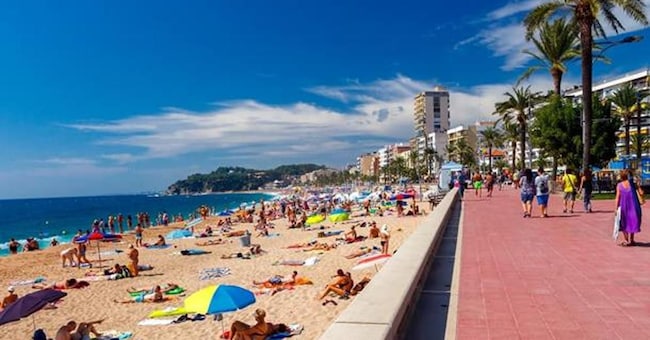
No destination beats Lloret de Mar, one of the many once picturesque villages of the Costa Brava (third Spanish destination in the top ten) transformed into crowded resorts where tourism (and construction) are the almost exclusive economic activities. Unparalleled tourist density (128.48) and first place secured.

Italian 'hypertourism' destinations.

As mentioned, in the ranking compiled by City DNA there are, outside the top ten, other Italian destinations. Verona (21st place) is more crowded than Rome (22nd position). Both are, albeit slightly, above the average density of 10.25 overnight stays per resident. This is followed by a quintet formed by Padova (33rd), Bologna (60th), Vicenza (63), Genova (75) and Torino (87). Their tourist density ranges from 7.86 to 3.02 in Turin.


Copyright reserved ©
Loading...

Brand connect

Loading...

Newsletter

Notizie e approfondimenti sugli avvenimenti politici, economici e finanziari.

Iscriviti